List of the Costliest Hurricanes in the United States
Hurricanes are the costliest weather and climate disasters in the United States, often causing catastrophic damage to infrastructure, buildings, and…
What is List of the Costliest Hurricanes in the United States?
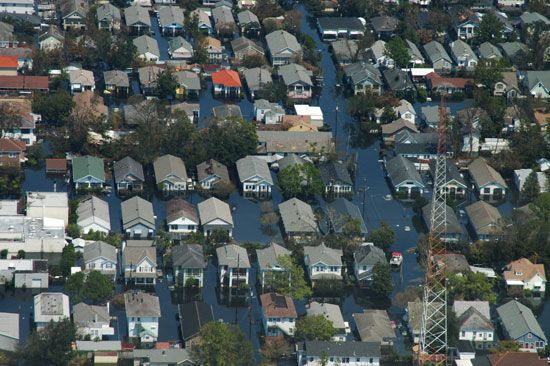
Hurricanes are the costliest weather and climate disasters in the United States, often causing catastrophic damage to infrastructure, buildings, and agricultural assets. On average, these events result in costs exceeding $20 billion per storm.1
The following table highlights the top 10 costliest hurricanes in the U.S., with damage estimates adjusted to constant 2024 U.S. dollars.12
Rank
Hurricane Name
Year
Estimated Damage (2024 USD)
1
Katrina
2005
$198,600,000,000
2
Harvey
2017
$158,600,000,000
3
Ian
2022
$119,400,000,000
4
Maria
2017
$114,180,000,000
5
Sandy
2012
$87,300,000,000
6
Ida
2021
$83,900,000,000
7
Helene
2024
$78,700,000,000
8
Irma
2017
$63,400,000,000
9
Andrew
1992
$59,600,000,000
10
Ike
2008
$42,900,000,000
How do meteorologists determine the category of a hurricane?
Meteorologists determine the category of a hurricane using the Saffir-Simpson hurricane wind scale, which classifies storms based exclusively on their maximum sustained wind speed. This measurement is defined as the highest average wind speed sustained over a one-minute period at an elevation of 10 meters (32.8 feet) above the water surface.6
Once a tropical cyclone reaches maximum sustained winds of at least 119 km (74 miles) per hour, it is ranked on the scale from Category 1 to Category 5.6
Category
Wind Speed (mph)
1
74–95
2
96–110
3
111–129
4
130–156
5
157
While early versions of the scale incorporated central atmospheric pressure and storm surge, these metrics were removed in 2009 to avoid classification inconsistencies and confusion caused by geographic and topographic variables. Because modern storms have increasingly exceeded the Category 5 threshold, some scientists are currently debating the potential addition of a sixth category to better reflect extreme wind intensities.6
What is the difference between a hurricane, a typhoon, and a cyclone?
The terms hurricane, typhoon, and cyclone all refer to the same weather phenomenon: an intense tropical cyclone. These are circular storm systems characterized by low atmospheric pressure, heavy rain, and high winds that draw energy from warm ocean waters.78
The only difference between these storms is their geographical location:910
- Hurricanes: Occur in the North Atlantic Ocean and the eastern North Pacific Ocean.97
- Typhoons: Occur in the western North Pacific, affecting regions such as the Philippines, Japan, and China.78
- Cyclones: Occur in the western South Pacific and the Indian Ocean.97
Regardless of the name, these systems are classified as mature tropical cyclones once their sustained wind speeds exceed 119 km (74 miles) per hour. Before reaching this intensity, they are generally categorized as tropical storms.711
How does inflation affect the way we rank historical hurricane damage?
To accurately rank the financial impact of historical hurricanes, meteorologists and economists adjust raw damage figures using the Consumer Price Index. This process converts historical costs into “constant dollars”—in this case, 2024 U.S. dollars—which accounts for the effects of inflation over time.12
Without this adjustment, a storm that occurred decades ago would appear significantly less destructive than a modern storm simply because the value of the dollar has changed, rather than because the physical damage was less severe. By normalizing these costs, researchers can create a reliable, apples-to-apples comparison of the economic devastation caused by different weather events throughout history.1
For example, this method allows for a standardized ranking where older, catastrophic events like Hurricane Camille (1969) can be compared directly against recent storms like Hurricane Helene (2024) to determine their relative impact on the built environment and the economy.12
Sources
- List of the Costliest Hurricanes in the United States — Encyclopædia Britannica
- tropical cyclone - Costliest hurricanes in the United States — Encyclopædia Britannica
- Deadliest Hurricanes in the U.S. — Encyclopædia Britannica
- List of the Costliest Hurricanes in the United States: Top Questions — Encyclopædia Britannica
- Hurricane Harvey: Top Questions — Encyclopædia Britannica
- Saffir-Simpson hurricane scale — Encyclopædia Britannica
- 20 Deadliest Storms in History: Top Questions — Encyclopædia Britannica
- What's the Difference Between… | A typhoon, a hurricane, and a cyclone — Merriam-Webster
- tropical cyclone — Encyclopædia Britannica
- What Is the Difference Between a Typhoon and a Super Typhoon? — Encyclopædia Britannica
- tropical storm — Encyclopædia Britannica
Published on · 3 min read