Permian Extinction
The Permian extinction, often referred to as the greatest mass extinction in Earth's history, occurred during the latter part of the Permian Period, which…
What was the Permian extinction and when did it occur?
The Permian extinction, often referred to as the greatest mass extinction in Earth’s history, occurred during the latter part of the Permian Period, which lasted from approximately 298.9 million to 252.2 million years ago.12
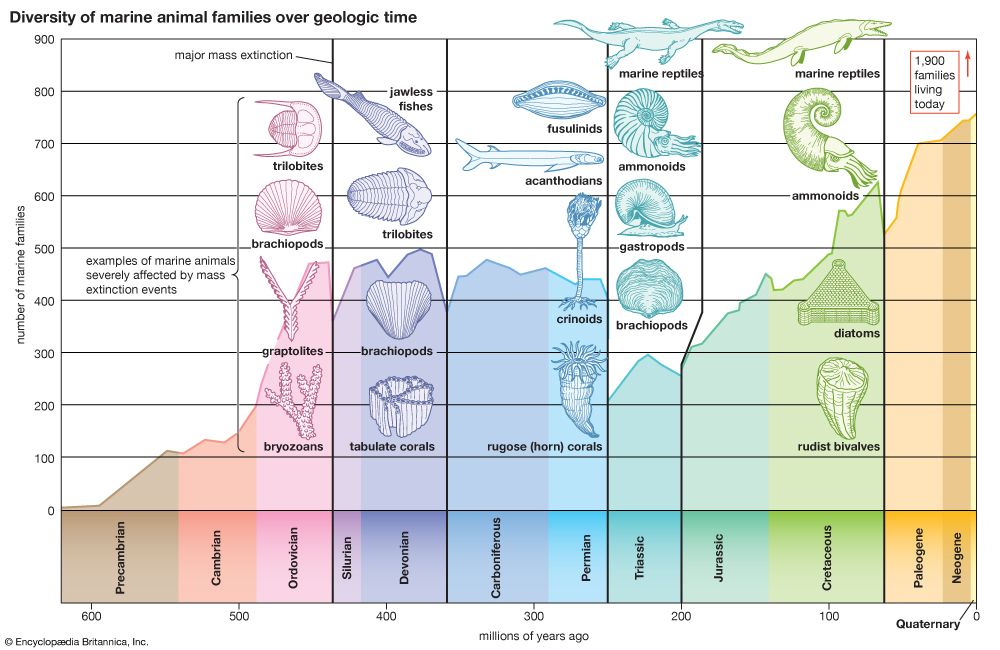
This catastrophic event profoundly altered life on Earth, eliminating about 95 percent of marine species and roughly 70 percent of terrestrial species. While the exact duration is debated, many scientists suggest the extinction occurred over 15 million years, while others argue for a more rapid interval lasting about 200,000 years.1
Proposed causes for this crisis include:
- Temperature Crises: Significant fluctuations in ocean temperatures, potentially exceeding 30–32 °C (86–90 °F), which proved lethal for many invertebrates.3
- Carbon Cycle Alterations: Disruptions linked to oceanic anoxia and volcanic activity, such as the eruption of the Siberian flood basalts, which likely increased atmospheric carbon dioxide levels.45
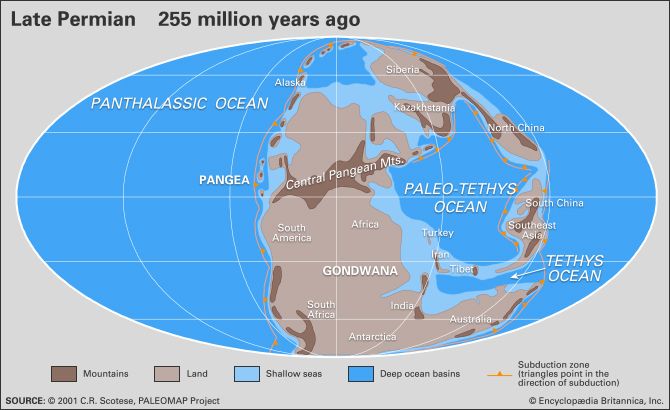
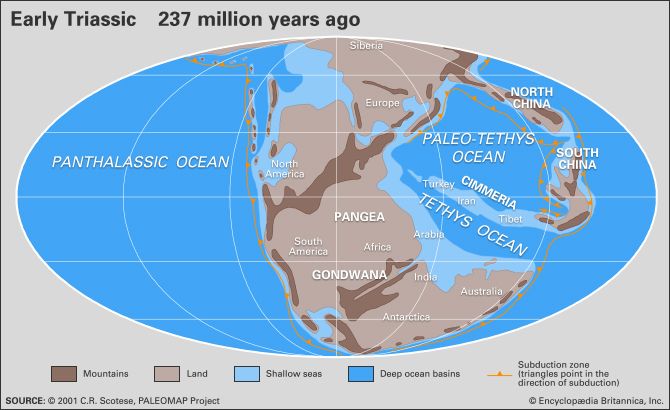
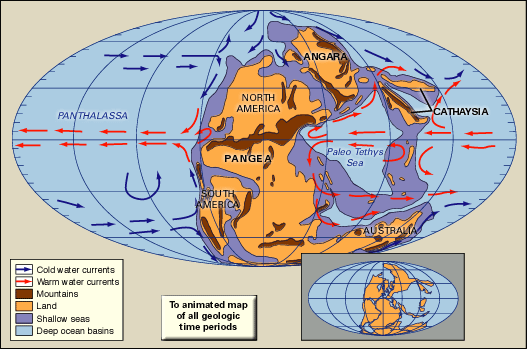
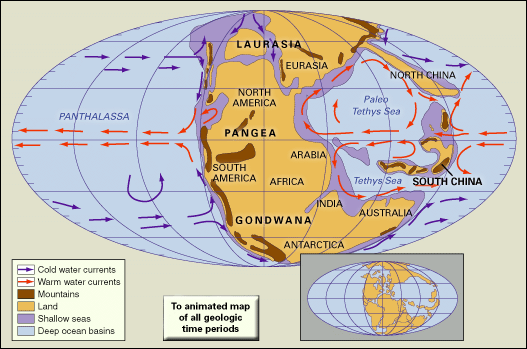
- Geological and Climatic Shifts: The assembly of the supercontinent Pangea altered ocean currents and regional climates, leading to hot, dry conditions1.2
What percentage of species on Earth were wiped out during the Permian extinction?
The Permian extinction is characterized by the elimination of approximately 90 percent of all species on Earth. This catastrophic mass extinction was particularly devastating to specific groups, resulting in the loss of more than 95 percent of marine species and about 70 percent of terrestrial species. Additionally, more than half of all taxonomic families present at the time disappeared during this period.73
How did the Permian extinction influence the evolution of life in the following Triassic period?
The Permian extinction, the most severe mass extinction in Earth’s history, fundamentally reshaped the trajectory of life during the subsequent Triassic Period. By clearing out dominant Paleozoic groups, the crisis created ecological voids that allowed new lineages to emerge and diversify.96
Marine Ecosystems
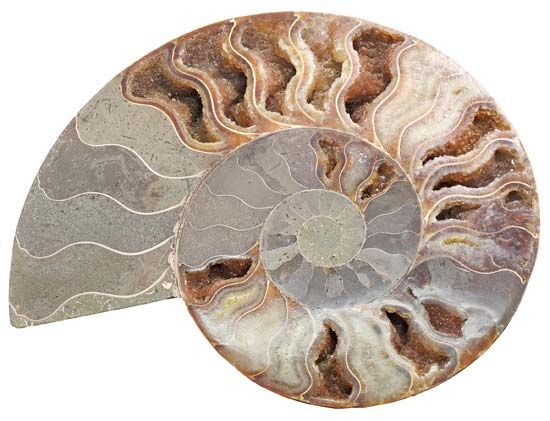
The extinction decimated marine life, particularly bottom-dwelling invertebrates. Groups like trilobites, rugose and tabulate corals, and several brachiopod superfamilies vanished entirely. This collapse paved the way for the rise of modern marine fauna. For instance, while ammonoids suffered a drastic reduction, the surviving ceratitids underwent an explosive adaptive radiation in the Middle and Late Triassic. Additionally, as sea levels rose, continental shelves were colonized by new groups, including large marine reptiles and colonial stony corals that became essential reef-builders.6109
Terrestrial Evolution
On land, the recovery was marked by a shift in the importance of vertebrates. With only about 30 percent of terrestrial vertebrate genera surviving the transition, reptiles increased significantly in diversity. This period saw the emergence of the first dinosaurs, setting the stage for their dominance in the Jurassic and Cretaceous periods, as well as the appearance of the first mammals—small, shrewlike creatures derived from reptiles. Plant life also shifted, as cool-adapted seed ferns were replaced by species like Dicroidium, which were better suited to the warm, dry conditions of the early Triassic.9611
How long did it take for life on Earth to recover after the Permian extinction?
The recovery of life following the Permian extinction was a protracted process that unfolded over the course of the Triassic Period, which lasted from approximately 252.2 million to 201.3 million years ago.12
While the terminal Permian crisis itself was the culmination of a series of extinction episodes spanning roughly 15 million years, the subsequent biological recovery was not instantaneous. During the early Triassic, ecosystems remained in a state of flux as surviving lineages began to adapt to the new environmental conditions. The recovery was characterized by:9
- Adaptive Radiation: As ecological niches were vacated, surviving groups—such as ammonoids—underwent explosive diversification.12
- Faunal Shifts: The dominance of Paleozoic groups gave way to modern marine fauna, including the emergence of large marine reptiles and new reef-building corals.12
- Terrestrial Evolution: On land, reptiles increased in diversity, leading to the appearance of the first dinosaurs and, by the end of the Triassic, the first mammals.12
Sources
- Permian extinction - Other potential causes — Encyclopædia Britannica
- Permian Period - Temperature crises — Encyclopædia Britannica
- Permian Period - Mass extinction — Encyclopædia Britannica
- A Journey Through Time Since the Precambrian - Permian Period: 298.9 million to 252.2 million years ago — Encyclopædia Britannica
- Permian Period - Alteration of the carbon cycle — Encyclopædia Britannica
- Triassic Period - Permian-Triassic extinctions — Encyclopædia Britannica
- Permian extinction — Encyclopædia Britannica
- Permian extinction - Marine invertebrates — Encyclopædia Britannica
- A Journey Through Time Since the Precambrian - Triassic Period: 252.2 million to 201.3 million years ago — Encyclopædia Britannica
- Triassic Period - Invertebrates — Encyclopædia Britannica
- Triassic Period - Plants — Encyclopædia Britannica
- Permian Period - Marine invertebrates — Encyclopædia Britannica
Published on · 3 min read