Lychee
The lychee (Litchi chinensis) is an evergreen tree belonging to the soapberry family. Native to Southeast Asia, the fruit has been a staple in the region and…
What is the origin and history of the lychee fruit?
The lychee (Litchi chinensis) is an evergreen tree belonging to the soapberry family. Native to Southeast Asia, the fruit has been a staple in the region and a favorite among the Cantonese since ancient times. The name is derived from the Beijing Chinese term lìzhī, and the fruit was first recorded in Western usage around 1588.12
While the tree remains of local importance throughout Southeast Asia, it is now grown commercially in China and India1. Its expansion into the Western world began in 1775 when it reached Jamaica. By 1916, the fruit achieved commercial significance in Florida. Today, it is also cultivated in South Africa, Hawaii, and around the Mediterranean.1
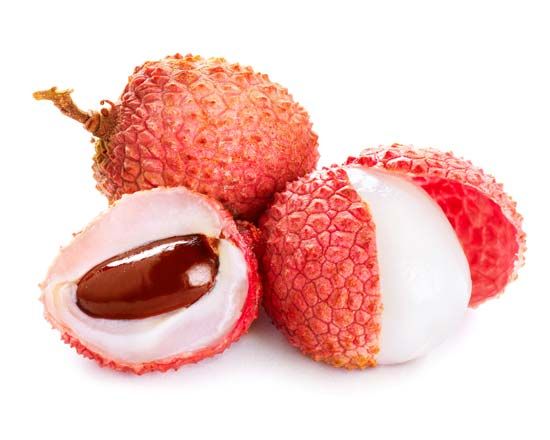
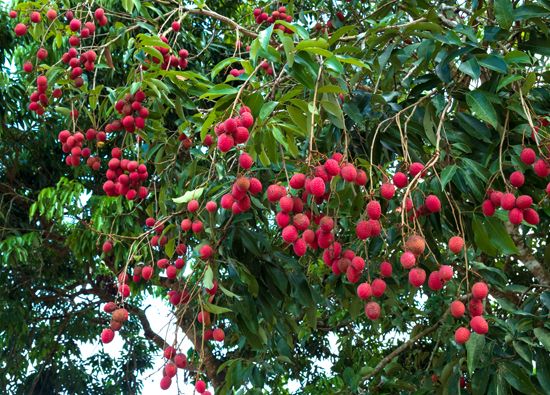
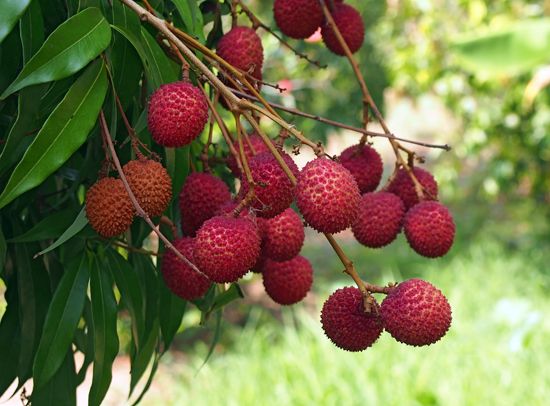
The fruit is a drupe featuring a strawberry-red, brittle rind that protects a translucent, sweet, and aromatic aril surrounding a single large seed.12
Are there any cultural or symbolic significances associated with lychees in different parts of the world?
The provided search results do not contain information regarding the cultural or symbolic significances of lychees in different parts of the world. While the lychee is noted as a favorite fruit of the Cantonese people since ancient times, the available documentation focuses on its botanical description, history of cultivation, and associated health risks rather than its symbolic or cultural roles.
Sorry, the Britannica knowledge base does not contain this information.
What are the potential health risks associated with consuming lychees?
Consuming lychees can pose serious health risks, particularly for children. The fruit and its seeds contain the toxins hypoglycin A and methylene cyclopropyl-glycin, which inhibit the body’s ability to synthesize glucose. This inhibition can lead to acute hypoglycemia, a condition characterized by dangerously low blood sugar levels.1
These toxins are found in higher concentrations in unripe fruits. The risk of developing hypoglycemic encephalopathy—a severe neurological condition—is significantly increased when the fruit is consumed by undernourished children or when it is eaten after a period of fasting. Cases of illness and death linked to these toxins have been documented in India, Bangladesh, and Vietnam.1
How long does it take for a lychee tree to bear fruit?
A lychee tree typically begins to bear fruit when it reaches three to five years of age.1
The tree, a member of the soapberry family, is commonly propagated through air layering—a process where a branch is encouraged to develop roots while remaining attached to the parent plant—or by seed. Once established in an orchard, these evergreen trees require consistent moisture around their roots but generally need very little pruning or specialized care to reach production maturity.1
Sources
- lychee — Encyclopædia Britannica
- lychee — Merriam-Webster
- lichee — Merriam-Webster
Published on · 2 min read