Hopbush
The term hopbush refers to various tropical and subtropical shrubs and trees belonging to the genus Dodonaea within the soapberry family (Sapindaceae).
What is Hopbush?
The term hopbush refers to various tropical and subtropical shrubs and trees belonging to the genus Dodonaea within the soapberry family (Sapindaceae).1
The most prominent species is Dodonaea viscosa, also known as akeake. This plant is a widely distributed shrub or small tree that can reach heights of approximately 4.5 meters (15 feet). It is often grown as an ornamental plant and is recognized for its narrow, glossy leaves that are coated in a sticky substance when young. The plant produces inconspicuous flowers in terminal clusters and bears fruit in the form of winged, papery capsules. Additionally, D. viscosa is noted for its resilience, showing a degree of tolerance to both drought and smog.12
What are the characteristics of the soapberry family?
The soapberry family, Sapindaceae, is a large group of flowering plants in the order Sapindales, comprising approximately 145 genera and 1,925 species. Primarily found in tropical and subtropical regions, the family is characterized by the following features:3
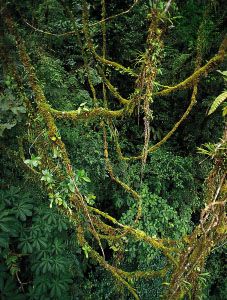
- Growth Habit: Members are predominantly woody plants, including trees, large shrubs, and lianas (woody climbers).3
- Leaves: The leaves are typically alternate and often pinnately compound, meaning leaflets are arranged along both sides of a central axis. Stipules are generally absent.43
- Flowers: Flowers are usually small, often fragrant, and insect-pollinated. They are typically arranged in terminal or axillary panicles or racemes. A nectar-secreting disk at the base of the pistil is a common feature.3
- Fruit: Fruits are diverse and may be fleshy, capsular, or winged samaras. Many fleshy fruits contain hard seeds that pass through the digestive tracts of birds and mammals, aiding in seed dispersal.3
- Economic Importance: The family includes species valued for edible fruits (such as lychee and rambutan), timber, and ornamental use. Some species, like the western soapberry, contain saponins used as soap.3
How do winged capsules help a plant spread its seeds?
Winged structures, including those found on capsules or as part of samaras, are specialized adaptations that facilitate wind dispersal (anemochory). By increasing the surface area of the fruit or seed relative to its weight, these wings allow the plant to catch air currents more effectively.789
When a winged fruit or seed is released, the structure acts as a sail or a propeller, slowing its descent and allowing the wind to carry it further away from the parent plant. In the case of one-winged samaras, such as those found on maple trees, the shape induces rotation, which further stabilizes the flight and extends the distance the seed can travel. This movement is crucial for the survival of the species, as it reduces competition between parent and offspring for resources and sunlight, while also enabling the colonization of new habitats.710811
Why is Dodonaea viscosa considered resistant to smog?
Dodonaea viscosa, commonly known as the hopbush or akeake, is a resilient shrub or small tree within the soapberry family (Sapindaceae). While it is widely recognized for its ability to withstand drought and smog, the specific physiological mechanisms behind its smog resistance are not detailed in the available literature. Its hardiness makes it a popular choice for landscaping in challenging urban environments where air quality may be compromised.2
Sources
- hopbush — Merriam-Webster
- hopbush — Encyclopædia Britannica
- soapberry — Encyclopædia Britannica
- Sapindales - Characteristic morphological features — Encyclopædia Britannica
- Sapindaceae — Merriam-Webster
- Sapindaceae — Encyclopædia Britannica
- Fruit - Wind dispersal — Encyclopædia Britannica
- Seed dispersal - Anemochory: wind dispersal — Encyclopædia Britannica
- Seed dispersal — Encyclopædia Britannica
- Seed - Dispersal by wind — Encyclopædia Britannica
- Angiosperm - Mechanisms of dispersal — Encyclopædia Britannica
- Plant - Fruits and seeds — Encyclopædia Britannica
Published on · 2 min read