Longan
The scientific name of the longan plant is Dimocarpus longan. It belongs to the soapberry family (Sapindaceae), which consists of a large group of primarily…
What is the scientific name of the longan plant, and which plant family does it belong to?
The scientific name of the longan plant is Dimocarpus longan. It belongs to the soapberry family (Sapindaceae), which consists of a large group of primarily tropical, woody plants.12
How does the longan fruit compare to its close relative, the lychee?
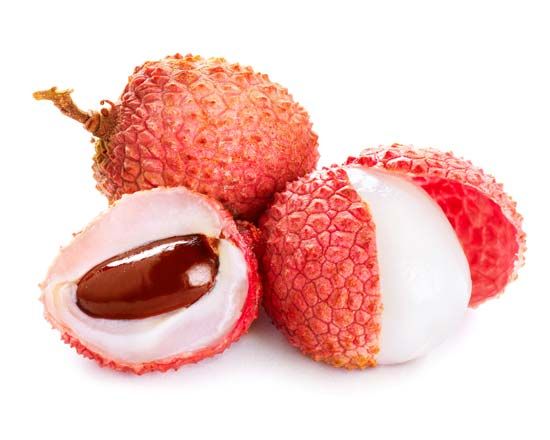
The longan (Dimocarpus longan) and the lychee (Litchi chinensis) are closely related tropical fruits belonging to the soapberry family (Sapindaceae). While they share a similar botanical structure—both featuring a single large seed surrounded by translucent, white, juicy flesh—they exhibit distinct physical and sensory characteristics.134
Key Comparisons
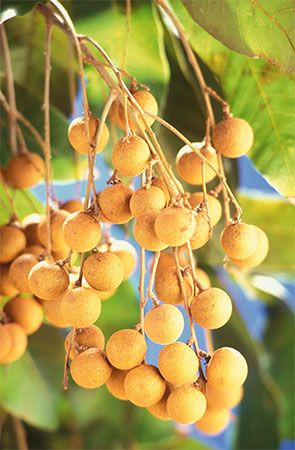
- Appearance: The lychee is typically oval to round with a strawberry-red, brittle outer skin. In contrast, the longan fruit is almost spherical with a yellowish-brown, thin, leathery skin.41
- Flavor: Both fruits are known for their aromatic and musky qualities. The longan is described as having a mildly sweet and musky flavor, while the fresh pulp of the lychee is similarly aromatic and musky, though it can become acidic and very sweet when dried.14
- Cultivation: Both trees are evergreen and native to Asia. They are commonly sold fresh, dried, or canned in syrup, and both are of significant local and commercial importance in their respective regions.14
What are some common pests and diseases that affect longan plants, and how can they be managed?
How is the longan related to the lychee?
The longan (Dimocarpus longan) and the lychee are closely related tropical fruits that both belong to the soapberry family (Sapindaceae).14
Botanically, they share significant similarities in their structure: both are produced by evergreen trees native to Asia and feature a single dark seed surrounded by translucent, juicy, white flesh. While the longan is often referred to as “dragon’s eye” due to its appearance, it is distinguished from the lychee by its yellowish-brown, leathery skin, whereas the lychee typically possesses a distinctively red, brittle exterior. Both fruits are widely consumed and are commonly available in fresh, dried, or canned forms.14
We could dive deeper into the botanical characteristics of the soapberry family or explore other tropical fruits within this group.
Sources
- longan — Encyclopædia Britannica
- Sapindaceae — Merriam-Webster
- Sapindaceae — Encyclopædia Britannica
- longan — Merriam-Webster
- lychee — Encyclopædia Britannica
Published on · 2 min read