Little Alfold
The Little Alfold basin, located in northwestern Hungary and extending into Austria and Slovakia, has significantly shaped the development of its surrounding…
How has the Little Alfold basin influenced the cultural and economic development of the surrounding regions?
The Little Alfold basin, located in northwestern Hungary and extending into Austria and Slovakia, has significantly shaped the development of its surrounding regions through its fertile landscape and strategic location.
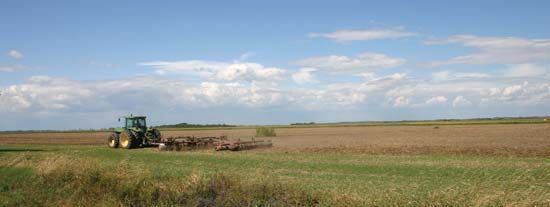
Economically, the basin is exceptionally rich, supporting advanced agricultural production that includes wheat, corn, rye, barley, sugar beets, and various table vegetables, alongside orchards and vineyards. Livestock breeding, including dairy cattle, pigs, horses, and poultry, is also a vital component of the regional economy. Because the area is more favorably endowed with natural resources than the Great Alfold, it has fostered more advanced industrial development.12
Culturally, the region is anchored by its major city, Győr, which is noted for its Baroque architecture. The basin’s geography, defined by the Danube River and its tributaries, has historically facilitated settlement and connectivity across borders.21
Are there any significant environmental concerns or conservation efforts related to the Little Alfold basin?
Sorry, the Britannica knowledge base does not contain information regarding specific environmental concerns or conservation efforts related to the Little Alfold basin.
What is the significance of the Little Alfold basin in terms of European geography?
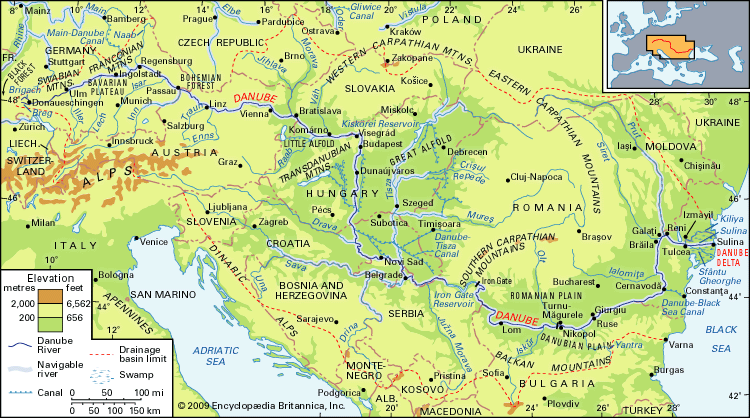
The Little Alfold basin, also known as the Little Hungarian Plain or Kisalföld, is a significant geographical feature in Central Europe. Covering approximately 3,000 square miles (8,000 square km), it spans northwestern Hungary and extends into Austria and Slovakia, where it is referred to as the Podunajská Lowland.1
Its geographical significance is defined by several key factors:
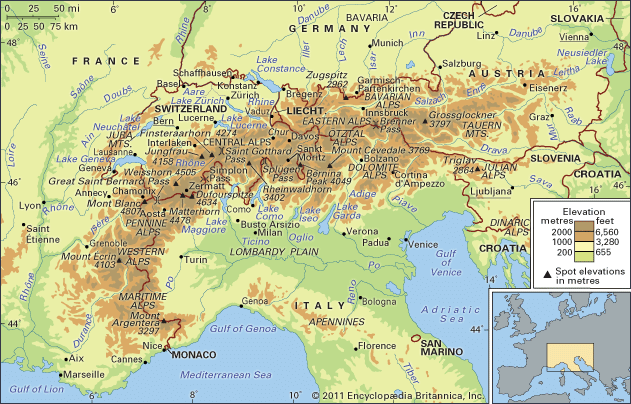
- Strategic Location and Boundaries: The basin is framed by major European mountain systems, including the foothills of the Austrian Alps to the west, the Carpathians to the north, and the Transdanubian highlands to the south and east.1
- Hydrological Role: The Danube River serves as the primary drainage artery. Upon emerging from the Hungarian Gates Gorge near Bratislava, the river slows, leading to significant sediment deposition that has formed large islands and influenced the local landscape.4
- Agricultural Productivity: The basin is an exceptionally fertile region, supporting a diverse range of crops including wheat, corn, sugar beets, and vineyards, which are vital to the regional economy.1
- Structural Formation: The basin is a subsiding, basinlike structure filled with fluvial deposits, representing a distinct lowland counterpart to the larger Great Alfold to the southeast.15
What natural resources are found in the Little Alfold basin, and how are they utilized?
The primary natural resources of the Little Alfold basin are its exceptionally fertile soil and abundant water supplies, which are essential to the region’s economy.1
Agricultural Utilization
The basin’s rich land is highly productive, supporting a wide variety of crops and livestock. Key agricultural outputs include:
- Crops: Wheat, corn (maize), rye, barley, sugar beets, potatoes, fodder crops, table vegetables, and tobacco.1
- Specialized Farming: The region features extensive orchards and vineyards.1
- Livestock: The area supports the breeding of dairy cattle, pigs, horses, and poultry.1
Water Resources
Water is a critical resource for the basin, provided by the Danube River and its tributaries, such as the Rába River and the Váh River. These water systems are utilized for:1
- Irrigation: Supporting the basin’s intensive agricultural activities.2
- Industrial and Residential Use: Providing necessary water supplies for settlements within the region.2
While the broader Hungarian landscape contains various mineral deposits—such as manganese in the Bakony Mountains and modest fossil fuel reserves—the Little Alfold is primarily defined by its agricultural and hydrological wealth.16
Sources
- Little Alfold — Encyclopædia Britannica
- Great Alfold — Encyclopædia Britannica
- Hungary - Traditional regions — Encyclopædia Britannica
- Hungary - Relief — Encyclopædia Britannica
- Danube River - Physiography — Encyclopædia Britannica
- Danube River - The economy — Encyclopædia Britannica
- Hungary - Resources and power — Encyclopædia Britannica
Published on · 3 min read