Llama
The llama (Lama glama) is the largest of the four lamoid species. As members of the camel family, they are slender-bodied animals characterized by long legs…
What are the main physical characteristics of llamas?
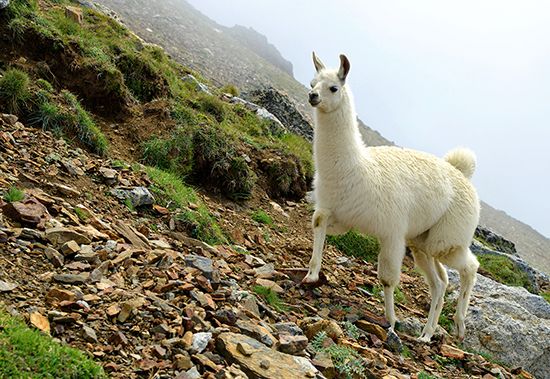
The llama (Lama glama) is the largest of the four lamoid species. As members of the camel family, they are slender-bodied animals characterized by long legs, long necks, small heads, and large, banana-shaped ears. Unlike camels, they do not have humps.12
Key physical attributes include:
- Size: They average 120 cm (47 inches) at the shoulder. Males typically weigh between 136 and 181.4 kg (300–400 pounds), while females weigh between 104.3 and 158.7 kg (230–350 pounds).12
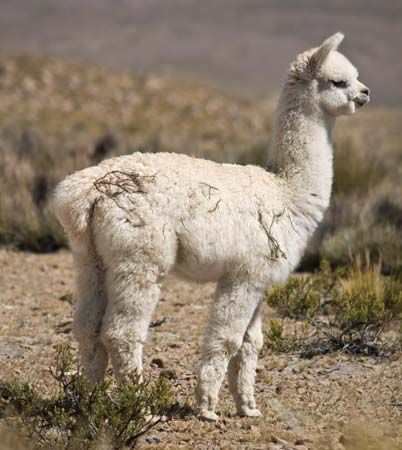
- Face: They possess elongated faces, which distinguishes them from the smaller, blunt-faced alpaca.2
- Coat: Their fleece consists of coarse guard hairs and a shorter, crimped insulating undercoat. While often white, they can also be solid black, brown, or variegated with markings.1
- Adaptations: Llamas are genetically adapted to high-altitude environments. Unlike humans, who acclimatize to low oxygen levels, llamas possess hemoglobin with a high oxygen affinity, allowing for efficient blood saturation at lower partial pressures of oxygen.3

How are llamas related to other camelid species like alpacas and camels?
Llamas, alpacas, and camels are all members of the family Camelidae, a group of hoofed mammals that originated in North America approximately 40 million years ago. While they share a common ancestry, their evolutionary paths diverged millions of years ago.2
The Lamoid Group
Llamas and alpacas belong to a collective group known as lamoids, which also includes their wild cousins, the guanaco and the vicuña.41
- Ancestry: Genetic studies have confirmed that the llama is the domesticated descendant of the wild guanaco, while the alpaca is descended from the vicuña.1
- Interbreeding: A unique characteristic of these four South American species is their ability to interbreed and produce fertile offspring.41
Relationship to Camels
The lineage that led to modern Old World camels (the dromedary and the Bactrian camel) diverged from the South American camelid lineage between 11 million and 25 million years ago.2
While they share the same family, there are distinct physical differences:
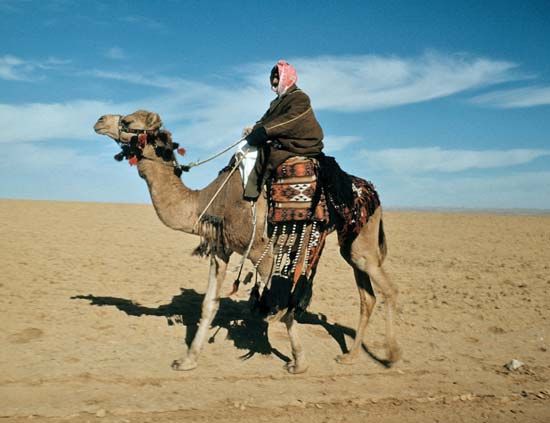
- Humps: Unlike camels, llamas and other lamoids do not possess humps.1
- Anatomy: Lamoids are generally more slender-bodied with longer necks and legs compared to the robust build of camels.12
- Adaptation: Both groups have evolved specialized physiological traits to survive in harsh environments, such as the camel’s ability to tolerate extreme dehydration and the llama’s high-altitude adaptations.12
What are the primary uses of llamas in both ancient and modern times?
Llamas have served as essential companions and resources for human populations in the Andes for approximately 6,500 years. Their utility spans both historical civilizations, such as the Inca, and modern agricultural practices.2
Primary Uses
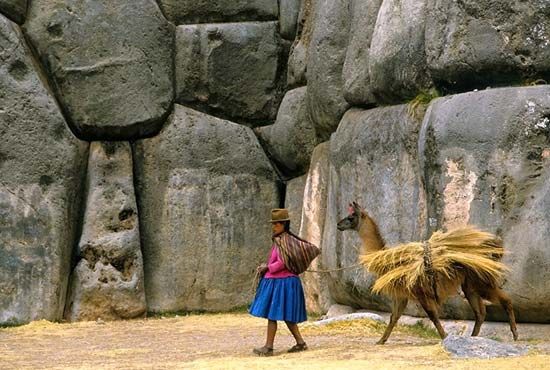
- Pack Animals: Due to their endurance and ability to carry loads of 45 to 60 kg (99 to 132 pounds) over rugged terrain, llamas have long been the primary transport animals on Andean plateaus and mountains. They were integral to the logistics of the Inca highway system, with travel units specifically adjusted to their pace.127
- Fleece and Textiles: Llamas are sheared for their wool, which is used in knitwear, woven outerwear, rugs, and rope. While their hair is coarser than that of the alpaca, it remains a valuable local resource.21
- Subsistence and Materials: Historically and currently, llamas provide a source of food, hides, and tallow for candles. Additionally, their dried dung is utilized as fuel in high-altitude regions where wood is scarce.2
- Livestock Protection: In modern settings, llamas are often employed as guard animals to protect other livestock, such as sheep and alpacas, from predators.1
What is a llama?
The llama (Lama glama) is a domesticated livestock species and a member of the camel family, Camelidae. It is the largest of the four lamoid species, which also include the alpaca, guanaco, and vicuña.21
Unlike their Old World camel relatives, llamas do not have humps. They are characterized by their slender bodies, long legs and necks, and elongated faces with banana-shaped ears. As descendants of the wild guanaco, they have been utilized by humans for approximately 6,500 years, primarily as pack animals capable of carrying significant loads across rugged Andean terrain.182
While generally gentle, llamas are known to spit, kick, or lie down if they are mistreated or overloaded. Beyond their role in transportation, they are also a source of wool, food, and hides, and they are sometimes used as guard animals for other livestock.21
Sources
- llama — Encyclopædia Britannica
- What’s the Difference Between Llamas and Alpacas? — Encyclopædia Britannica
- human respiratory system - High altitudes — Encyclopædia Britannica
- guanaco — Encyclopædia Britannica
- camel - Natural history — Encyclopædia Britannica
- Bactrian camel — Encyclopædia Britannica
- Pre-Columbian civilizations - Inca technology and intellectual life — Encyclopædia Britannica
- llama — Merriam-Webster
Published on · 4 min read