Ruminant
Ruminants are mammals belonging to the suborder Ruminantia, characterized by their unique digestive process involving a multichambered stomach and the…
What are some common examples of ruminant animals?
Ruminants are mammals belonging to the suborder Ruminantia, characterized by their unique digestive process involving a multichambered stomach and the regurgitation of food, known as cud, for further chewing.1
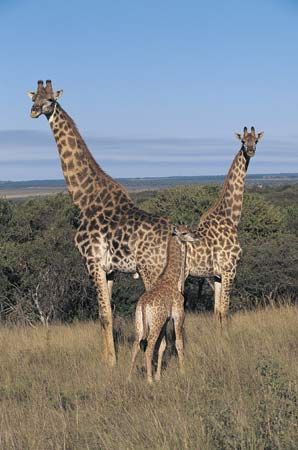
Common examples of ruminant animals include:
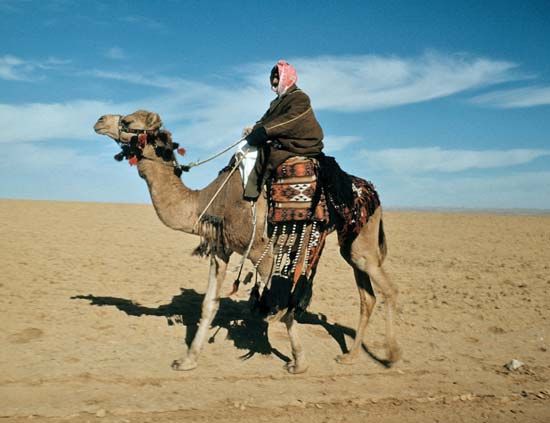
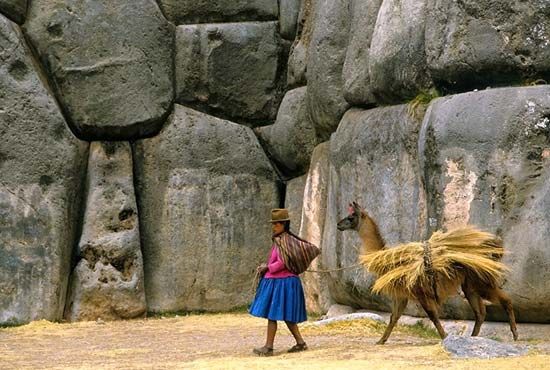
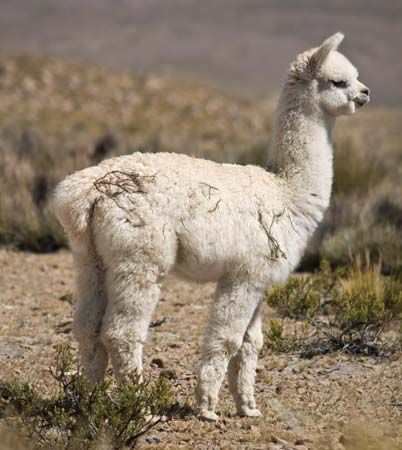
It is important to note that while animals like camels, llamas, and alpacas also chew cud, they possess a three-chambered stomach rather than the four-chambered stomach typical of true ruminants; consequently, they are often classified as pseudoruminants.1
What role do ruminants play in agriculture and human food production?
Ruminants, such as cattle, sheep, and goats, play a vital role in global agriculture by converting pasture forage and by-product feeds—which humans cannot digest—into high-quality protein sources like meat, milk, and wool. Because more than 60 percent of the world’s farmland consists of meadows and pasture, these animals are essential for utilizing land that is otherwise unsuitable for crop production.5
Historically, ruminants have served as “all-purpose” animals, providing draft power, leather, and a reliable food supply that allows nations to store nutrients for emergencies. However, modern intensive farming of these animals presents significant ethical and environmental challenges. Ruminants are major sources of methane and nitrous oxide, which are potent greenhouse gases driving the climate crisis. Furthermore, intensive operations can lead to water pollution from manure and require vast amounts of land and water resources. Balancing the nutritional benefits of ruminant products with the urgent need to mitigate their environmental impact remains a critical issue for the future of global food systems.5167
What is the evolutionary history of ruminants?
The evolutionary history of ruminants is rooted in the order Artiodactyla, which likely descended from early generalized mammals known as condylarths. By the Eocene Epoch, these animals were distinct, with a possible ancestor being Archaeomeryx, a small animal from China that already exhibited a fused naviculo-cuboid bone in the ankle.1
Development and Diversification
Ruminants evolved as part of successive waves of artiodactyls, each better adapted to changing environments. While primitive four-toed suiforms (pig-like ancestors) were once dominant, functionally two-toed ruminants succeeded them in the Miocene Epoch.1
- Digestive Specialization: The ruminant digestive system, characterized by a multichambered stomach, evolved to allow these animals to extract nutrients from fibrous plant material that other mammals could not digest. This adaptation provided a significant competitive advantage as grasslands expanded during the middle Miocene due to cooling, seasonal climates.9
- Bovid Radiation: Bovids—the most diverse family of ruminants—appeared in Eurasia about 18 million years ago. Early forms like Eotragus were small forest dwellers. As habitats opened up, bovids radiated into various niches, eventually migrating into Africa via land bridges.9
- The Golden Age: During the Pliocene and Pleistocene epochs, ruminants reached a peak in diversity and abundance. While many species went extinct following the Ice Age, others survived, particularly in the tropical refuges of sub-Saharan Africa.9
Interestingly, evidence suggests that camels evolved their ruminating habit independently of true ruminants, as their three-chambered stomach structure differs significantly from the four-chambered system of the suborder Ruminantia.2
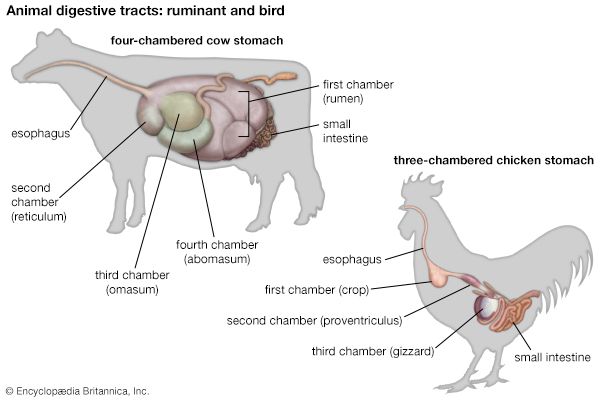
What is the unique digestive system of ruminants and how does it work?
Ruminants, such as cattle, sheep, and deer, possess a specialized digestive system that allows them to extract nutrients from fibrous plant material like cellulose, which most mammals cannot digest on their own.112
The Four-Chambered Stomach
In most ruminants, the stomach is divided into four distinct compartments:112
- Rumen: The largest chamber, where ingested plant material is stored and softened. Here, a complex community of bacteria and protozoans ferments the cellulose, breaking it down into absorbable fatty acids.1112
- Reticulum: Works in tandem with the rumen to sort food particles.
- Omasum: Absorbs water and remaining fatty acids.12
- Abomasum: Often called the “true stomach,” this chamber secretes hydrochloric acid and digestive enzymes, functioning similarly to the stomach of non-ruminant mammals.12
The Process of Rumination
Ruminants eat quickly and later regurgitate the partially fermented material, known as cud. By chewing the cud, the animal further breaks down the plant fibers, increasing the surface area for microbial action. This process also allows the animal to synthesize essential microbial protein and vitamins, which are then digested in the abomasum and small intestine.11112
Sources
- ruminant — Encyclopædia Britannica
- artiodactyl - Abundance and distribution — Encyclopædia Britannica
- Cow - Domestic cattle — Encyclopædia Britannica
- Livestock — Encyclopædia Britannica
- Livestock farming — Encyclopædia Britannica
- Intensive animal farming - Environmental impacts — Encyclopædia Britannica
- Milk - Con 2: Dairy milk is bad for the environment. — Encyclopædia Britannica
- Cow - Domestication and economic production — Encyclopædia Britannica
- artiodactyl - Evolution and paleontology — Encyclopædia Britannica
- bovid - Evolution and diversification — Encyclopædia Britannica
- artiodactyl - Digestive system — Encyclopædia Britannica
- nutrition - Herbivores — Encyclopædia Britannica
Published on · 4 min read