Locust
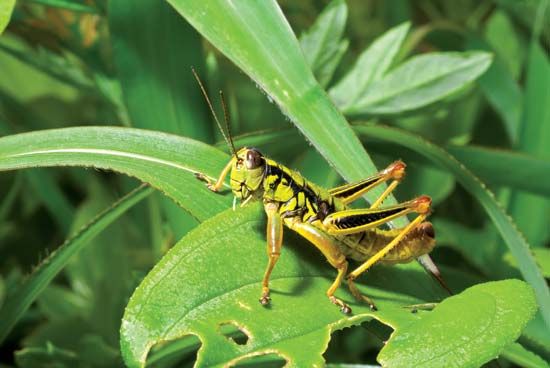
Locusts are a group of short-horned grasshoppers (family Acrididae) distinguished by their ability to undergo a dramatic physiological and behavioral…
What are the main characteristics that distinguish locusts from other insects?
Locusts are a group of short-horned grasshoppers (family Acrididae) distinguished by their ability to undergo a dramatic physiological and behavioral transformation known as phase theory. Unlike most other insects, locusts exist in two distinct phases:12
- Solitary Phase: The normal state, characterized by sluggish behavior, low metabolic rates, and coloration that blends with the environment.1
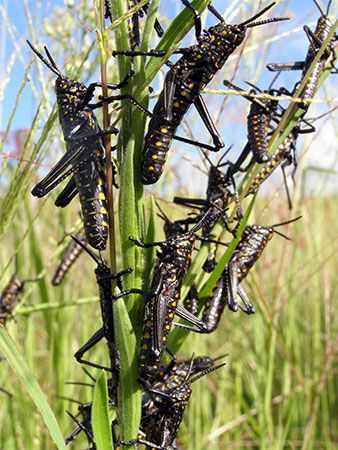
- Gregarious Phase: Triggered by crowding, this phase features high metabolic rates, nervous and active behavior, and a tendency to gather in massive, migratory swarms to gather in massive, migratory swarms.12
Physically, these phases differ significantly. Gregarious adults typically possess longer wings and broader shoulders compared to their solitary counterparts. This transformation is driven by hormonal changes and pheromones induced by population density, which also synchronize reproductive maturation. While other insects may be called “locusts”—such as the periodical cicada—true locusts are defined by this unique capacity to shift between solitary and destructive, swarming forms in response to environmental fluctuations.12
How do locusts transition from solitary to gregarious phases, and what triggers this change?
The transition of locusts from a solitary to a gregarious phase is a physiological response to environmental stress and population density, governed by complex hormonal and chemical signals.21
The Trigger: Environmental Fluctuations
The process typically begins when a population expands during a series of favorable seasons with abundant food. When environmental conditions subsequently turn unfavorable, the locusts are forced to congregate in remaining patches of suitable habitat. This crowding is the primary catalyst for the shift.21
The Mechanism: Hormones and Pheromones
As locusts are forced into close proximity, they are exposed to increased physical contact and chemical secretions from other individuals. This interaction triggers a cascade of physiological changes:2
- Hormonal Shifts: Crowding stimulates specific hormones that accelerate reproductive maturation in both males and females.2
- Chemical Signaling: The presence of mature males and their secretions encourages females to mature rapidly, leading to a population explosion.2
- Phase Transformation: Nymphs maturing in these crowded conditions develop into the gregarious type. Conversely, if a gregarious locust matures in isolation, its offspring will revert to the solitary phase.1
This transformation results in the distinct gregarious form, characterized by increased restlessness, higher metabolic rates, and a tendency to form destructive migratory swarms.21
What are the different species of locusts, and how do they differ from each other?
The term “locust” is often used to describe two very different groups of organisms: certain short-horned grasshoppers (family Acrididae) and a genus of flowering trees (genus Robinia).
Locust Insects
True locusts are acridids capable of shifting between a solitary phase and a destructive, swarming gregarious phase. Notable species include:
- Migratory locust (Locusta migratoria): Possesses the widest range of any acridid, spanning grasslands across Africa, Eurasia, the East Indies, Australia, and New Zealand.
- Desert locust (Schistocerca gregaria): Inhabits dry grasslands and deserts from Africa to the Punjab; known for forming massive, high-flying swarms.
- Mediterranean Species: The Italian locust (Calliptamus italicus) and the Moroccan locust (Dociostaurus maroccanus) are significant agricultural pests in the Mediterranean region.
- African Species: The brown locust (Locustana pardalina) and red locust (Nomadacris septemfasciata) are noted for being extremely destructive in South Africa.
- American Species: The South American locust (Schistocerca paranensis) is the primary migratory species in its region, while the Rocky Mountain locust (Melanoplus spretus) is historically famous for devastating 19th-century prairie farms.
Locust Trees
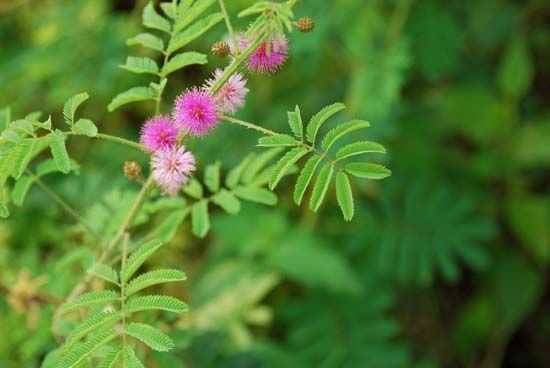
The genus Robinia consists of about 10 species of deciduous trees and shrubs in the pea family (Fabaceae). The black locust (Robinia pseudoacacia) is widely cultivated as an ornamental, while the honey locust (Gleditsia triacanthos) is also commonly used in landscaping.
How does the phase theory explain the transformation between solitary and gregarious locusts?
The phase theory explains that certain locust species possess two distinct forms: a solitary phase and a gregarious phase. These phases are not separate species but rather physiological responses to environmental fluctuations.12
The Transformation Process
The solitary phase is the species’ normal state. Transformation into the gregarious phase is triggered by crowding, which typically occurs when a population expands during favorable seasons and is subsequently forced into restricted, marginal habitats as conditions worsen.12
- Physiological and Behavioral Shifts: When a solitary nymph matures in the presence of high population density, it undergoes a transformation. It develops the gregarious phenotype, characterized by distinct black and yellow or orange coloration, increased activity, and higher metabolic rates.1
- Hormonal and Chemical Triggers: Crowding exposes individuals to physical contact and chemical secretions from others. These interactions stimulate specific hormones that accelerate reproductive maturation in both males and females, leading to a rapid population explosion.12
- Reversibility: This process is reversible. If a gregarious locust matures in isolation, its offspring will revert to the solitary phase.1
Sources
- locust — Encyclopædia Britannica
- Orthoptera - Hormones — Encyclopædia Britannica
- locust — Encyclopædia Britannica
Published on · 4 min read