Bustard
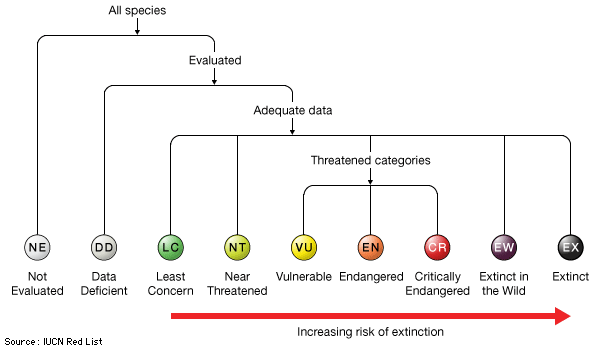
Conservation efforts for bustard species are critical due to their status as endangered or critically endangered animals, primarily threatened by habitat…
What conservation efforts are in place to protect bustard species?
Conservation efforts for bustard species are critical due to their status as endangered or critically endangered animals, primarily threatened by habitat loss, infrastructure development, and hunting.12
Key initiatives include:
- Project Bustard: Launched by the Indian government in 2012, this national program is modeled after Project Tiger. It focuses on protecting the great Indian bustard, the Bengal florican, and the lesser florican by preserving their habitats from further degradation.1
- Reintroduction Programs: Efforts are underway to restore populations in areas where they have been extirpated. For example, a reintroduction program for the great bustard began in the United Kingdom in 2004.2
- Targeted Conservation Focus: Countries like Morocco have prioritized the great bustard in national conservation programs since 2016 to mitigate the impact of environmental disruptions.2
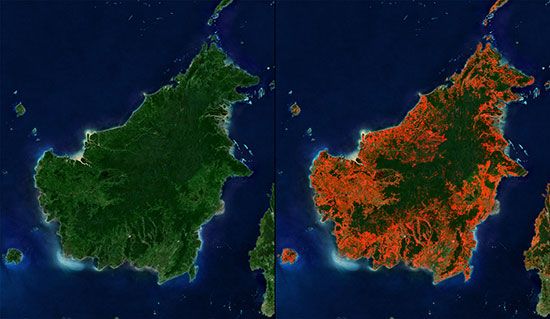
These programs aim to address the severe population declines caused by the transformation of grasslands into mechanized farmland and the fragmentation of their natural range.12
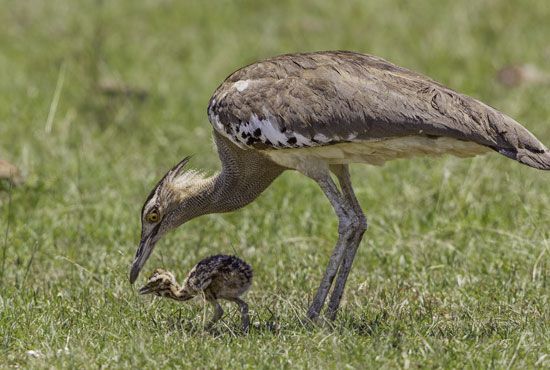
What do bustards primarily eat and how do they forage for food?
Bustards are omnivores that forage opportunistically, meaning they consume whatever palatable food is available in their immediate environment. Their diet and foraging habits are influenced by seasonal availability and the age of the bird.14
Dietary Composition
- Plant Matter: Bustards consume a variety of vegetation, including young shoots, flowers, leaves, and seeds. During the coldest and driest months of the year, seeds—such as wheat and peanuts—often constitute the largest portion of their diet.41
- Animal Matter: They prey on a wide range of small animals, including arthropods, worms, small reptiles, and small mammals like mice and voles. During the summer monsoon season, insects such as locusts, crickets, and beetles make up the bulk of their intake.14
Foraging Behavior
Bustards are diurnal, meaning they are active during the day, and they forage on the ground in open habitats like grasslands, scrublands, and grain fields. As they age, the proportion of plants in their diet typically increases. Because they lack a hind toe, they are adapted for walking and running on the ground rather than perching in trees, which dictates their terrestrial foraging style.124
How many species of bustards exist, and which ones are considered the largest?
There are approximately 26 species of bustards in the family Otididae.4
Regarding the largest species, there is some distinction in the literature:
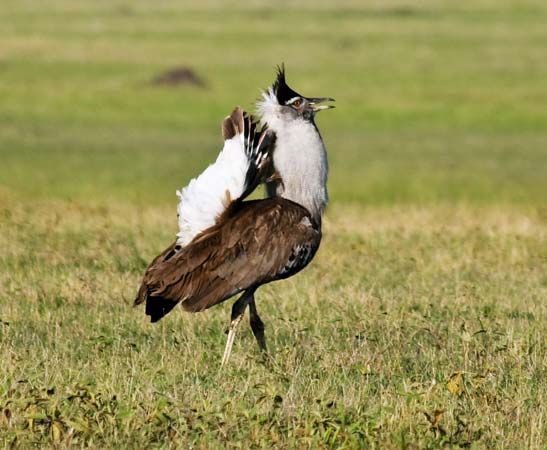
- Kori bustard (Ardeotis kori): This species is recognized as the largest member of the bustard family and is considered the world’s heaviest living flying animal. Adult males can weigh 18.1 kg (40 pounds) or more and reach heights of up to 1.3 meters (4.2 feet).5
- Great bustard (Otis tarda): Often cited as the largest European land bird, it is also frequently described as the heaviest extant flying bird in the world. While typical males weigh up to 14 kg (31 pounds), exceptionally large specimens have been recorded weighing as much as 21 kg (46 pounds).24
Both species are large, ground-dwelling birds adapted for running, characterized by their lack of a hind toe, which prevents them from perching in trees.254
How do bustards communicate and what is their mating behavior like?
Bustards communicate and attract mates through a combination of striking visual displays and specialized vocalizations. Because they do not form long-term pair bonds, their reproductive strategies often involve elaborate performances designed to entice females.61
Mating Behavior
Bustards exhibit diverse mating systems, including polygyny (where one male mates with multiple females) and lekking. In a lekking system, males gather at communal sites to perform for attending females. In other instances, solitary males attract females to their territory using loud, resonant calls. Once mating occurs, the male departs, and the female assumes the role of the sole caregiver for the eggs and chicks.641
Visual and Vocal Displays
- Vocalizations: Larger species, such as the great bustard and kori bustard, possess a specialized gular sac (neck pouch) that they inflate to produce loud, low-pitched booming calls. The Australian bustard’s call has been described as resembling the distant roar of a lion.76
- Visual Displays: During the breeding season, males undergo a dramatic transformation. They puff out their feathers, inflate their neck pouches, and raise their wings and tails until they meet over their backs, creating the appearance of an enormous “feather ball” to impress females.76
- Aerial Displays: Smaller species, such as the crested bustard, perform aerial displays, rising into the air before planing steeply back to the ground.7
Sources
- great Indian bustard — Encyclopædia Britannica
- Great bustard: Top Questions — Encyclopædia Britannica
- Great bustard — Encyclopædia Britannica
- Bustard — Encyclopædia Britannica
- Kori bustard — Encyclopædia Britannica
- Gruiform - Courtship — Encyclopædia Britannica
- Kori bustard: Top Questions — Encyclopædia Britannica
- Gruiform - Nesting — Encyclopædia Britannica
Published on · 4 min read