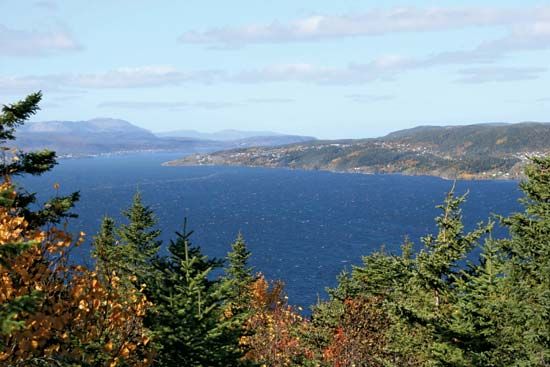
Long Range Mountains
The Long Range Mountains significantly influence the local environment of western Newfoundland by acting as a physical barrier and a funnel for atmospheric…
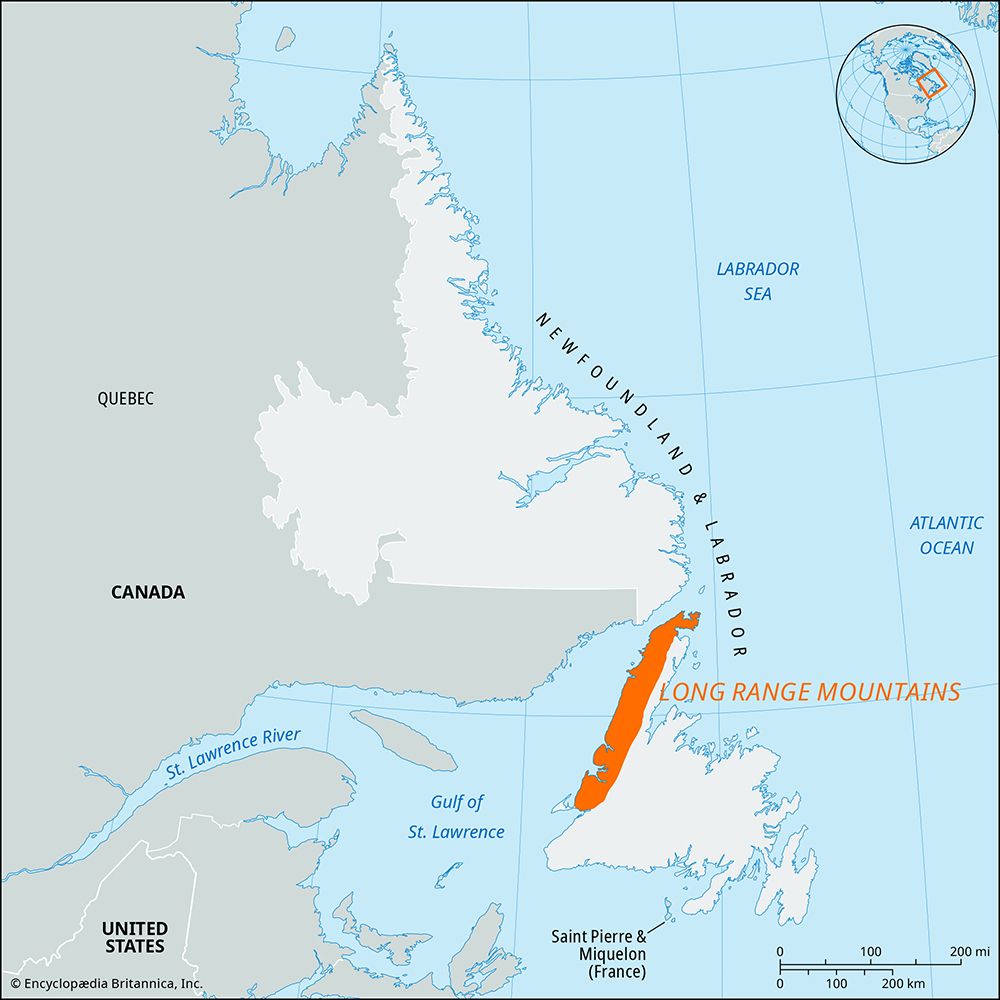
How do the Long Range Mountains affect the climate and ecosystem of Newfoundland?
The Long Range Mountains significantly influence the local environment of western Newfoundland by acting as a physical barrier and a funnel for atmospheric conditions.
Regarding climate, the southern portion of the range is particularly notable for experiencing violent winds, which can reach speeds of up to 120 miles (193 km) per hour. These extreme gusts are caused by the mountains funneling air currents directly from the open sea.1
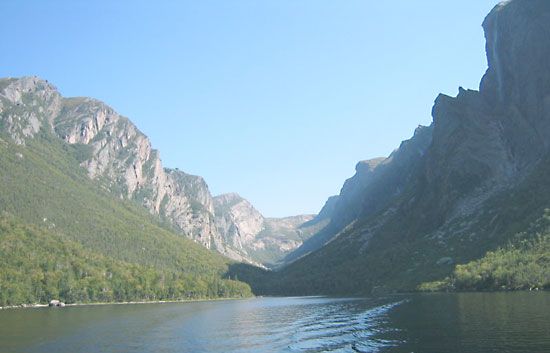
In terms of the ecosystem, the mountains are densely forested, providing a vital resource that supports regional industries such as pulp and paper milling. The rugged terrain, characterized by an ancient peneplain, features a diverse landscape of fjords, lakes, and wooded valleys, particularly within Gros Morne National Park. While the mountains rise abruptly from the western coastal plain, they also serve as the headwaters for the Humber River, which plays a key role in the island’s drainage systems.12
What is the highest elevation in the Long Range Mountains?
The highest elevation in the Long Range Mountains is 2,670 feet (814 meters), which is located in the Lewis Hills, southwest of Corner Brook.1
While Gros Morne is a prominent feature within the range, it reaches an elevation of 2,644 feet, making it slightly lower than the maximum height found in the Lewis Hills.1
What role do the Long Range Mountains play in the culture and economy of Newfoundland and Labrador?
The Long Range Mountains play a significant role in the economy and landscape of Newfoundland, primarily through their natural resources and tourism potential.
Economic Contributions
The mountains are densely forested, providing a vital economic base for the island. This timber supports large-scale pulp and paper milling operations, most notably in the city of Corner Brook, which serves as a central hub for this industry. While the range is not highly mineralized compared to other regions of the province, its geography—specifically the Humber River which rises in the range—facilitates drainage and water management across the western coastal plain.12
Cultural and Environmental Significance
Culturally and recreationally, the mountains are defined by Gros Morne National Park. This area preserves the range’s dramatic scenery, including fjords, lakes, and ancient geological formations, which are central to the region’s identity and tourism sector. The rugged terrain also presents unique challenges; the southern sections are known for extreme wind conditions, which have long influenced local travel and infrastructure planning.1
Are there any significant protected areas or national parks within the Long Range Mountains?
The most significant protected area within the Long Range Mountains is Gros Morne National Park. Established in 1973, this park covers 458,000 acres (185,500 hectares) and serves as a primary site for preserving the range’s unique geological features, including its ancient mountains, fjords, and wooded valleys.51
The park takes its name from Gros Morne Peak, which stands at 2,644 feet (806 meters) and serves as the central mountain feature of the protected area. Beyond its mountainous terrain, the park encompasses a diverse landscape that includes beaches, shifting dunes, and tidal inlets, providing a comprehensive look at the natural environment of western Newfoundland.51
Sources
- Long Range Mountains — Encyclopædia Britannica
- Newfoundland and Labrador - Relief, drainage, and soils — Encyclopædia Britannica
- Longs Peak — Encyclopædia Britannica
- Mount Elbert — Encyclopædia Britannica
- Gros Morne National Park — Encyclopædia Britannica
- Gros Morne National Park — Merriam-Webster
- Rocky Mountain National Park — Encyclopædia Britannica
- Kluane National Park and Reserve — Encyclopædia Britannica
- Waterton Lakes National Park — Encyclopædia Britannica
Published on · 2 min read