Longs Peak
Longs Peak is a prominent mountain located in the Front Range of the Rocky Mountains in Boulder County, Colorado, U.S.
What is Longs Peak?
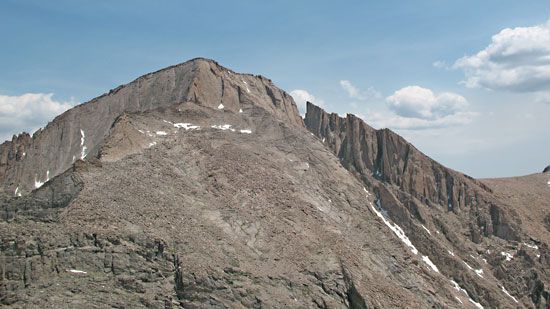
Longs Peak is a prominent mountain located in the Front Range of the Rocky Mountains in Boulder County, Colorado, U.S.1
Standing at an elevation of 14,259 feet (4,346 metres), it holds the distinction of being the highest peak within Rocky Mountain National Park and serves as the northernmost “fourteener” in the state of Colorado. The mountain was named in honor of Major Stephen H. Long, an American army officer and explorer who first encountered the peak in 1820. Today, the mountain is a popular destination for outdoor enthusiasts, with several hiking trails available that lead to its summit.1
What is a ‘fourteener’ in mountaineering?
In the context of mountaineering, a fourteener is defined as a mountain peak that reaches an elevation of at least 14,000 feet (approximately 4,267 meters) above sea level.1
The term is frequently used in regions with high-altitude terrain, such as Colorado, where climbers often seek to summit these specific peaks. While the word also has a historical definition in literature referring to a verse consisting of 14 syllables, its common usage in outdoor recreation is strictly tied to this elevation threshold.31
Who was Major Stephen H. Long?
Major Stephen H. Long was an American army officer and explorer best known for his 1820 expedition into the American West. During his travels, he encountered the prominent mountain in Colorado that now bears his name, Longs Peak.1
Long is also historically significant for his characterization of the Great Plains as the “Great American Desert.” Although he did not explore the true North American Desert, his description of the region as an arid wasteland captured the American public’s imagination and influenced early perceptions of the Western frontier.4
What wildlife lives in Rocky Mountain National Park?
Rocky Mountain National Park, located in north-central Colorado, supports a diverse array of wildlife across its montane, subalpine, and alpine tundra ecosystems.5
The park is home to several large mammals, including:
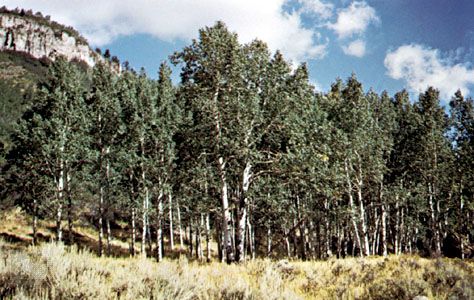
In addition to these species, the park hosts a wide variety of birds. The region’s varied habitats—ranging from dense forests of aspen, fir, pine, and spruce to high-altitude tundra—provide essential environments for this animal life.5
Sources
- Longs Peak — Encyclopædia Britannica
- Pikes Peak — Encyclopædia Britannica
- fourteener — Merriam-Webster
- North American Desert - Study and exploration — Encyclopædia Britannica
- Exploring 7 of Earth’s Great Mountain Ranges - Rocky Mountains — Encyclopædia Britannica
- Rocky Mountain National Park — Encyclopædia Britannica
- Rocky Mountains - Animal life — Encyclopædia Britannica
Published on · 2 min read