Longhair
While cats are naturally fastidious groomers, their specific needs vary significantly based on coat type.
How does the grooming routine for longhair cats differ from that of shorthair cats?
While cats are naturally fastidious groomers, their specific needs vary significantly based on coat type.
Longhaired Cats
Longhairs require frequent brushing to prevent painful tangles and mats, particularly around the ears, under the arms, on the belly, and along the back of the legs. Breeds like the Persian, Norwegian Forest Cat, and Maine Coon often need daily or near-daily attention. For these cats, stainless steel combs are recommended over slicker brushes, as they are more effective at reaching the base of the coat to prevent matting.1
Shorthaired Cats
Grooming requirements for shorthaired breeds depend on their coat density:
- Extremely short hair: Breeds like the Siamese have little undercoat and require minimal grooming, except during seasonal shedding periods.2
- Medium-length/Dense undercoat: Breeds such as the British Shorthair require regular, year-round grooming to prevent matting.2
Regardless of breed, regular grooming helps remove loose hair, prevents hairballs, and allows owners to detect health issues like lumps or abscesses early.3
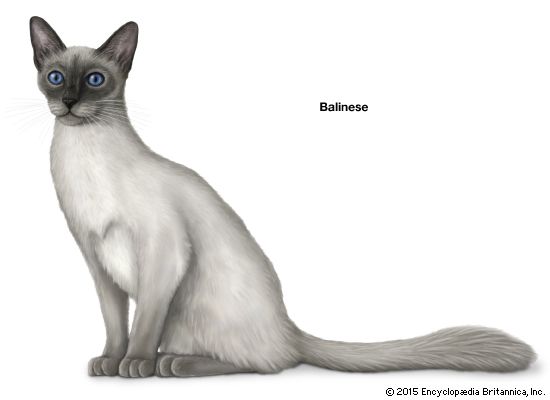
What are the main characteristics that distinguish longhair cat breeds?
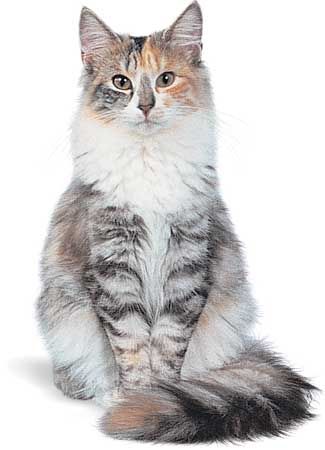
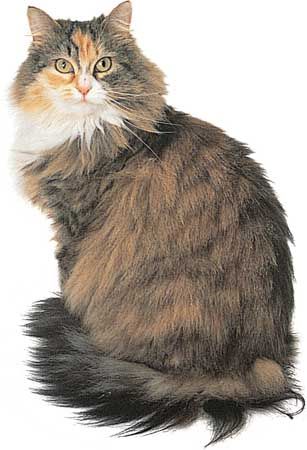
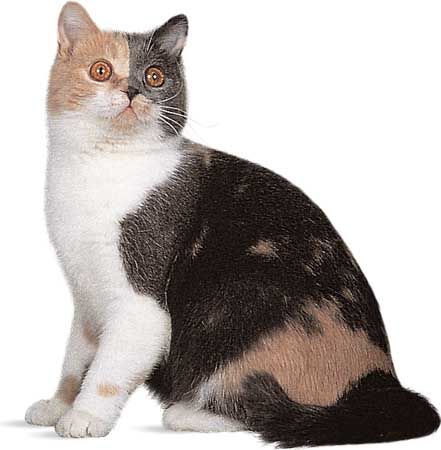
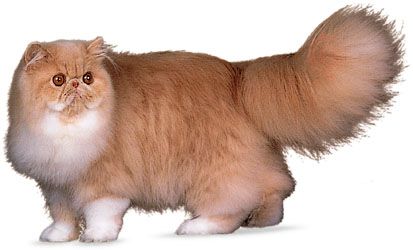
Longhair cats are primarily defined by their long, soft, and flowing coats, which often form a heavy ruff around the neck. While the term is sometimes used to describe a wide variety of breeds, these cats are generally characterized by their luxurious fur and diverse color patterns, ranging from solid colors to complex markings like tabby, calico, and tortoiseshell.4
Beyond their coat, longhair breeds exhibit significant physical diversity:
- Body Types: While many, such as the Persian, possess a “cobby” (stocky) build with short legs and a broad head, others are lithe and graceful, such as the Balinese or Somali.45
- Distinctive Features: Specific breeds are identified by unique traits, such as the Birman’s white-gloved paws, the Cymric’s taillessness, or the Ragdoll’s tendency to relax its muscles when held.45
- Temperament: Although they are often perceived as more languorous than shorthaired cats, they remain playful, affectionate, and capable of defending themselves.4
Maintenance for these breeds is essential, as their long, dense, or cottony coats require frequent brushing to prevent painful mats, particularly in areas like the belly and “britches” where cats struggle to groom themselves.1
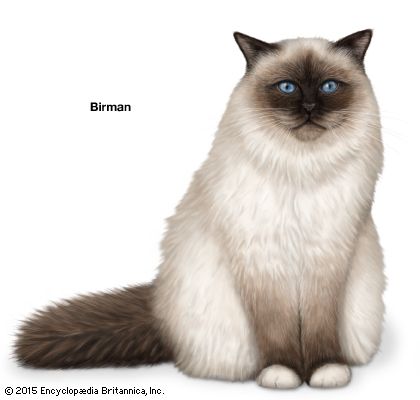
How did longhair cat breeds originate and develop over time?
The development of longhair cat breeds is a blend of ancient natural history and modern selective breeding. Historically, long-haired cats were often referred to as Persians or Angoras, though these names were eventually superseded by the general term “longhair,” except in the United States where “Persian” remains common.4
The origins of many foundational longhair breeds are ancient and sometimes obscure. For instance, the Persian is considered one of the oldest and most popular breeds, though its exact origin remains unknown, with some theories pointing to Iran. Similarly, the Turkish Angora was among the first longhair cats introduced to Europe.45
Over time, breeders have developed new varieties through intentional crossbreeding and by identifying natural mutations:
- Crossbreeding: The Himalayan was created by crossing the Siamese with the Persian, while the Javanese resulted from crossing the Balinese with the Colourpoint Shorthair.45
- Mutations: The Balinese emerged as a long-haired mutation of the Siamese.45
- Regional Development: Breeds like the Maine Coon developed as the oldest American breed, while others like the Cymric were established as long-haired versions of existing breeds, such as the Manx.45
Which are some of the most popular longhair cat breeds?
Several longhair cat breeds are recognized for their distinctive appearances and temperaments. Below are some of the most popular and notable breeds:
Breed
Key Characteristics
Persian
One of the oldest and most popular breeds, known for a cobby body and massive head.
Maine Coon
North America’s only native longhair breed; large, muscular, and known for a shaggy coat.
Ragdoll
A large, blue-eyed cat that tends to relax its muscles when held, appearing limp like a rag doll.
Norwegian Forest Cat
A robust, muscular breed with a water-resistant double coat, historically associated with Norse mythology.
Himalayan
A cross between the Siamese and Persian, featuring Siamese-style colorpoint markings.
Birman
Known as the “Sacred Cat of Burma,” characterized by deep-blue eyes and white-gloved paws.
Balinese
A long-haired mutation of the Siamese with a svelte body and sapphire-blue eyes.
Turkish Angora
One of the first longhair cats in Europe, featuring a long, plumed tail.
Somali
A long-haired variety of the Abyssinian, possessing a lithe body and a full brush tail.
Cymric
A stout, tailless breed that is essentially a long-haired version of the Manx.
Javanese
A graceful, lithe cat resulting from a cross between the Balinese and Colourpoint Shorthair.
Sources
- cats as pets - Longhaired cats — Encyclopædia Britannica
- cats as pets - Shorthaired cats — Encyclopædia Britannica
- cats as pets - Grooming cats — Encyclopædia Britannica
- longhair — Encyclopædia Britannica
- cat - List of selected longhair breeds — Encyclopædia Britannica
- cats as pets - Hairless cats — Encyclopædia Britannica
- Longhair Cat Breeds — Encyclopædia Britannica
- Norwegian Forest Cat — Encyclopædia Britannica
- Maine coon cat — Encyclopædia Britannica
- Why are Maine Coon cats so big? — Encyclopædia Britannica
- rag doll — Merriam-Webster
Published on · 4 min read