Lundy
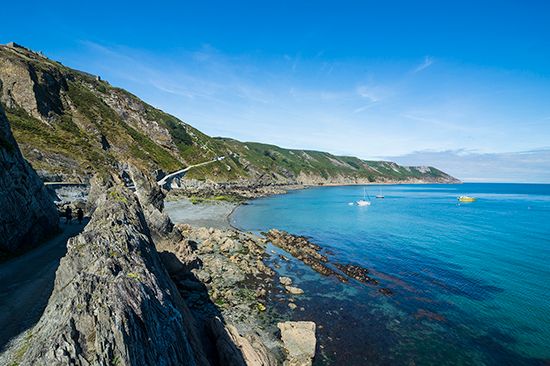
Lundy Island, located in the Bristol Channel, is a significant site for wildlife, particularly seabirds. The island's name itself is derived from the Norse…
What unique wildlife can be found on Lundy Island?
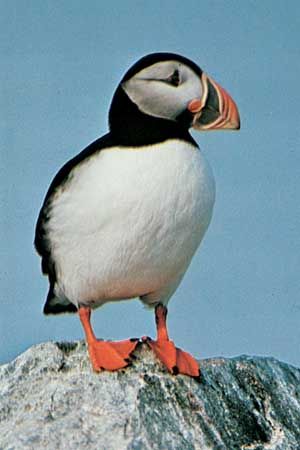
Lundy Island, located in the Bristol Channel, is a significant site for wildlife, particularly seabirds. The island’s name itself is derived from the Norse word lunde, meaning “puffin,” reflecting the historical and ongoing presence of these birds, which breed on the island alongside many other seabird species.1
Additionally, the island is home to a population of black rats that survive on the small, sheltered landmass known as Rat Island, located off the southeastern coast.1
How does Lundy Island’s ecosystem differ from mainland England?
Lundy Island’s ecosystem differs from mainland England primarily due to its isolated, granite-based geological structure and its role as a specialized habitat for maritime species.
While mainland England features diverse terrestrial landscapes, Lundy is a small, 1.5-square-mile island defined by high, rugged granite cliffs that rise to 466 feet. This topography creates a distinct environment that serves as a critical breeding ground for puffin populations and various other seabirds, a feature less concentrated in typical mainland coastal regions.1
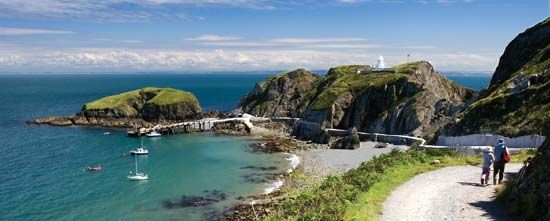
Furthermore, the island’s geology is unique; unlike the granite that forms the bulk of the island, the southeastern tip consists of weathered Devonian slates, which provide the only sheltered landing cove. This area is protected by the small, adjacent Rat Island, which acts as a refuge for a population of black rats—a species that has become rare or managed differently in many mainland ecosystems.1
Where is Lundy Island located, and what are its geographical features?
Lundy is a small island situated in the Bristol Channel, located approximately 11 miles (18 km) off the northern coast of Devon in southwestern England.1
The island spans an area of about 1.5 square miles (4 square km) and is primarily composed of granite. Its geography is characterized by high, rugged cliffs, most notably Shutter Rock at the southwestern end, and it reaches a maximum elevation of 466 feet (142 meters).1
A notable geological exception occurs in the southeast, where the composition shifts to weathered Devonian slates. This area provides the island’s only landing cove, which is sheltered by the small, adjacent Rat Island. Beyond its physical features, the island is recognized as a namesake for a regional weather-forecasting area that reaches toward the Scilly Isles and the southeastern coast of Ireland.1
What is the historical significance of Lundy Island?
Lundy Island holds historical significance primarily as a strategic maritime location and a site of private ownership. For centuries, the island served as a base for privateers and smugglers who utilized its remote position in the Bristol Channel to their advantage.1
The island’s ownership history reflects its changing status over time:
- Crown Ownership: Lundy was held by the British crown for nearly five centuries, from 1150 until 1647.1
- Private Ownership: In 1647, it was sold to Lord Saye and Sele. Later, the Heaven family owned the island from 1836 to 1918, during which time they constructed the island’s church in 1896.1
- National Trust: In 1969, the island was acquired by the National Trust, ensuring its preservation.1
The name “Lundy” itself is historically rooted in the Norse word lunde, meaning “puffin,” reflecting the island’s long-standing identity as a sanctuary for seabirds.1
Sources
- Lundy — Encyclopædia Britannica
- Bird - Nesting — Encyclopædia Britannica
- Lundy Island — Merriam-Webster
Published on · 2 min read