Bristol Channel
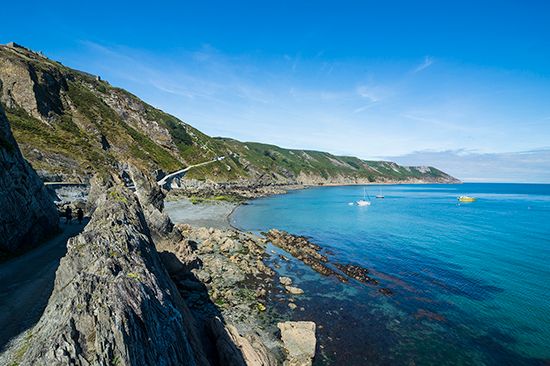
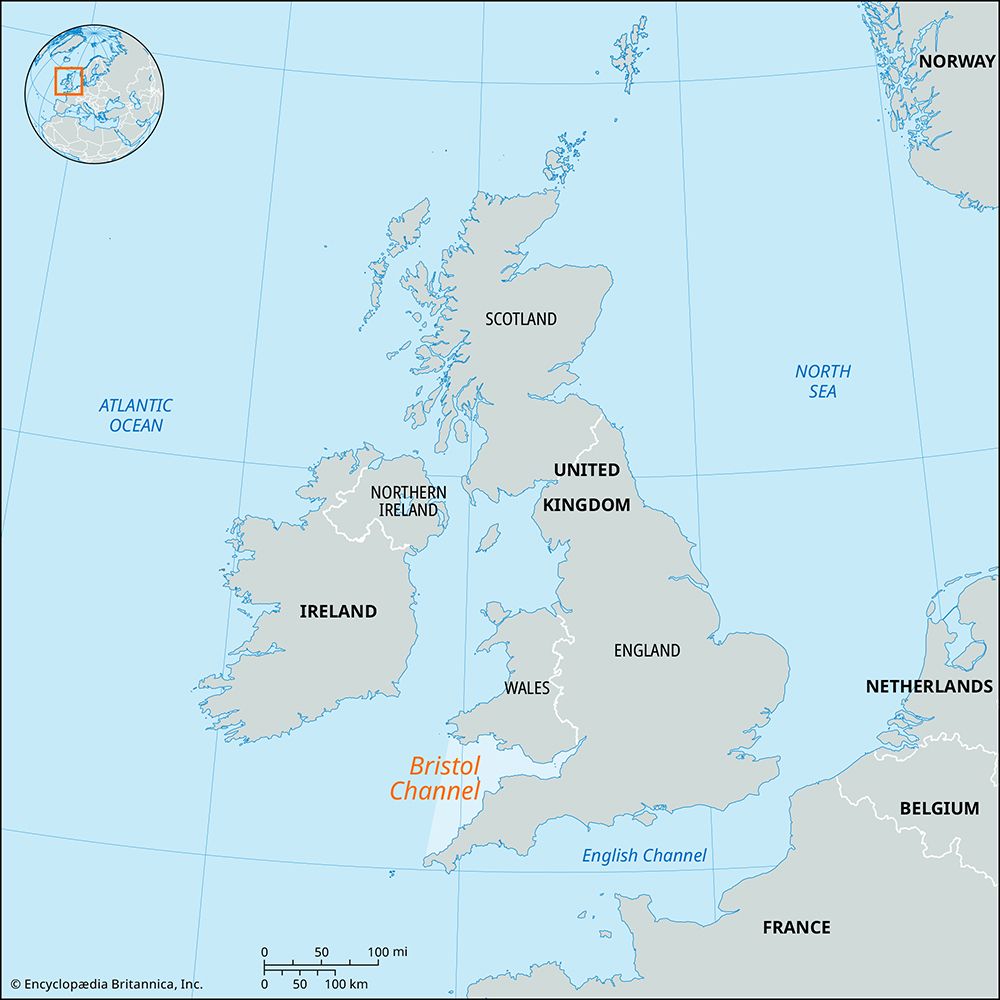
The Bristol Channel is an inlet of the Atlantic Ocean that serves as a major waterway separating southwestern England from southern Wales.
What is Bristol Channel?
The Bristol Channel is an inlet of the Atlantic Ocean that serves as a major waterway separating southwestern England from southern Wales.12
At its eastern end, the channel transitions into the estuary of the River Severn, which is Britain’s longest river. The channel’s geography is characterized by distinct shorelines: the northern coast, bordering the South Wales coalfield, is heavily industrialized, while the southern coast in the counties of Somerset and Devon is primarily agricultural1.13
Located in the center of the channel is Lundy Island, a site now managed by the National Trust. The channel is a vital maritime route, facilitating shipping traffic for major ports including Bristol, Swansea, and Cardiff.1
What is a tidal bore and how does it form in the Severn estuary?
A tidal bore is a phenomenon occurring in certain rivers and estuaries where the incoming tide forms a “wall of water” that rushes upstream against the river’s current. This event happens during exceptionally high tides, specifically spring tides, when the tidal range is large and the incoming water is funneled into a narrow channel.5
As the bore moves, it creates a distinct front of one or more waves that travel faster than the normal tidal current. Behind this wave, the water level rises abruptly, and the current shifts to flow upriver.5
In the River Severn, the bore forms as the massive tidal energy from the Bristol Channel is forced into the narrowing estuary. Because the Severn experiences one of the largest tidal ranges in the world, the incoming tide is compressed, creating a powerful, visible wave that travels inland past Gloucester.56
What makes Lundy Island unique for wildlife and history?
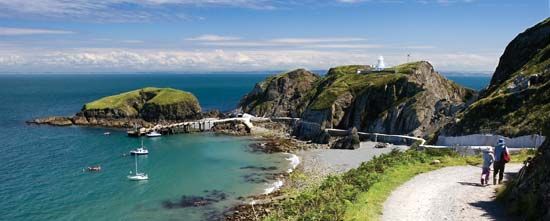
Lundy is a unique island in the Bristol Channel defined by its distinct geology and rich heritage.
Wildlife
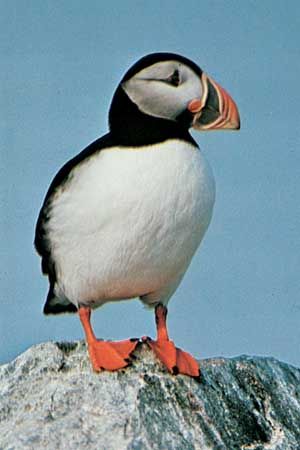
The island’s name is derived from the Norse word lunde, meaning “puffin,” reflecting its long-standing status as a breeding ground for puffins and various other seabirds. Its rugged landscape, primarily composed of granite with high cliffs like Shutter Rock, provides a vital habitat for these avian populations. Additionally, the island’s southeastern cove is sheltered by Rat Island, which serves as a refuge for the black rat.7
History
Lundy’s history is marked by its strategic isolation:
- Maritime Past: For centuries, the island served as a base for privateers and smugglers.
- Ownership: It was held by the British crown from 1150 until 1647. Later, the Heaven family owned the island from 1836 to 1918, during which time they constructed the local church in 1896.
- Preservation: In 1969, the island was acquired by the National Trust, ensuring its protection.7
How have the Severn bridges impacted travel between England and Wales?
The construction of bridges over the Severn estuary has been transformative for travel between England and South Wales, providing vital limited-access motorway links that connect the region to the Bristol area and beyond.28
Key developments include:
- Severn Bridge: Opened in the 1960s, this suspension bridge established a crucial motorway link (M48) connecting London to South Wales.2
- Prince of Wales Bridge: Originally known as the Second Severn Crossing, this structure opened in 1996 to accommodate increasing automobile traffic and now carries the M4 motorway.2
These crossings have significantly improved connectivity, as the main lines of transport in Wales have historically been lateral, moving between the east and west. While internal movement within Wales can be challenging due to its geography, these bridges facilitate essential cross-border travel, complementing the Severn Tunnel, which has served as the primary rail link since the closure of the Sharpness-Lydney railway bridge in the late 1960s.82
Sources
- Bristol Channel — Encyclopædia Britannica
- River Severn — Encyclopædia Britannica
- Bristol Channel — Merriam-Webster
- Bristol — Encyclopædia Britannica
- tidal bore — Encyclopædia Britannica
- tidal bore — Merriam-Webster
- Lundy — Encyclopædia Britannica
- Wales - Transportation — Encyclopædia Britannica
Published on · 3 min read