Lycaste
Lycaste is a genus comprising approximately 30 species of tropical American orchids belonging to the family Orchidaceae. These perennial plants can grow as…
What is Lycaste?
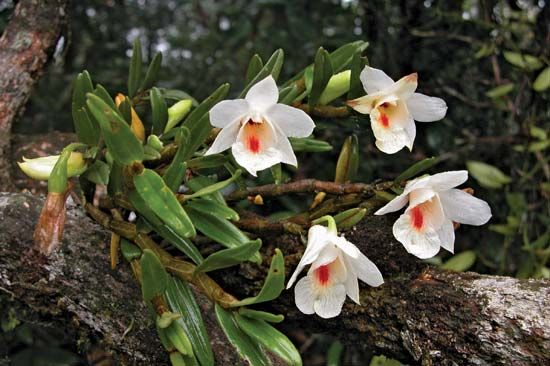
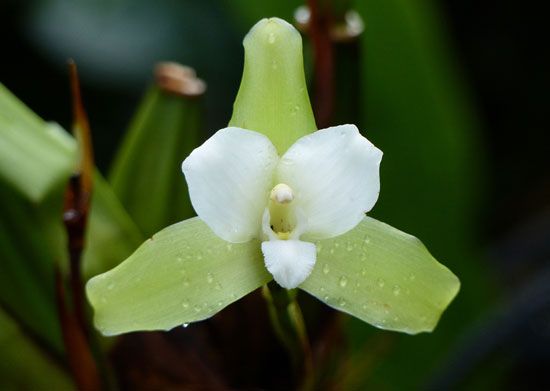
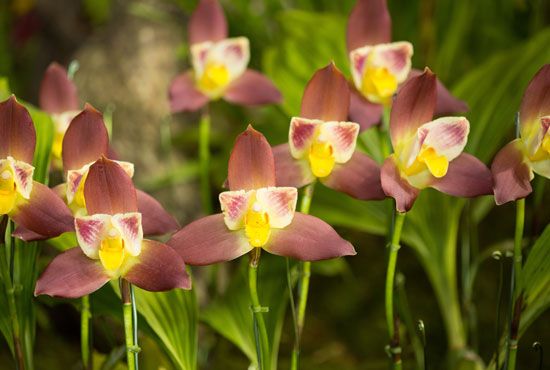
Lycaste is a genus comprising approximately 30 species of tropical American orchids belonging to the family Orchidaceae. These perennial plants can grow as epiphytes or on the ground, and many are popular in cultivation.1
The plants are characterized by thick, egg-shaped pseudobulbs—swollen stems—that support one to three large, folded leaves. These leaves typically drop before the plant’s long-lasting flowers fade. Each pseudobulb produces multiple flower stalks from its base, bearing blooms where the sepals are notably larger than the petals, often displaying contrasting colors. Additionally, the flowers of several species are known for their fragrance.1
What is the difference between epiphytic and terrestrial plants?
The primary difference between epiphytic and terrestrial plants lies in their growth medium and how they obtain essential nutrients and water.
Epiphytic Plants
An epiphyte is a plant that grows upon another plant or object, such as a rock, solely for physical support. These plants have no attachment to the ground and are not parasitic on their hosts.
- Habitat: Most are found in moist tropical regions, where growing in the tree canopy allows them to access sunlight that is otherwise blocked in dense forests.
- Nutrient and Water Acquisition: Epiphytes obtain water from rain and atmospheric moisture, often absorbing it through specialized roots or leaves. Nutrients are typically gathered from organic debris that collects on the supporting structure.
Terrestrial Plants
In contrast, terrestrial plants grow in the soil, which serves as their primary source of anchorage and nutrition.
- Root Function: The roots of terrestrial plants are typically underground, functioning to anchor the plant, absorb water and dissolved minerals from the soil, and store reserve foods.
- Growth: Unlike epiphytes, which rely on aerial roots for attachment to non-soil surfaces, terrestrial plants utilize their root systems to navigate the soil environment, often forming symbiotic relationships with soil fungi or bacteria to enhance nutrient uptake.
How do pseudobulbs help orchids survive in the wild?
Pseudobulbs are specialized, thickened stem structures found in many orchid species, particularly those that grow as epiphytes. These structures serve as vital survival mechanisms for plants living in environments where water and nutrient availability can be inconsistent.56
By acting as storage organs, pseudobulbs allow orchids to accumulate and retain water and nutrients during periods of abundance. This reserve capacity is essential for survival in the wild, as it enables the plant to endure dry spells or seasonal fluctuations in their habitat when external moisture is scarce.67
While pseudobulbs vary in their morphological complexity—ranging from structures composed of several internodes to those consisting of a single internode—they are a defining feature that supports the resilience of many orchid groups, helping them thrive in diverse climates across the globe.67
What are some other popular types of orchids?
The orchid family (Orchidaceae) is incredibly diverse, comprising approximately 26,000 species. While many are grown for their showy flowers, they vary significantly in appearance and growth habits.89
Here are some popular and notable types of orchids:
- Moth orchid (Phalaenopsis): Perhaps the most popular houseplant in the family, these are prized for their long-lasting, elegant flowers and relative ease of care.10
- Cattleya: Often referred to as the “queen of orchids,” this genus is famous for its large, fragrant, and highly ornamental blooms.
- Cymbidium: Known for their long, arching spikes of flowers, these are popular in the commercial flower trade and are often grown in cooler climates.
- Dendrobium: A vast and varied genus that includes both epiphytic and terrestrial species, known for their diverse flower shapes and colors.
- Jewel orchid: Unlike most orchids grown for their flowers, these are cultivated primarily for their striking, patterned foliage, which often features metallic-colored veins.11
- Lady’s slipper: Easily recognized by their unique, pouch-shaped labellum (lip) that resembles a slipper.8
- Vanilla: Economically significant as the primary source of the popular vanilla flavoring.8
- Lizard orchid: A terrestrial species named for its unusual, lizard-like flower structure and distinct scent.12
Sources
- Lycaste — Encyclopædia Britannica
- epiphyte — Encyclopædia Britannica
- root — Encyclopædia Britannica
- fern - Annotated classification — Encyclopædia Britannica
- pseudobulb — Merriam-Webster
- orchid - Growth forms — Encyclopædia Britannica
- Bulbophyllum — Encyclopædia Britannica
- list of plants in the family Orchidaceae — Encyclopædia Britannica
- moth orchid — Encyclopædia Britannica
- orchid - Structural diversity — Encyclopædia Britannica
- orchid - Ecology — Encyclopædia Britannica
- houseplant — Encyclopædia Britannica
- jewel orchid — Encyclopædia Britannica
- lizard orchid — Encyclopædia Britannica
Published on · 3 min read