Lynn Canal
The provided search results do not contain specific information regarding the depth of Lynn Canal. Consequently, I cannot provide its depth or compare it to…
How deep is Lynn Canal, and how does its depth compare to other fjords?
The provided search results do not contain specific information regarding the depth of Lynn Canal. Consequently, I cannot provide its depth or compare it to other fjords.
While the data confirms that Lynn Canal is a fjord located in southeastern Alaska, it does not offer bathymetric measurements. In contrast, the records do note that other prominent fjords, such as Sogn Fjord in Norway, reach depths of 1,308 meters (4,291 feet), and Canal Messier in Chile reaches 1,270 meters (4,167 feet). These depths are characteristic of the glacial origins of such landforms, which often feature deep basins and shallower thresholds at their mouths.12
What are the main characteristics of Lynn Canal as a fjord?
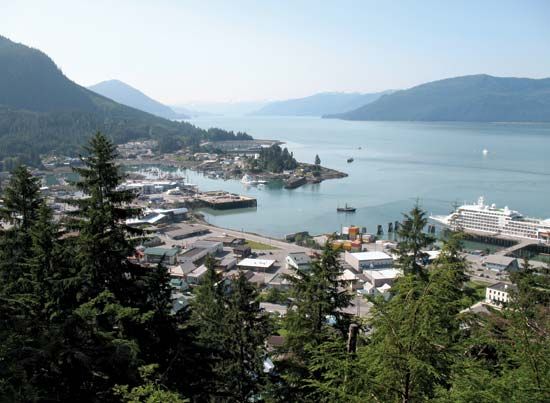
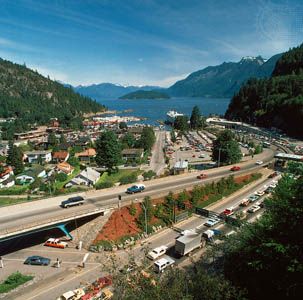
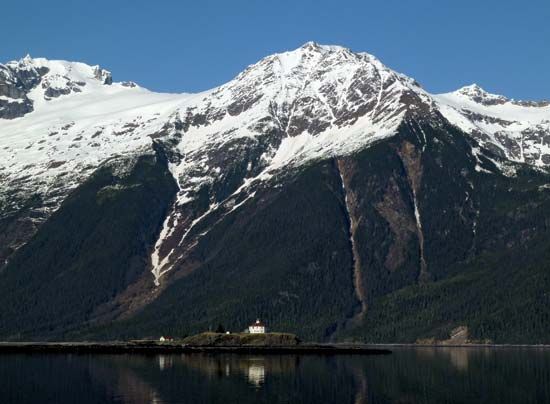
Lynn Canal is a narrow, scenic fjord located in the Alexander Archipelago of southeastern Alaska. As a characteristic fjord, it features a long, narrow passage formed by the marine inundation of a glaciated valley, with the Coast Mountains rising steeply along its eastern shore.15
Key characteristics include:
- Dimensions: It spans approximately 60 to 80 miles in length and ranges from 3 to 12 miles in width.13
- Geography: It serves as the northernmost fjord to penetrate the Coast Mountains and extends north from the Chatham Strait.1
- Inlets: Near Haines, the canal divides into two primary inlets: one leading to the Chilkat River and the other through Taiya Inlet to Skagway.1
- Significance: It serves as a vital segment of the Inside Passage and supports a diverse ecosystem, including humpback whales and Steller sea lions.1
What kind of wildlife can be found in and around Lynn Canal?
The waters of Lynn Canal support a diverse array of marine life, serving as a significant habitat within the Inside Passage.
The canal is notably home to several large marine mammals, including:
- Humpback whales: These large cetaceans are frequently observed in the area.6
- Steller sea lions: Also known as northern sea lions, these animals inhabit the canal’s waters.6
In addition to these mammals, the canal supports a variety of fish populations that contribute to the region’s rich aquatic ecosystem. While the surrounding coastal areas of southeastern Alaska are characterized by dense forests of Sitka spruce and hemlock, the specific wildlife found directly along the shores of Lynn Canal often reflects the broader biodiversity of the Alexander Archipelago, which provides essential corridors for both marine and terrestrial species.61
How does Lynn Canal impact transportation and commerce in Southeast Alaska?
Lynn Canal serves as a critical maritime artery for transportation and commerce in Southeast Alaska. As the northernmost fjord penetrating the Coast Mountains, it functions as the essential northern terminus for the Inside Passage, which is serviced by the Alaska Marine Highway.
The canal’s strategic importance is highlighted by its connection to the port of Skagway. By providing a navigable waterway that reaches deep into the mainland, the canal facilitates the movement of goods and passengers between the coastal communities of Alaska and the broader Pacific Northwest, including Washington state. This maritime link is vital for regional connectivity, as many communities in this rugged, mountainous terrain rely heavily on waterborne transport for logistics and trade.1
We could dive deeper into the history of the Alaska Marine Highway or explore how other fjords in the region influence local economies.
Sources
- Lynn Canal — Encyclopædia Britannica
- estuary - Fjords — Encyclopædia Britannica
- Lynn Canal — Merriam-Webster
- Sogn Fjord — Encyclopædia Britannica
- fjord — Encyclopædia Britannica
- Alaska - Plant and animal life — Encyclopædia Britannica
Published on · 2 min read