Malabar Coast
The Malabar Coast is a region located along the southwestern edge of peninsular India. It is situated between the Arabian Sea to the west and the Western…
What is the geographical location and extent of the Malabar Coast in India?
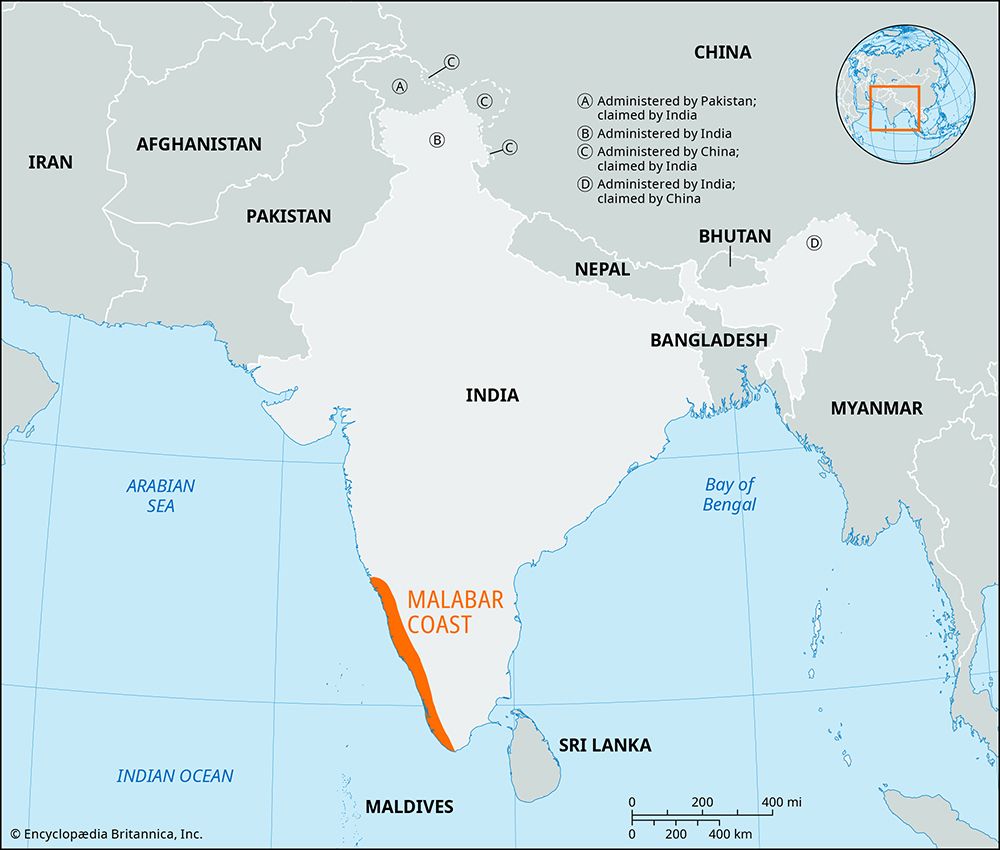
The Malabar Coast is a region located along the southwestern edge of peninsular India. It is situated between the Arabian Sea to the west and the Western Ghats mountain range to the east.12
While the term has historically been used to describe the entire western coast of India, it is now primarily applied to the area extending from the state of Goa southward. Geographically, the region encompasses the coastal areas of Karnataka and the majority of Kerala state.12
The landscape is characterized by a continuous belt of sand dunes, behind which lie numerous lagoons connected by canals that serve as vital inland waterways. The interior consists of fertile, level alluvial land supported by streams originating in the Western Ghats, facilitating the cultivation of crops such as rice and spices.1
What indigenous communities have traditionally inhabited the Malabar Coast?
The Malabar Coast is a region defined by centuries of migration and cultural exchange, resulting in a diverse population rather than a single indigenous group. The majority of the population consists of the Malayalis, a group of mixed ethnic heritage who speak the Dravidian language Malayalam.1
Historically, the region has been home to various communities, including:
- Mappila (Moplah): The largest Muslim community on the Malabar Coast, with a presence dating back many centuries.1
- St. Thomas (Mar Thoma) Christians: Long-established Christian communities who share early traditions unique to the region, tracing their origins to the arrival of St. Thomas the Apostle.1
- Nambudiri: A prominent caste of orthodox Hindus who retain strong elements of Indo-Aryan ancestry.1
- Kadar: A small tribe residing in the forests along the hilly border between Kerala and Tamil Nadu, traditionally known for collecting forest products like honey and wax.3
- Cochin Jews: A community historically centered in Kochi that maintained a presence in the region for centuries.1
While the term Adivasi refers to the original inhabitants of the Indian subcontinent, these groups are more concentrated in the hills and forests of central and southern India rather than the coastal plains themselves.4
What role did the Malabar Coast play in ancient maritime trade routes?
The Malabar Coast served as a vital hub in ancient maritime trade, connecting peninsular India to the broader world through a sophisticated network of ports and seasonal navigation.18
Maritime Connectivity and Trade
The discovery of seasonal monsoon winds allowed ships to sail directly across the Arabian Sea, significantly enhancing trade between the western coast of India and regions such as the Persian Gulf, the Red Sea, and the eastern Mediterranean. By the 1st century CE, the Periplus Maris Erythraei documented several active ports along this coast, most notably Muziris (Cranganore), which facilitated extensive commerce with the Roman Empire.1
Commodities and Economic Impact
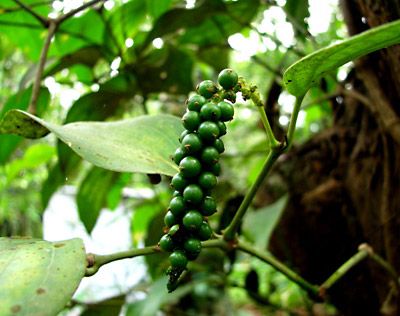
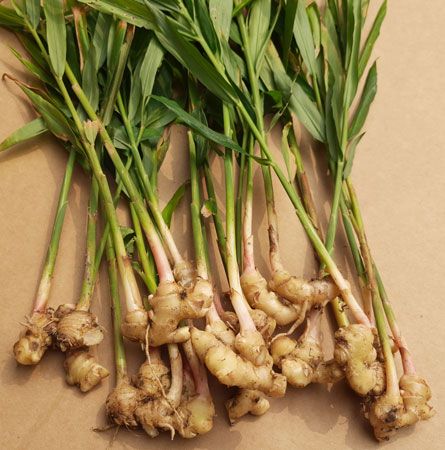
The region was a primary source for high-value goods, particularly pepper, cardamom, ginger, and turmeric. These were exchanged for Roman gold, glass, copper, and wine. Archaeological evidence, such as the discovery of Roman coins and pottery at trading settlements like Arikamedu, underscores the intensity of this economic relationship.981
How has the spice trade contributed to the economic importance of the Malabar Coast?
The Malabar Coast has long been a center of economic importance due to its role as a primary source of high-value spices, including black pepper, cardamom, ginger, and turmeric. These crops, cultivated in the fertile land watered by the Western Ghats, established the region as a critical hub in global maritime commerce.111
The economic significance of these commodities attracted international interest for centuries, leading to intense competition among foreign powers. The Portuguese established trading posts on the coast to secure access to these goods, followed by the Dutch in the 17th century, the French in the 18th, and eventually the British, who gained control of the region by the late 18th century. This history of trade not only shaped the region’s economic development but also made it a focal point for the colonial expansion that defined the era of global spice exploration.111
Sources
- Malabar Coast — Encyclopædia Britannica
- Malabar Coast — Merriam-Webster
- Keralam - Population composition — Encyclopædia Britannica
- Malabar — Merriam-Webster
- Karnataka Coast — Encyclopædia Britannica
- Adivasi — Encyclopædia Britannica
- Kadar — Encyclopædia Britannica
- spice trade — Encyclopædia Britannica
- India - Contacts with the West — Encyclopædia Britannica
- Mughal dynasty - Economy and trade — Encyclopædia Britannica
- history of Sri Lanka - Foreign trade — Encyclopædia Britannica
Published on · 3 min read