Macaque
There are more than 20 species of macaques (genus Macaca), which are robust, gregarious Old World monkeys.

How many species of macaques are there, and where are they typically found?
There are more than 20 species of macaques (genus Macaca), which are robust, gregarious Old World monkeys.1
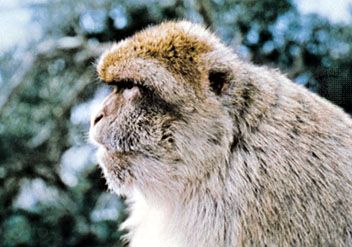
While macaques are found in a variety of environments—including forests, plains, and rocky terrain—they are almost exclusively Asian in their distribution. The only exception is the Barbary macaque, which is native to the upland forests and mountain ranges of North Africa, specifically Algeria and Morocco, with an introduced population in Gibraltar.123
Asian species are widely distributed across the continent, ranging from the Japanese macaque in the north to various species inhabiting Southeast Asia, India, China, and the Indonesian islands. Because many of these populations are declining due to habitat loss, it is a moral imperative to support conservation efforts to protect these intelligent primates from extinction.13
What is the diet of macaques, and how does it vary among different species?
Macaques are generally omnivorous, possessing a flexible diet that allows them to thrive in diverse environments ranging from forests and plains to rocky terrain. To facilitate their feeding habits, they are equipped with large cheek pouches that allow them to store and carry extra food.4
While their diet is broadly omnivorous, specific food choices often depend on the species’ habitat and local availability:
- Crab-eating macaques (Macaca fascicularis): Living in forests along rivers, these primates supplement their diet of fruit by fishing for crabs and other crustaceans.4
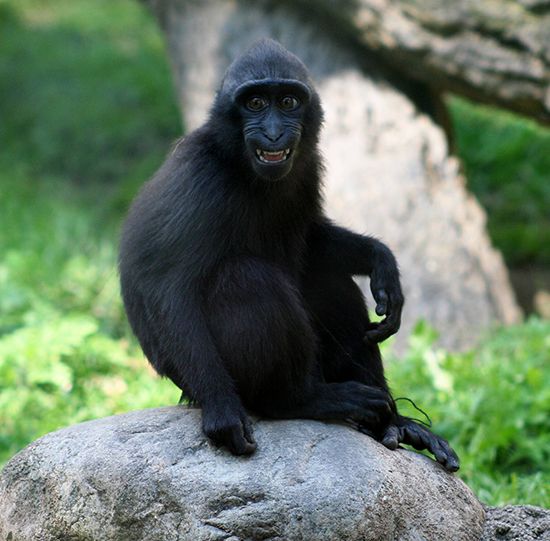
- Crested black macaques (Macaca nigra): Primarily arboreal, these monkeys feed largely on fruit within their tropical forest habitat.2
- Pigtail macaques (Macaca nemestrina): Inhabiting the rainforests of Southeast Asia, these macaques are known to be skilled at picking ripe coconuts.4
- Japanese macaques (Macaca fuscata): These monkeys have demonstrated the ability to adapt to new food sources, such as sweet potatoes and candies, with these dietary innovations spreading through their troops via social learning.5
Across the genus, macaques demonstrate the general primate tendency toward dietary catholicity rather than strict specialization, allowing them to adjust their intake based on seasonal availability and ecological opportunity.64
How do macaques feature in the culture and mythology of countries where they are native?
Macaques hold significant places in the cultural and mythological landscapes of their native regions, often bridging the gap between the natural world and human belief systems.
- Japanese Macaques: Often referred to as snow monkeys, these primates are prominent figures in Japanese myths and folktales. They are famously depicted in representations of the Buddhist adage “see no evil, hear no evil, speak no evil,” symbolizing a moral teaching through their posture.7
- Rhesus Monkeys: In parts of India, these macaques are held sacred and are treated with tolerant affection, particularly by many Brahmans. Their presence is so integrated into religious life that they are commonly found inhabiting temple grounds in large numbers.8
- Barbary Macaques: These monkeys are central to a persistent legend regarding the Rock of Gibraltar. It is said that British dominion over the territory will endure only as long as the macaque population remains on the Rock, linking the animal’s presence to the political stability of the region.12
While not always explicitly identified as macaques, monkey figures—such as the hero Sun Wukong from the Chinese classic Journey to the West—frequently appear in Asian folklore, reflecting the deep-seated cultural importance of these intelligent primates.9
What role do macaques play in scientific research, and why are they often chosen for studies?
Macaques are the most widely used monkeys in biomedical research, serving as vital experimental subjects for understanding human biology and disease. Their utility in science stems from their close biological similarity to humans, which has historically allowed researchers to study complex physiological and psychological processes.27
Why Macaques Are Chosen
- Biological Kinship: Macaques share significant anatomical and physiological traits with humans, making them effective models for studying human diseases, endocrinology, and neurology.27
- Hardiness: Species like the rhesus monkey are known to be hardy in captivity, which facilitates their use in long-term experimental settings.10
- Intelligence: Their high level of intelligence makes them valuable subjects for psychological and sociological studies.210
Key Contributions to Science
Macaques have been instrumental in major medical breakthroughs, including the development of the polio vaccine in the 1950s. They have also been central to advancements in genetics; for instance, scientists achieved the first cloning of a rhesus monkey via embryonic cell nuclear transfer in 2001, and in 2018, a crab-eating macaque became the first primate cloned using somatic cell nuclear transfer. Additionally, the Rh blood group system in humans was determined through reactions involving rhesus monkey blood.210
While their scientific value remains high, the use of macaques is increasingly subject to conservation concerns and ethical scrutiny, leading to stricter regulations on their use and exportation.7
Sources
- Barbary macaque — Encyclopædia Britannica
- macaque — Encyclopædia Britannica
- primate - Distribution and abundance — Encyclopædia Britannica
- primate - Diet — Encyclopædia Britannica
- crested black macaque — Encyclopædia Britannica
- monkey — Encyclopædia Britannica
- rhesus monkey — Encyclopædia Britannica
- Gibraltar: Top Questions — Encyclopædia Britannica
- Hanuman - Cultural and political influences — Encyclopædia Britannica
- primate - Historical background of primate studies — Encyclopædia Britannica
Published on · 4 min read