Monkey
Monkeys inhabit a diverse range of environments across the globe, though they are predominantly found in tropical regions. Their primary habitats include:
What are some of the most common habitats where monkeys can be found in the wild?
Monkeys inhabit a diverse range of environments across the globe, though they are predominantly found in tropical regions. Their primary habitats include:12
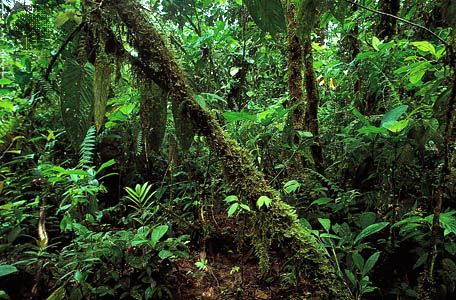
- Tropical Forests: The vast majority of monkey species live in tropical rainforests, where they utilize the complex, three-dimensional structure of the canopy to travel, forage, and live. These forests provide a dense network of branches and foliage that serve as essential pathways.13
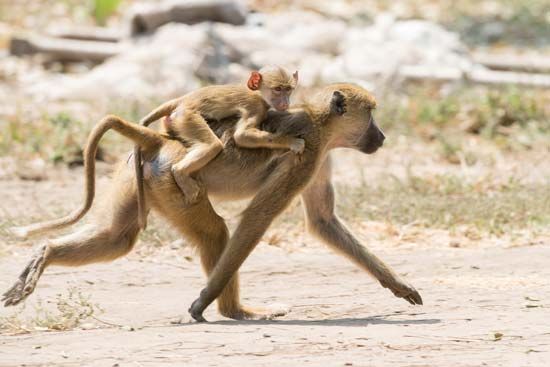
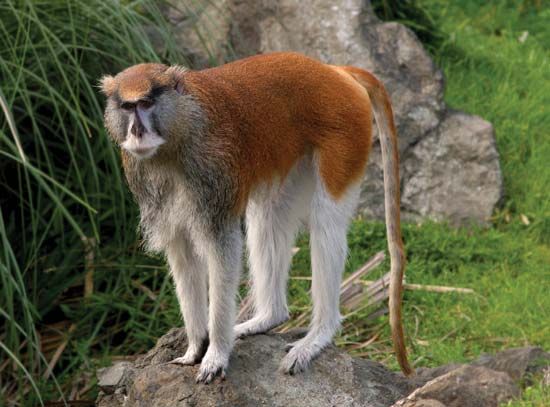
- Savannas and Woodlands: Some species, such as baboons, vervets, and patas monkeys, have adapted to savannas and open woodlands, particularly in Africa and Asia. These environments consist of a mix of grasses and trees, with ground-dwelling monkeys often foraging in more open country.43
- Montane Forests: Monkeys also inhabit tropical montane forests at high altitudes in Africa, Asia, and South America. Some species, such as the Japanese macaque and certain snub-nosed monkeys, have adapted to cold, mountainous regions where temperatures can drop below freezing.23
How intelligent are monkeys compared to other animals?
Monkeys are highly intelligent animals known for their inquisitiveness, large brains, and ability to solve complex problems. While they demonstrate significant cognitive capabilities, their intelligence is generally distinct from that of other animals, particularly great apes.16
Cognitive Abilities
Monkeys are adept at learning from experience and performing manipulative tasks, aided by their ability to sit upright and free their hands. Some species, such as capuchins, spontaneously use objects like stones as tools to crack nuts, while baboons have been observed using sticks to obtain food.1
However, monkeys generally do not reach the cognitive levels of great apes—such as chimpanzees, gorillas, and orangutans—which possess more complex brains. Key differences include:16
- Self-Awareness: Great apes are capable of recognizing themselves in mirrors, a trait not shared by monkeys.6
- Social Learning: Unlike great apes, which exhibit clear cultural transmission of behaviors, most monkeys typically must learn new skills individually rather than through social observation. A notable exception is the Japanese macaque, which has demonstrated the ability to spread innovative food-gathering behaviors throughout an entire troop.17
- Abstract Reasoning: Great apes can reason abstractly and learn quasi-linguistic communication when taught by humans, capabilities that exceed those of monkeys.67
When compared to other intelligent species like octopuses, crows, or elephants, monkeys demonstrate a different suite of cognitive strengths, often centered on their complex social structures and manual dexterity.18
How are monkeys classified into Old World and New World monkeys, and what are their key differences?
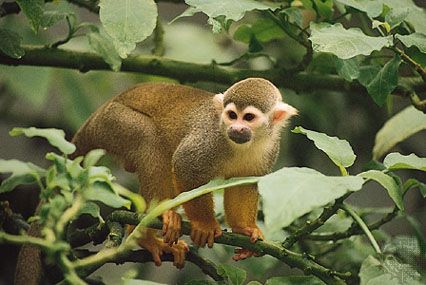
Monkeys are categorized into two primary groups based on their geographic distribution and distinct anatomical features: Old World monkeys and New World monkeys.2
Key Differences
The classification is primarily defined by the following physical and biological characteristics:
- Nasal Structure: New World monkeys are known as platyrrhines (“flat-nosed”), characterized by broad noses with a wide septum and outwardly directed nostrils. In contrast, Old World monkeys are catarrhines (“downward-nosed”), possessing narrow noses with a thin septum and downward-facing nostrils, similar to apes and humans.21
- Tail Functionality: Some New World monkey species possess prehensile tails capable of supporting their entire body weight or grasping objects. No Old World monkeys have this ability, and some, such as macaques, are nearly tailless.29
- Anatomy: Old World monkeys feature hard, bare “sitting pads” (ischial callosities) on their buttocks, a trait absent in New World monkeys. Additionally, many Old World monkeys possess opposable thumbs, allowing for precise manual dexterity, whereas New World monkeys lack this level of manual control.2
- Dentition: New World monkeys typically have 36 teeth, whereas Old World monkeys share a dental formula more closely related to apes and humans.29
Geographic and Ecological Distribution
- New World Monkeys: These species reside primarily in the tropical forests of South America, particularly the Amazon. This group includes marmosets, capuchins, spider monkeys, and howlers.2
- Old World Monkeys: Found throughout Africa and Asia, this group includes baboons, guenons, colobus, and langurs. They are further divided into two subfamilies: the Cercopithecinae (which have cheek pouches for food storage) and the Colobinae (which have complex, multi-chambered stomachs for fermenting plant material).2
How do different monkey species vary in size and appearance?
Monkey species exhibit a wide range of sizes and appearances, influenced by their evolutionary adaptations and ecological niches.2
Size Variation
Monkeys range from small, lightweight forms to large, robust species. For example, the olive colobus is a small monkey weighing only about 4.5 kg (9.9 pounds). In contrast, the chacma baboon is significantly larger, with males averaging 30 kg (66 pounds). Within species, size is often affected by sexual dimorphism, where males may be substantially larger than females; male baboons, for instance, can be more than twice the size of females.111213
Appearance and Physical Features
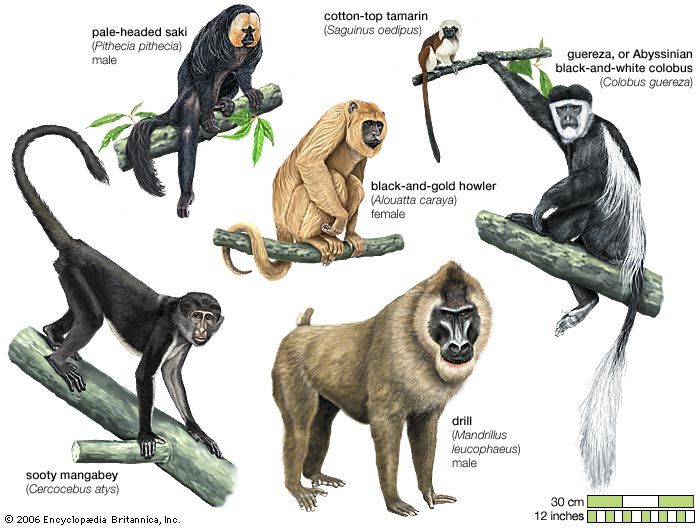
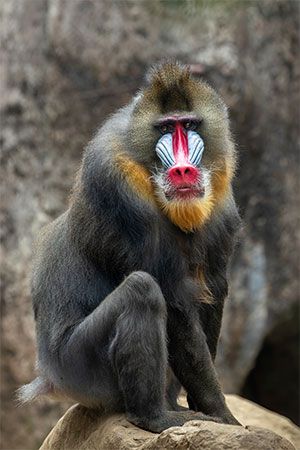
- Facial Features: Most monkeys have relatively flat faces, though some, like baboons and mandrills, possess prominent muzzles. The shape of the nose is a key identifier: New World monkeys have broad, flat noses with side-facing nostrils, while Old World monkeys have narrow, downward-facing nostrils.1421
- Coloration: Many species are strikingly colored. African guenons are known for their beautiful colors, and mandrills exhibit vivid, complex coloration on their bodies and genitalia, which serves as a species-recognition signal.215
- Specialized Structures: Some species have unique physical traits, such as the proboscis monkey of Borneo or the snub-nosed monkeys of China and Vietnam. Additionally, some New World monkeys possess prehensile tails, whereas Old World monkeys lack this ability and may even be nearly tailless.2
Sources
- monkey — Encyclopædia Britannica
- monkey - Old World monkeys versus New World monkeys — Encyclopædia Britannica
- primate - Distribution and abundance — Encyclopædia Britannica
- vervet — Encyclopædia Britannica
- primate - Forest and savanna — Encyclopædia Britannica
- Which Animal Is the Smartest? — Encyclopædia Britannica
- ape — Encyclopædia Britannica
- chimpanzee - Intelligence — Encyclopædia Britannica
- Platyrrhina — Merriam-Webster
- platyrrhine — Merriam-Webster
- baboon — Encyclopædia Britannica
- primate - Snouts , muzzles, and noses — Encyclopædia Britannica
- colobus — Encyclopædia Britannica
- Sexual dimorphism — Encyclopædia Britannica
- primate - Male and female genitalia — Encyclopædia Britannica
Published on · 4 min read