False Gharial
The false gharial (Tomistoma schlegelii) is a large freshwater crocodile native to swamps and rivers in parts of Southeast Asia, including Sumatra, Java…
What is a false gharial?
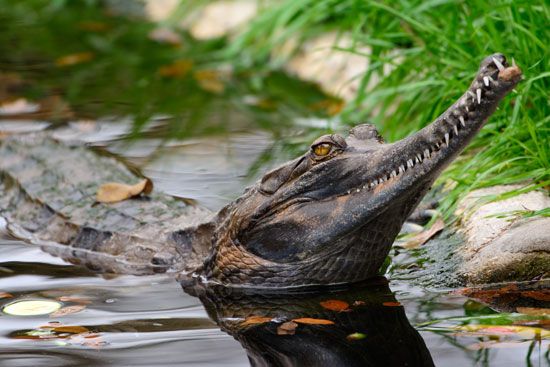
The false gharial (Tomistoma schlegelii) is a large freshwater crocodile native to swamps and rivers in parts of Southeast Asia, including Sumatra, Java, Borneo, and Peninsular Malaysia.1
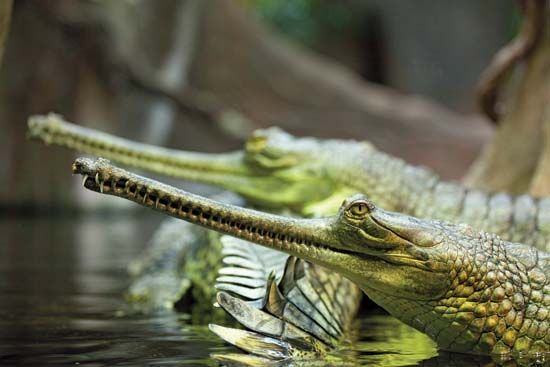
It is one of only two living species in the family Gavialidae, alongside the gavial (Gavialis gangeticus). While they share a long-snouted appearance, the false gharial is distinguished by a thicker snout that tapers more gradually and lacks the bulbous “ghara” protuberance found on male gavials.1
As an endangered species, the false gharial faces significant threats from habitat loss due to logging and agricultural expansion. These ambush predators primarily consume fishes but are opportunistic feeders capable of taking larger prey. Protecting their remaining wetland habitats is essential for the survival of this unique reptile.1
What does a false gharial look like?
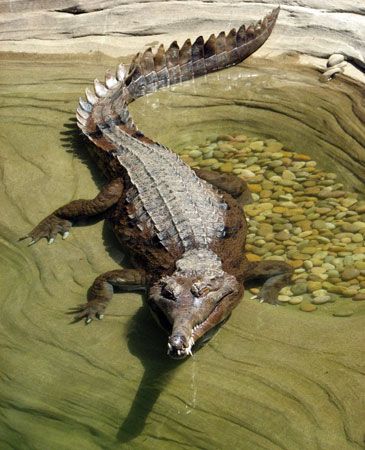
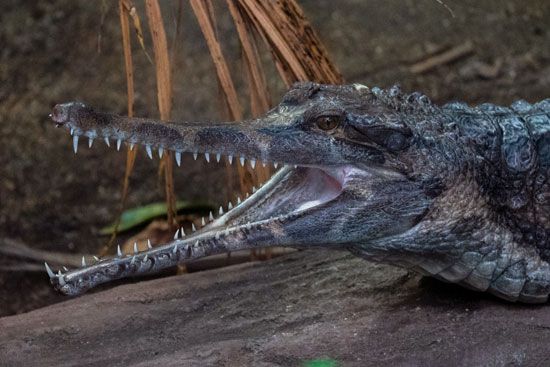
The false gharial (Tomistoma schlegelii) is a large freshwater crocodile easily recognized by its long, thick snout, which tapers gradually from the head. Unlike the gavial, the false gharial lacks the bulbous “ghara” protuberance on the end of its snout and possesses fewer teeth, typically numbering between 76 and 84.1
Physically, the species is well-adapted for an aquatic life, with its eyes and nostrils positioned on the top of its head. Adults exhibit the following characteristics:1
- Size: Males can reach lengths of 4.9–5.5 meters (16–18 feet), while females are generally smaller, measuring 3–3.4 meters (10–11 feet).1
- Weight: Fully grown adults weigh between 93 and 210 kg (205–463 pounds).1
- Coloration: The scales on the top and sides are brown with black patches or bands, particularly on the tail, while the underside ranges from beige to white.1
Where does the false gharial live?
The false gharial (Tomistoma schlegelii) is a freshwater crocodile native to Southeast Asia. Its natural range includes swamps, rivers, and various waterways located on the islands of Sumatra, Java, and Borneo, as well as in Peninsular Malaysia.1
These reptiles are primarily found in wetland environments where they can remain submerged as ambush predators. Their survival is currently threatened by habitat loss resulting from logging, agricultural expansion—particularly oil palm cultivation—and the channeling or drainage of their native waterways.1
What does the false gharial eat?
The false gharial is an ambush predator that primarily hunts by remaining motionless at or just beneath the water’s surface, waiting for prey to venture within reach of its jaws.1
While its diet consists mostly of fishes, it is an opportunistic feeder that consumes a wide variety of other animals, including:
- Amphibians
- Other reptiles
- Crustaceans
- Mammals, such as pigs and deer that wander near the water’s edge
- Primates, including crab-eating macaques1
Although they are capable of taking down large mammals, attacks on humans are extremely rare.1
Sources
- false gharial — Encyclopædia Britannica
- 10 Critically Endangered Animals of India - Gharial ( Gavialis gangeticus ) — Encyclopædia Britannica
- gavial — Encyclopædia Britannica
Published on · 2 min read