Macaw
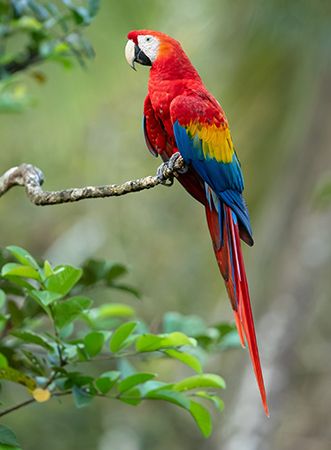
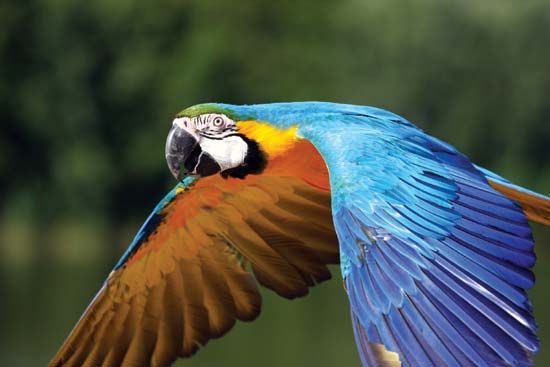
Macaws are a group of approximately 18 species of large, colorful parrots belonging to the family Psittacidae. Known for their long tails and brilliant…
What are macaws and where are they typically found in the wild?
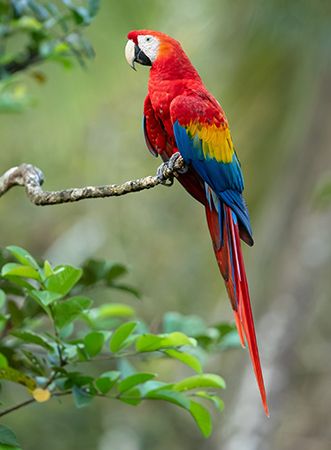
Macaws are a group of approximately 18 species of large, colorful parrots belonging to the family Psittacidae. Known for their long tails and brilliant plumage, these gregarious birds possess powerful, sickle-shaped beaks used to crack open hard-shelled seeds and nuts.1
In the wild, macaws are native to the tropical regions of North and South America. Their habitats span various environments, from the forests of Central America to the riverbanks and woodlands of South America, including countries such as Brazil, Bolivia, Paraguay, Peru, and Colombia. Unfortunately, many species are currently threatened by habitat loss, logging, and the illegal pet trade, leading the IUCN Red List of Threatened Species to classify several as endangered or critically endangered.1
How do macaws differ from other parrots in terms of size and appearance?
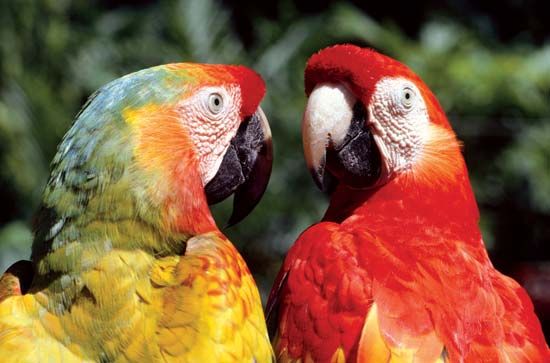
Macaws are distinguished from other parrots primarily by their impressive size and specialized physical features. While parrots as a group range from 8 to 100 cm in length, macaws represent the larger end of this spectrum, with the hyacinth macaw holding the title of the largest of all parrots at up to 100 cm (nearly 40 inches) long.21
Key differences in appearance include:
- Tail Structure: Unlike many parrots that have short, rounded, or square tails, macaws possess extremely long, pointed tails that often surpass their body length.2
- Beak Morphology: Macaws feature large, powerful, sickle-shaped beaks. These are not only used to crack open hard-shelled seeds and nuts but also function as a “third foot” to assist in climbing.1
- Plumage and Facial Features: Macaws are known for their brilliant, vivid plumage. Unlike many other brightly colored bird species, male and female macaws look identical. Some species, such as the scarlet macaw, are further characterized by a bare white facial patch that can change color when the bird is excited.1
What are the different species of macaws and how do they vary?
There are approximately 18 species of macaws, which are classified into six genera: Ara, Anodorhynchus, Cyanopsitta, Primolius, Orthopsittaca, and Diopsittaca. While they share common traits like long tails and powerful beaks, they vary significantly in size, coloration, and conservation status.1
Notable Species Variations
- Hyacinth Macaw (Anodorhynchus hyacinthinus): The largest of all parrots, reaching up to 100 cm in length. It is known for its striking cobalt-blue plumage.1
- Scarlet Macaw (Ara macao): One of the most recognizable species, featuring brilliant red, yellow, and blue feathers contrasted by a bare white facial patch that can blush when the bird is excited.1
- Blue-and-Yellow Macaw (Ara ararauna): Notable for its diverse diet, having been recorded consuming at least 20 different plant species, including some toxic to humans.1
Several species are currently facing severe threats, including the blue-throated macaw, the great green macaw, and Lear’s macaw. The Spix’s macaw is considered extinct in the wild, while the glaucous macaw remains critically endangered.1
We could dive deeper into the specific conservation challenges these species face in the wild.
How long do macaws typically live, both in the wild and in captivity?
Macaws are known for their longevity, though specific lifespans in the wild can be difficult to track precisely due to the environmental pressures they face. In captivity, where these birds are protected from predators and provided with consistent care, some individuals have been documented living up to 65 years of age.1
While the provided information does not specify a precise average lifespan for macaws in their natural habitat, it is clear that their survival in the wild is increasingly threatened by factors such as logging, land clearing, and the illegal pet trade, which contribute to the rarity of many species.1
Sources
- Macaw — Encyclopædia Britannica
- Psittaciform - General features — Encyclopædia Britannica
- Psittaciform - Annotated classification — Encyclopædia Britannica
- Psittaciform - Critical appraisal — Encyclopædia Britannica
Published on · 3 min read