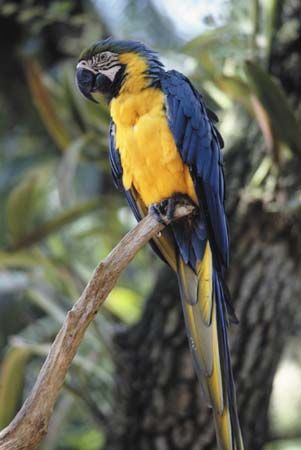
Parrot
There are 368 recognized species of parrots (order Psittaciformes), which are categorized into two families: Psittacidae and Cacatuidae.
How many species of parrots are there, and where are they primarily found?
There are 368 recognized species of parrots (order Psittaciformes), which are categorized into two families: Psittacidae and Cacatuidae.12
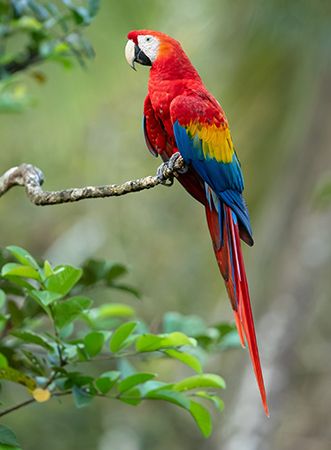
Parrots are primarily birds of the tropics and subtropics, though their distribution also extends into the temperate regions of the Southern Hemisphere. They are found across a wide range of environments, including:12
- Global distribution: They inhabit areas such as Madagascar, many Pacific Islands, the West Indies, and parts of Asia, including India and southern China.1
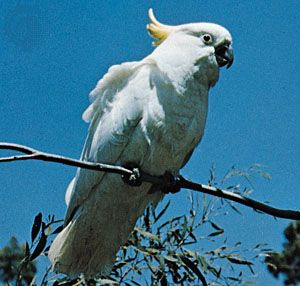
- Specific regions: The family Cacatuidae (cockatoos) is found exclusively in Australia, New Guinea, and the Philippine Islands. Other species are native to New Zealand and the Western Hemisphere) and the Western Hemisphere.21
- Habitats: While most species inhabit forests, some live in grasslands or mountainous regions, such as the Andes and the Himalayas.3
What are some of the most popular parrot species kept as pets, and why?
Parrots are highly sought after as pets due to their intelligence, social nature, and unique physical traits. Their ability to mimic human speech, combined with their capacity to form strong emotional bonds with human caretakers, makes them particularly engaging companions.45
Popular Pet Species
Several species are widely recognized for their popularity in the pet trade:
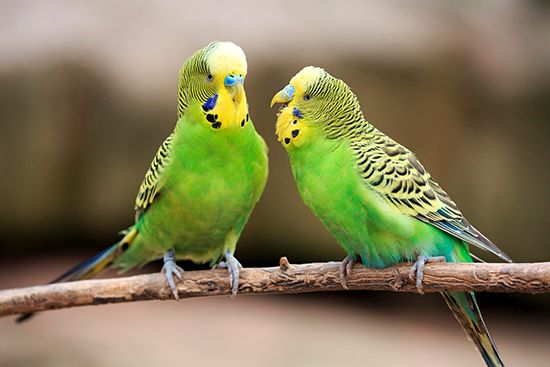
- Budgerigar: Often called the “budgie” or shell parakeet, this is arguably the most popular caged parrot. They are hardy, relatively easy to care for, and come in numerous color mutations.65
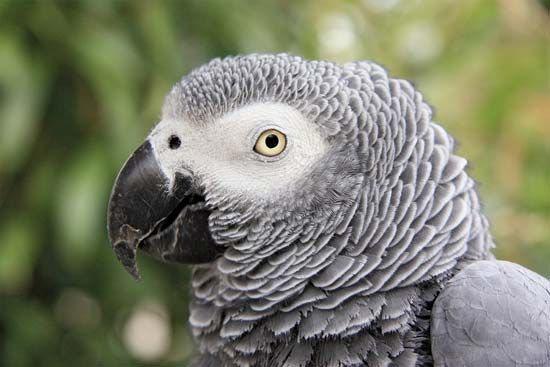
- African Gray Parrot: Renowned for their exceptional cognitive abilities and mimicry skills, these parrots are highly intelligent and form deep attachments to their owners.475
- Cockatiel: A small, crested member of the cockatoo family, they are favored for their affectionate nature and relative ease of maintenance.89
- Amazons: Various species of Amazon parrots are popular for their impressive mimicry and vibrant personalities.5
Why They Are Popular
Beyond their vocal talents, parrots are valued for their “hand-like” use of their feet to manipulate food and objects, their bright colors, and their willingness to interact physically, such as being petted or scratched. Their long lifespans and social, flock-oriented behavior allow them to become integrated members of a human household.547
How have human activities affected parrot populations in the wild, and what conservation efforts are being made?
Human activities have significantly impacted parrot populations, leading to widespread declines and extinctions. The most devastating factors include the destruction of natural habitats, the introduction of exotic species, and the spread of diseases. Because many parrots reside on small islands, they are particularly vulnerable to these environmental changes.108
Specific human-driven pressures include:
- Habitat Loss: The conversion of forests into agricultural or grazing land has fragmented habitats, isolating populations and reducing the space available for survival.11
- Persecution and Trade: Historically, some species, such as the Carolina parakeet, were driven to extinction through direct human persecution. Furthermore, the high demand for parrots in the pet trade has led to the depletion of wild populations, prompting governments to implement laws forbidding the export of many species.121
- Mistreatment: During capture and transport for the pet trade, high mortality rates often occur, meaning only a small fraction of captured birds reach their destination.1
To address these threats, concerted research and conservation efforts are essential to ensure the survival of rare species. Governments have enacted regulations to curb the illegal trade and export of threatened parrots, aiming to protect remaining wild populations from further exploitation.101
What are some unique physical features of parrots, such as their beaks and feet?
Parrots possess several unique physical adaptations that distinguish them from other birds, primarily centered on their specialized bills and feet.
The Parrot Bill
The most distinctive trait of a parrot is its strongly hooked, powerful bill. Unlike many other birds, parrots have a highly kinetic (movable) upper jaw that can move independently of the skull, allowing for exceptional manipulation of objects. The upper and lower mandibles feature a uniform, strong curve, and the undersurface of the upper bill often contains filelike ridges that help hold seeds in place while the lower jaw peels away the outer shell. This sturdy, curved structure is specifically adapted for cracking hard nuts and manipulating food.413
Specialized Feet
Parrots are characterized by zygodactyl feet, an arrangement where two toes point forward and two point backward. This “yoke-toed” structure, combined with a short, thick tarsometatarsus, provides the strength and dexterity necessary for parrots to climb effectively and manipulate objects with their feet as if they were hands. This is a significant departure from the typical anisodactyl foot found in most other birds, where three toes point forward and one points backward.14
Sources
- Psittaciform — Encyclopædia Britannica
- Psittaciform - Annotated classification — Encyclopædia Britannica
- Psittaciform - Habitat and food choice — Encyclopædia Britannica
- Why do parrots talk? — Encyclopædia Britannica
- Parakeet — Encyclopædia Britannica
- African gray parrot — Encyclopædia Britannica
- Cockatiel — Encyclopædia Britannica
- Psittaciform - Importance to humans — Encyclopædia Britannica
- Cockatoo — Encyclopædia Britannica
- Bird - Importance to man — Encyclopædia Britannica
- Psittaciform - Evolution — Encyclopædia Britannica
- conservation - Predictions of extinctions based on habitat loss — Encyclopædia Britannica
- Psittaciform - Feet — Encyclopædia Britannica
- Passeriform - Feet and legs — Encyclopædia Britannica
- Psittaciform - General features — Encyclopædia Britannica
- Psittaciform - Bill and skull — Encyclopædia Britannica
- Beak — Encyclopædia Britannica
- Zygodactylae — Merriam-Webster
Published on · 4 min read