Main River
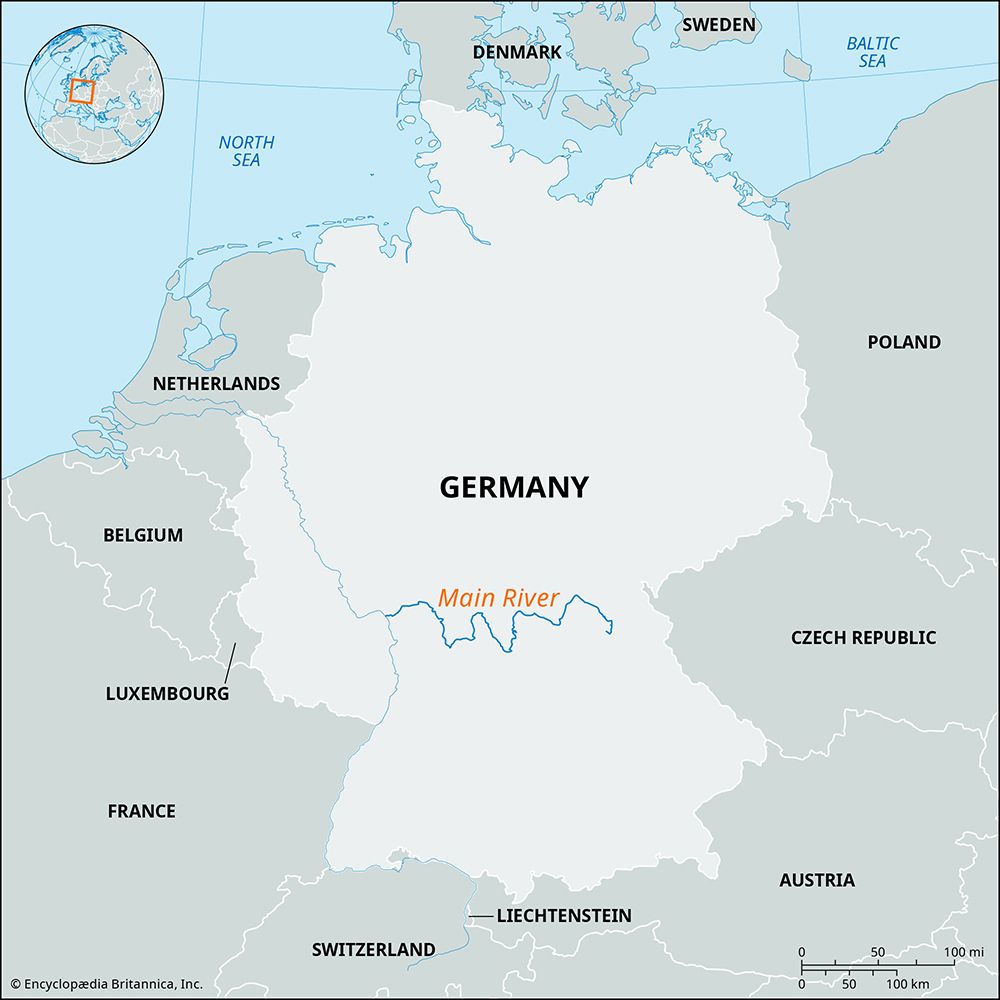
The Main River is a vital waterway in Germany that serves as a major right-bank tributary of the Rhine River. It flows westward for 326 miles (524 km) before…
How does the Main River connect to other major waterways in Europe?
The Main River is a vital waterway in Germany that serves as a major right-bank tributary of the Rhine River. It flows westward for 326 miles (524 km) before joining the Rhine near Mainz.1
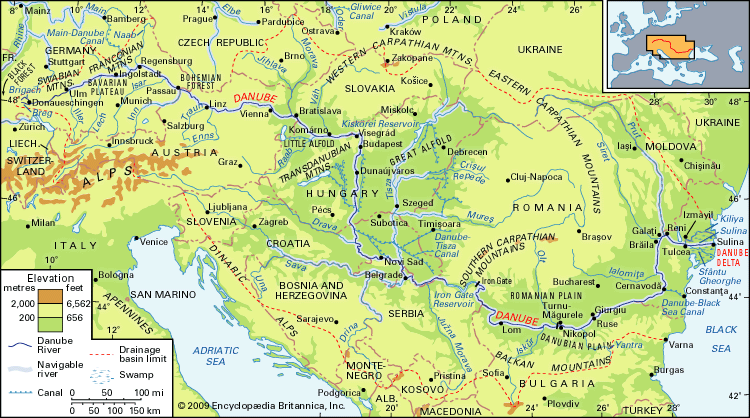
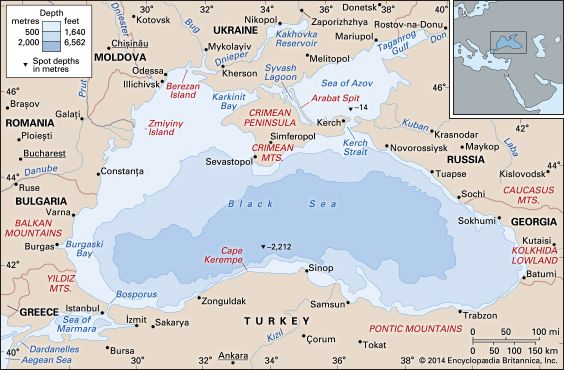
The river’s connectivity was significantly expanded with the completion of the Main-Danube Canal in 1992. This 171-km (106-mile) commercial waterway connects the Main River at Bamberg to the Danube River at Kelheim. By linking these two major river systems, the canal creates a continuous 3,500-km (2,200-mile) trans-European waterway that allows barge traffic to travel between the North Sea and the Black Sea. This integration facilitates trade and transport across 15 countries, serving as a critical link between eastern and western Europe.123
How long is the Main River, and what are its major tributaries?
The Main River has a total length of 326 miles (524 km). It is formed by the confluence of the Weisser (White) Main and the Roter (Red) Main. Along its course, it receives several major tributaries:1
- Regnitz River: Enters from the left at Bamberg.1
- Fränkische Saale River: Enters from the right at Gemünden.1
- Tauber River: Enters from the left at Wertheim.1
The river ultimately flows into the Rhine River near Mainz.1
What is the geographical location and course of the Main River in Germany?
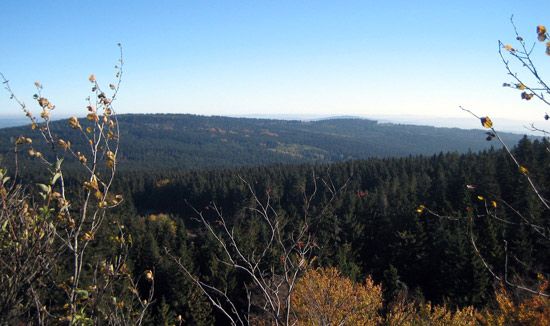
The Main River is a significant waterway in Germany, serving as a major right-bank tributary of the Rhine River. It originates near Kulmbach through the confluence of two headstreams: the Weisser (White) Main, rising in the Fichtel Mountains, and the Roter (Red) Main, which rises in the Fränkische Mountains (Franconian Jura).1
The river’s course is characterized by a winding path across the German landscape:
- Upper Course: It flows southwesterly to Bamberg, where it receives the Regnitz River.
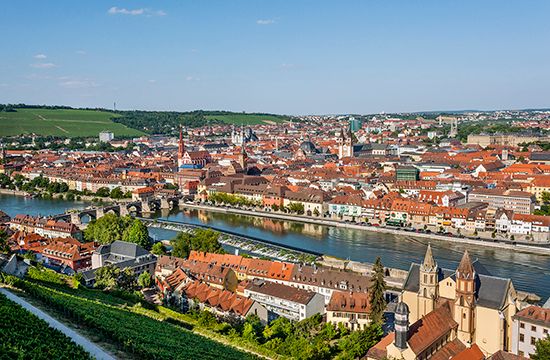
- Middle Course: It turns south and east toward Würzburg, then flows north between the Spessart and Odenwald ranges to Gemünden. After receiving the Fränkische Saale, it turns south to Wertheim, where it meets the Tauber River.
- Lower Course: The river continues west and north to Aschaffenburg, eventually following a westward path through Frankfurt am Main before joining the Rhine near Mainz.1
Spanning 326 miles (524 km), the river is a vital component of the Main-Danube Canal, which connects the North Sea to the Black Sea.1
How has the Main River been important for transportation and commerce in Germany?
The Main River has long served as a vital artery for transportation and commerce in Germany, evolving from a regional waterway into a critical component of a major European transit network.12
Development of Navigation
Historically, the river’s utility for trade was limited by its natural state, but significant efforts were made to improve its navigability. Before World War II, the company responsible for the Main-Danube project enlarged the locks on the Main River to facilitate better transport, often integrating hydroelectric power stations into these structures. Following the war, the integration of European inland waterways became a priority, leading to the canalization of the Main upstream to Bamberg.317
The Main-Danube Canal
The most transformative development for the river’s commercial importance was the completion of the Main-Danube Canal in 1992. This engineering feat:13
- Connects Major Seas: It links the Rhine River to the Danube River, creating a continuous 2,200-mile (3,500-km) waterway between the North Sea and the Black Sea.13
- Facilitates Bulk Transport: The canal accommodates large barges capable of carrying up to 2,425 tons of bulk cargo, significantly enhancing the efficiency of freight movement across 15 countries.37
Today, the Main River functions as a key link in the European inland waterway system, supporting industrial trade and providing a strategic route for traffic between eastern and western Europe.72
Sources
- Main River — Encyclopædia Britannica
- Main-Danube Canal — Encyclopædia Britannica
- canals and inland waterways - Major inland waterways of Europe — Encyclopædia Britannica
- European Plain - Drainage — Encyclopædia Britannica
- Regnitz River — Encyclopædia Britannica
- Germany - Drainage of Germany — Encyclopædia Britannica
- Germany - Waterways — Encyclopædia Britannica
- Rhine River - The economy — Encyclopædia Britannica
- Danube River - The economy — Encyclopædia Britannica
Published on · 3 min read