Negro River
There are two prominent rivers known as the Negro River in South America:
What is Negro River?
There are two prominent rivers known as the Negro River in South America:
- Negro River (Amazon Tributary): This is a major tributary of the Amazon River, originating in Colombia as the Guainía and Vaupés rivers. It flows through Venezuela and Brazil, eventually joining the Solimões River at Manaus to form the Amazon. Known for its distinct jet-black water caused by organic decomposition, it is the largest of all Amazon tributaries.12
- Negro River (Uruguay): This river rises in the southern highlands of Brazil and flows southwest through Uruguay. It is significant for its series of dams, including the Rincón del Bonete Reservoir, which are vital sources of hydroelectric power for the country. It eventually joins the Uruguay River.3
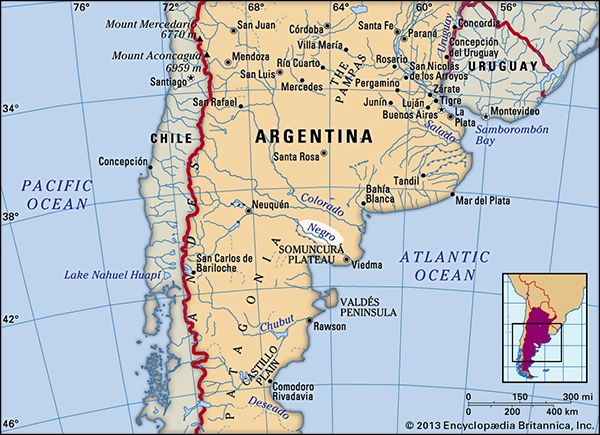
Additionally, the Negro River in Argentina crosses the province of the same name in the Patagonia region, serving as a critical water source for irrigation and agriculture.4
Why does the Amazon’s Rio Negro have such dark water?
The dark, jet-black color of the Negro River is primarily caused by high concentrations of humic acids. These acids are released during the decomposition of organic matter in the marginal swamps and nutrient-poor, sandy uplands through which the river flows.14
Because the river originates in these ancient, crystalline highlands, it carries very little silt or dissolved solids, which allows the dark, tea-like coloration—resulting from the dissolved organic compounds—to remain distinct. This “blackwater” characteristic contrasts sharply with the “whitewater” tributaries of the Amazon River, such as the Madeira River, which originate in the geologically youthful Andes and carry heavy loads of light-colored sediment.41
What is the Meeting of Waters in Manaus?
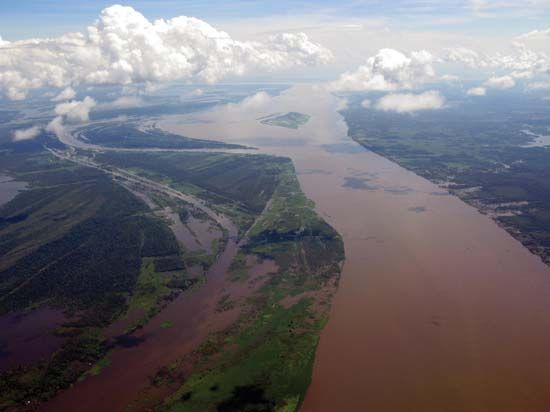
The “Meeting of Waters” (or Encontro das Águas) is a famous natural phenomenon occurring near the city of Manaus, Brazil, where the Negro River and the Solimões River converge to form the Amazon River.61
This junction is visually striking because the two rivers possess vastly different characteristics that prevent them from mixing immediately:
- The Negro River: Carries clear, jet-black water rich in humic acids from decomposing organic matter, which is relatively warm and free of sediment.14
- The Solimões River: Carries yellowish, “whitewater” that is heavily laden with silt and sediment derived from the Andes.14
When these two bodies of water meet, the darker, sediment-free waters of the Negro tend to be overrun by the silt-heavy waters of the Solimões. This creates a distinct, side-by-side color boundary that remains visible for a significant distance before the currents eventually merge due to downstream turbulence.4
How do hydroelectric dams impact rivers like the Negro in Uruguay?
The Negro River in Uruguay has been significantly transformed by the construction of three major hydroelectric dams: the Rincón del Bonete (Gabriel Terra), Baygorria, and Palmar dams. These structures serve as vital sources of hydroelectric power for the country, but they have fundamentally altered the river’s natural state.2
The primary impacts of these dams include:
- Environmental Transformation: The dams have created large artificial reservoirs, such as the Rincón del Bonete, which is one of the largest in South America. This process inundates land and changes the local landscape, often leading to concerns regarding the loss of flora, fauna, and natural habitats.27
- Sediment Retention: Like many dams worldwide, these structures trap sediment that would otherwise flow downstream. This retention can reduce the effective storage capacity of the reservoirs over time as they fill with silt.89
- Disruption of Aquatic Life: Dams can impede the movement of migrating or spawning fish. While technologies like fish passes are sometimes used to mitigate these effects, the construction of multiple dams along a river system often makes it difficult to sustain fish populations, potentially leading to significant declines.710
Sources
- Negro River — Encyclopædia Britannica
- Negro River — Encyclopædia Britannica
- Río Negro — Encyclopædia Britannica
- Amazon River - Physiography of the river course — Encyclopædia Britannica
- fulvic acid — Encyclopædia Britannica
- Solimões River — Encyclopædia Britannica
- dam - Rise of environmental and economic concerns — Encyclopædia Britannica
- Río de la Plata - Physiography of the Uruguay basin — Encyclopædia Britannica
- river - Environments of deposition — Encyclopædia Britannica
- dam - Reservoirs — Encyclopædia Britannica
- dam - Fish passes — Encyclopædia Britannica
Published on · 3 min read