Cuckoo
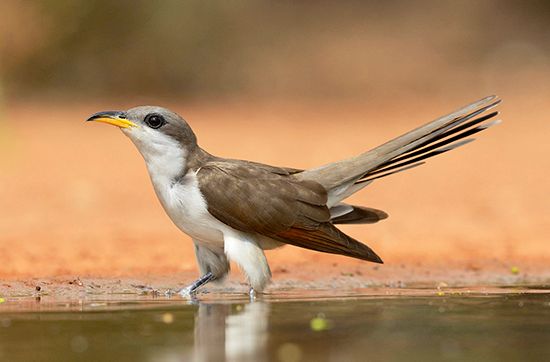
Like many insectivorous birds in temperate climates, temperate-zone cuckoos migrate toward or across the Equator during the winter months. These birds are…
How do cuckoos migrate, and what are their typical migration patterns?
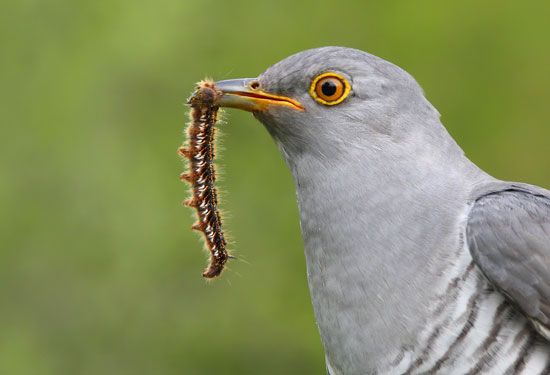
Like many insectivorous birds in temperate climates, temperate-zone cuckoos migrate toward or across the Equator during the winter months. These birds are primarily nocturnal migrants, meaning they typically travel under the cover of darkness.12
Their migration patterns are notable for several reasons:
- Independent Travel: In some species, young cuckoos migrate completely independently of their parents, sometimes crossing up to 3,200 km (about 2,000 miles) of open ocean without guidance.1
- Precise Navigation: Adults and young of certain small Australasian glossy cuckoos migrate separately over long distances to reach specific, relatively small oceanic islands.1
- Unknown Mechanisms: While it is clear that these birds possess an unusually precise ability for orientation and navigation, the specific biological mechanisms they use to achieve this remain unknown.1
Because cuckoos are often shy and inhabit thick vegetation, their migratory movements are frequently studied through radar and other indirect observations rather than direct tracking.32
What adaptations do cuckoo chicks have that help them survive in host nests?
Cuckoo chicks possess remarkable adaptations that ensure their survival within the nests of their foster parents. These adaptations are primarily behavioral and physiological, designed to eliminate competition and secure the undivided attention of the host birds.
Nest-Mate Eviction
Within hours of hatching, the blind and naked cuckoo chick exhibits an innate, powerful drive to remove any competition from the nest. It accomplishes this through a specialized physical adaptation: a depression located between its shoulder blades. The chick maneuvers itself under the host’s eggs or other nestlings, uses this depression to balance the object, and heaves it over the rim of the nest. This behavior ensures that the young cuckoo receives all the food and care provided by the foster parents.2
Rapid Growth and Mimicry
Once the nest is cleared, the cuckoo chick grows rapidly, often dwarfing its smaller foster parents by the time it is ready to fledge. While the primary adaptations for survival occur after hatching, the success of the chick is also dependent on the female cuckoo’s prior adaptations, such as egg mimicry, which ensures the egg is accepted and incubated by the host in the first place.27
How does the cuckoo’s brood parasitism strategy work, and what impact does it have on host species?
Brood parasitism is a reproductive strategy in which cuckoos lay their eggs in the nests of other bird species, relying on the hosts to incubate the eggs and raise the young. This behavior, which has been documented for centuries, involves several sophisticated adaptations and exerts significant evolutionary pressure on host populations.27
How the Strategy Works
- Host Selection and Mimicry: Female cuckoos often belong to specific “gentes” (clans) that specialize in parasitizing a single host species. To avoid detection, they have evolved egg mimicry, producing eggs that closely resemble the color and pattern of their host’s eggs.27
- Strategic Placement: Females monitor host nest construction and wait for the host to begin laying eggs. They typically visit the nest when the owners are away, depositing a single egg in each nest to maximize their reproductive success.2
- Nest-Mate Eviction: In many species, the newly hatched cuckoo instinctively evicts the host’s eggs or chicks from the nest, ensuring it receives all the food and attention from the foster parents.2
Impact on Host Species
The relationship is a classic example of coevolution. Hosts often develop defenses, such as the ability to discriminate and reject foreign eggs. In response, cuckoos must evolve increasingly accurate mimicry to bypass these defenses. This cycle leads to “coevolutionary alternation,” where cuckoos shift between different host species over generations as hosts develop or lose their defensive capabilities. While the impact on an individual host’s reproductive success is severe—often resulting in the total loss of their own brood—the long-term evolutionary result is a dynamic, ongoing arms race between the parasite and its hosts.72
What are the different types of cuckoos found around the world, and where are they typically located?
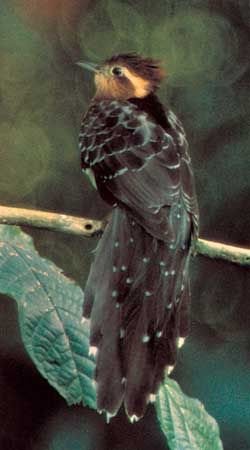
The family Cuculidae is distributed globally across temperate and tropical regions, though its diversity is concentrated in the Old World tropics. The family is organized into six subfamilies, each with distinct geographic ranges and characteristics.94
Geographic Distribution and Subfamilies
- Old World Restricted: The subfamilies Cuculinae, Centropodinae, and Couinae are found exclusively in the Old World.9
- New World Restricted: The Crotophaginae are found only in the New World.9
- Mixed Distribution: The Neomorphinae (ground cuckoos) are primarily in the New World, with one genus in Southeast Asia. The Phaenicophaeinae are found in the tropics of both hemispheres.9
Notable Groups and Locations
Cuckoos vary significantly in their habits and habitats:
- Typical Cuckoos (Cuculus): Found across Europe, Asia, Africa, and Australia.9
- Coucals (Centropus): Inhabit Africa, Asia, Australia, and adjacent islands.910
- Ground Cuckoos: Include the roadrunners of the southwestern United States and Mexico southwestern United States and Mexico.10
- Regional Specialists: Some genera are highly localized, such as Saurothera (lizard cuckoos) in the West Indies and various genera restricted to New Guinea or the Philippine Islands.9
Sources
- Cuculiform - Migration — Encyclopædia Britannica
- Cuculiform - Brood parasitism — Encyclopædia Britannica
- Cuculiform - Nonparasitic cuckoos — Encyclopædia Britannica
- Cuckoo — Encyclopædia Britannica
- community ecology - Coevolution of one species with several species — Encyclopædia Britannica
- Migration - Modes of migration — Encyclopædia Britannica
- coevolutionary alternation — Encyclopædia Britannica
- mimicry - Cuckoos — Encyclopædia Britannica
- Cuculiform - Distribution — Encyclopædia Britannica
- Cuculiform - General features — Encyclopædia Britannica
Published on · 4 min read