Malwa Plains
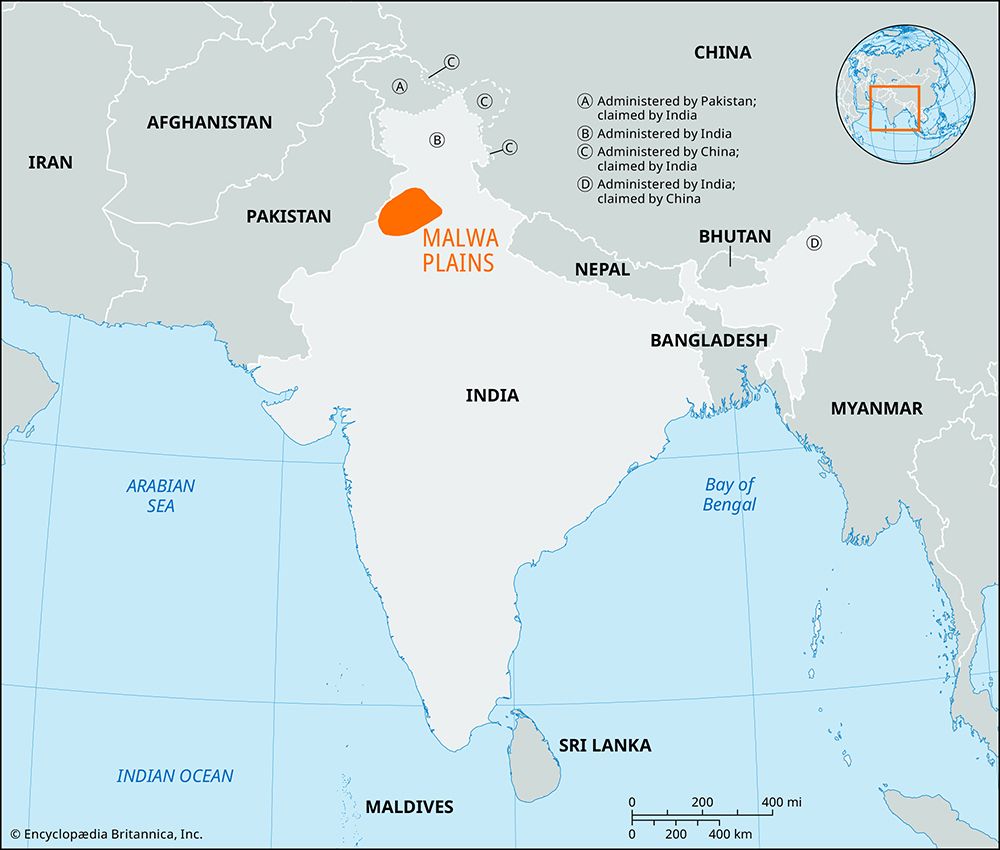
The Malwa Plains are a distinct alluvial region located in central Punjab state, northern India. It is important to distinguish this region from the Malwa…
What is the geographical location and extent of the Malwa Plains in India?
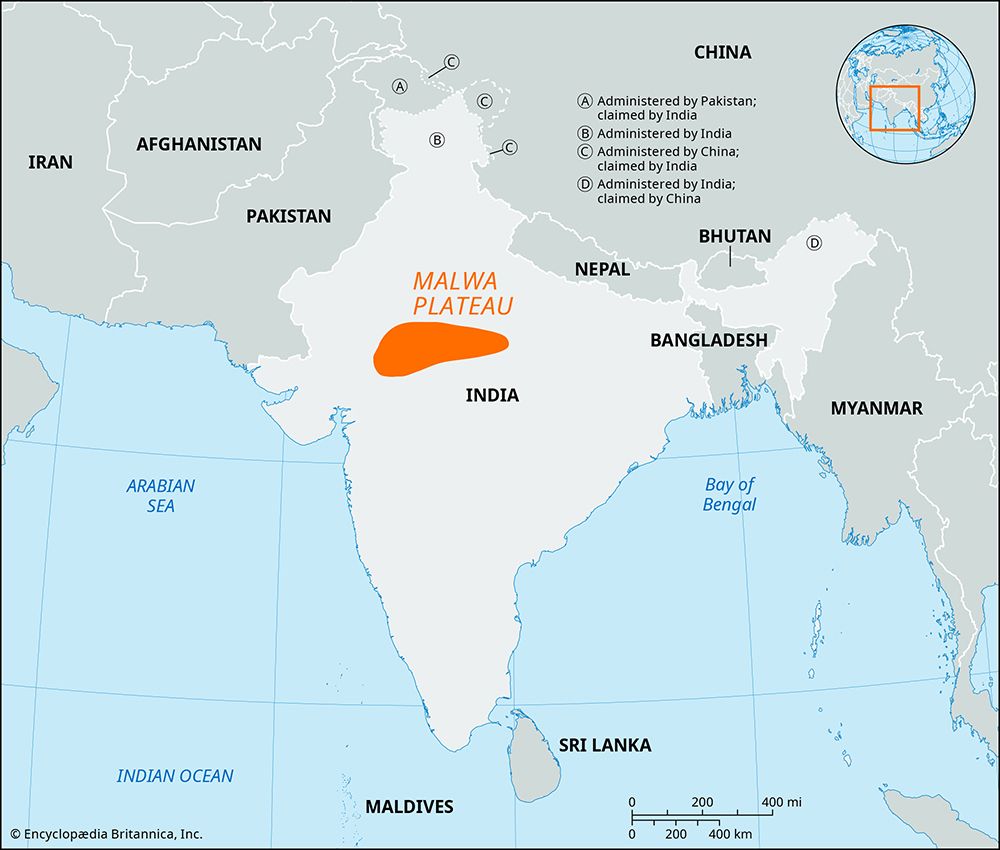
The Malwa Plains are a distinct alluvial region located in central Punjab state, northern India. It is important to distinguish this region from the Malwa plateau and province in west-central India, which are separate geographical entities.123
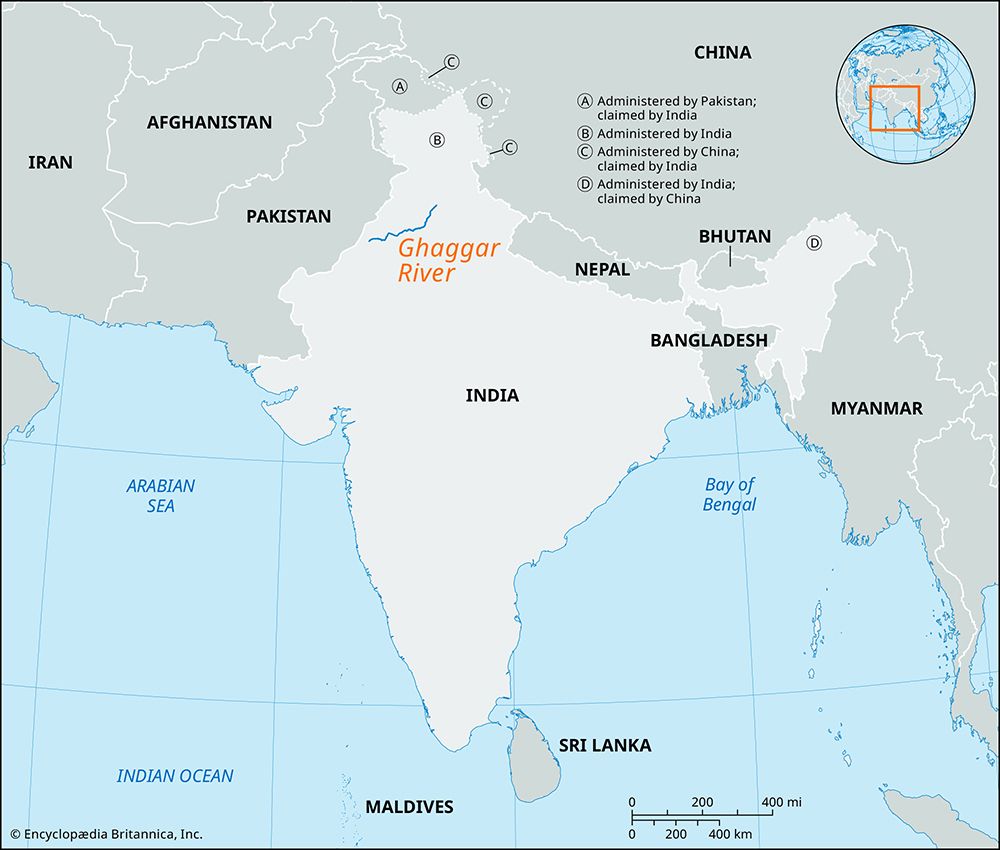
The Malwa Plains are situated between the Ghaggar and Sutlej rivers, lying south of the Bist Doab. The region is bordered to the northeast by the Siwalik Range.1
Regarding its extent and elevation, the plains range from approximately 985 feet (300 meters) above sea level in the northeast to below 655 feet (200 meters) in the southwest. The terrain is characterized by slightly undulating land, featuring occasional sand dunes and ridges in the southern areas that border the Great Indian (Thar) Desert.1
What are the primary economic activities and industries in the Malwa Plains area?
The economy of the Malwa Plains in Punjab is primarily driven by agriculture, with the region producing a surplus of food grains, most notably wheat. Other significant crops include cereals, pulses (legumes), cotton, sugarcane, and oilseeds.1
The industrial sector is divided between small-scale operations and larger manufacturing facilities:
- Small-scale industries: These focus on the production of machine tools, footwear, sewing machines and their parts, plastic goods, and water pipes and fittings.1
- Large-scale production: The region manufactures tractors, dry-cell batteries, polyester films, nylon, and automobile tires and tubes.1
The area is well-integrated into the broader economy through a robust network of roads and railways that connect key urban centers such as Ludhiana, Chandigarh, Abohar, Bhatinda, and Maler Kotla.1
What are some of the major crops grown in the Malwa Plains?
Agriculture is the primary economic driver of the Malwa Plains, which are known for producing a surplus of food grains. The major crops grown in the region include:
- Cereals: Including a significant output of wheat.1
- Pulses: Various types of legumes.1
- Cash Crops: Cotton and sugarcane.1
- Oilseeds: Grown as a key agricultural commodity.1
What are the main geological features that characterize the Malwa Plains?
The Malwa Plains are characterized by their status as an alluvial region located in central Punjab. Their primary geological and physical features include:
- Topography: The terrain is slightly undulating, with elevations ranging from approximately 985 feet (300 meters) in the northeast to below 655 feet (200 meters) in the southwest.
- Boundaries: The plains are situated between the Ghaggar and Sutlej rivers and are bordered by the Siwalik Range to the northeast.
- Surface Features: The landscape is marked by former river channels and, in the southern areas bordering the Great Indian (Thar) Desert, by occasional sand dunes and sand ridges.
- Hydrology: Several perennial rivers cross the region, including the Ghaggar, Patiali, Dangri, and Markanda.
While the Malwa Plains are defined by these alluvial characteristics, the Malwa Plateau in central India is distinct, being of volcanic origin and featuring mesas carved from ancient lava flows.
Sources
- Malwa Plains — Encyclopædia Britannica
- Malwa — Encyclopædia Britannica
- Malwa Plateau — Encyclopædia Britannica
Published on · 2 min read