Mato Grosso Plateau
Sorry, the Britannica knowledge base does not contain information regarding specific plant or animal species that are found exclusively on the Mato Grosso…
What are some of the unique plant or animal species found only in the Mato Grosso Plateau?
Sorry, the Britannica knowledge base does not contain information regarding specific plant or animal species that are found exclusively on the Mato Grosso Plateau.
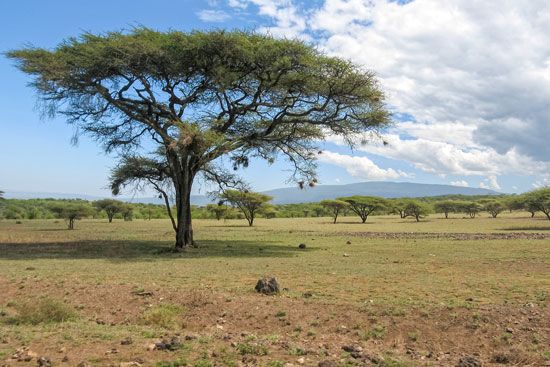
While the plateau is characterized by a mixture of savanna grasslands and woodland, and shares some vegetation with the nearby Pantanal complex—such as various palms, laurels, and grasses—the provided sources do not identify any species as being unique or endemic solely to this plateau.
How was the Mato Grosso Plateau formed, and what are its main geological features?
The Mato Grosso Plateau is an ancient erosional plateau situated within the Brazilian Highlands of central Brazil. Its formation is linked to the complex geological history of the region, which includes the Precambrian Brazilian orogenic cycle. During this period, the collision between the Amazonia craton and the Alto Paraguay craton created significant geological structures, including sequences of green schists, limestones, and quartzites.13
The plateau features several distinct geological and physical characteristics:
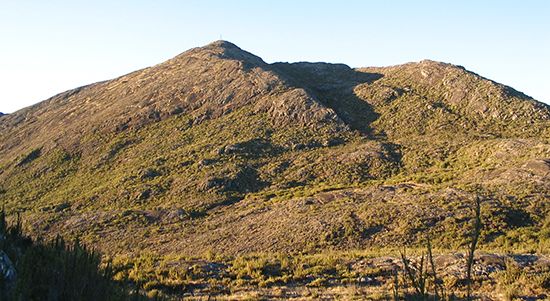
- Elevation and Topography: It maintains an average elevation of approximately 3,000 feet (900 meters) above sea level. The landscape is characterized by extensive plains, known as campos, which feature scrub growth and light forest.14
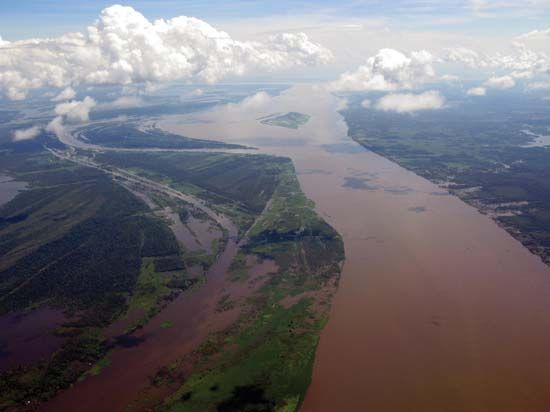
- Watershed Divide: The plateau serves as a critical continental divide, separating the Amazon River basin to the north from the Paraguay River and Río de la Plata systems to the south.14
- Boundaries: It extends from the border of Goiás state westward toward the Parecis Mountains and transitions into the Pantanal floodplains in the south.1
How does the Mato Grosso Plateau compare to other plateaus in South America in terms of size and ecological importance?
The Mato Grosso Plateau is a significant component of the Brazilian Highlands, which collectively comprise more than half of Brazil’s landmass. While the Brazilian Highlands are characterized by extensive tabular plateaus, the Mato Grosso Plateau specifically serves as a vital continental watershed divide, separating the Amazon River basin to the north from the Paraguay River and Río de la Plata systems to the south.167
In comparison to other South American plateaus, such as the Atacama Plateau in the Andes, the Mato Grosso Plateau is lower in elevation, averaging about 3,000 feet (900 meters) compared to the Atacama’s 11,000 to 13,000 feet (3,300 to 4,000 meters). Ecologically, the Mato Grosso Plateau is defined by a mixture of savanna grasslands and woodland, supporting significant cattle ranching and large-scale agro-industry. While the Atacama is a cold, desolate tableland with sparse vegetation, the Mato Grosso region acts as a critical transition zone between highland campos and the rich, often-inundated grazing lands of the Pantanal to the south.687
What is the geographical location and extent of the Mato Grosso Plateau in Brazil?
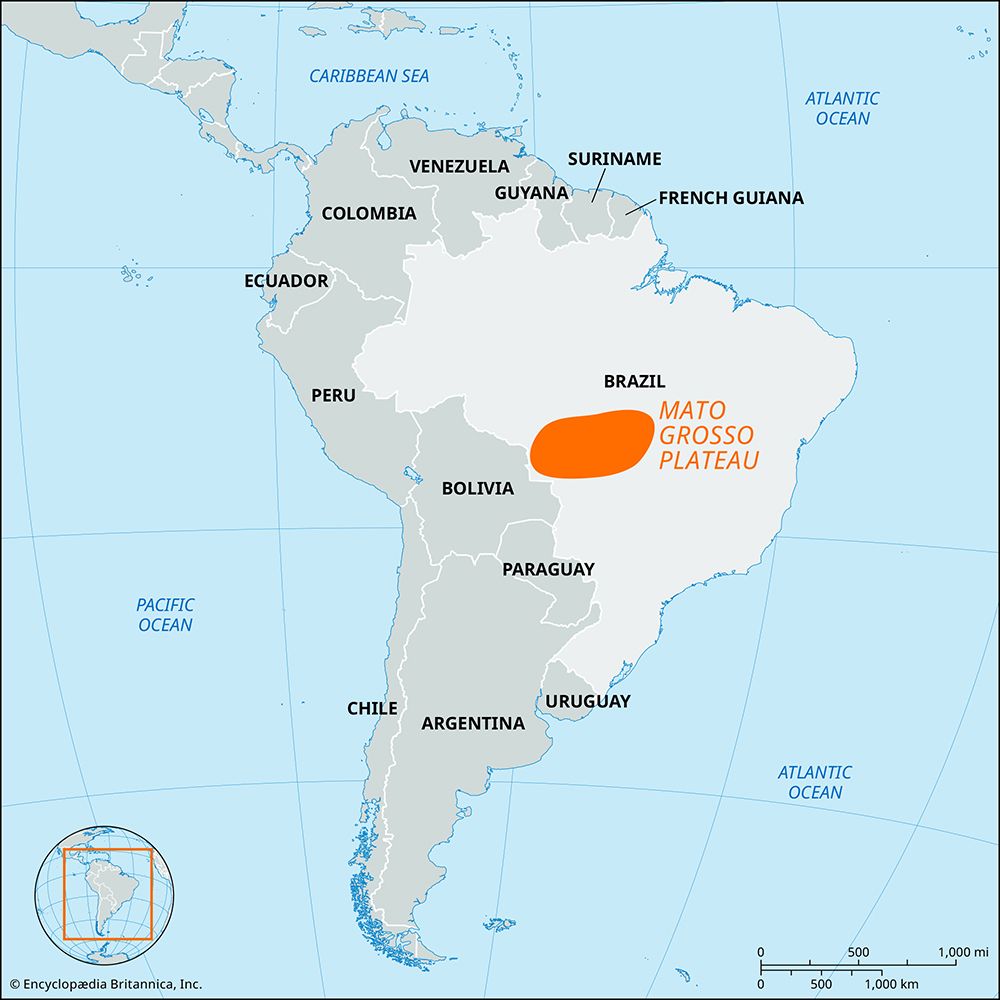
The Mato Grosso Plateau is an ancient erosional plateau located within the Brazilian Highlands of inland Brazil. It occupies a significant portion of central Mato Grosso state, extending westward from the border of Goiás state to the Parecis Mountains near the Bolivian border.14
Geographically, the plateau serves as a critical continental divide, separating the Amazon River basin to the north from the Paraguay River and Río de la Plata systems to the south. It maintains an average elevation of approximately 3,000 feet (900 meters) above sea level. To the south, the plateau transitions into the Pantanal, a region of rich, often-inundated grazing lands.14
Sources
- Mato Grosso Plateau — Encyclopædia Britannica
- Río de la Plata - Plant life — Encyclopædia Britannica
- South America - The Brazilian cycle — Encyclopædia Britannica
- Mato Grosso — Encyclopædia Britannica
- Brazil - Brazilian Highlands — Encyclopædia Britannica
- Brazilian Highlands — Encyclopædia Britannica
- Chile - The Chilean Andes — Encyclopædia Britannica
- Atacama Plateau — Encyclopædia Britannica
Published on · 3 min read