Mamba
Mambas (genus Dendroaspis) are a group of four venomous snakes native to sub-Saharan Africa that belong to the cobra family (Elapidae). They are…
What are the key characteristics that distinguish mambas from other snake species?
Mambas (genus Dendroaspis) are a group of four venomous snakes native to sub-Saharan Africa that belong to the cobra family (Elapidae). They are distinguished from other species by several key physical and behavioral traits:
- Appearance: Mambas are slender and agile with smooth scales and distinctive flat-sided, “coffin-shaped” heads. They possess long front fangs and deliver a powerful neurotoxic venom.1
- Mouth Coloration: The black mamba is named for the black lining of its mouth, which contrasts with the white mouths of green mambas and most other snakes.12
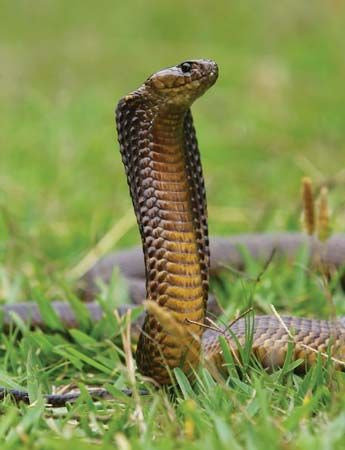
- Defensive Posture: When threatened, mambas may rear up and flatten their necks into a narrow hood, a behavior similar to but distinct from the broader hoods of cobras.12
- Agility: They are known for being exceptionally quick; the black mamba is one of the world’s fastest snakes, capable of reaching speeds over 12 miles per hour.12
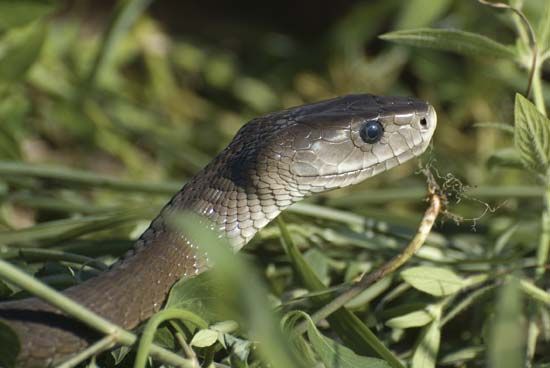
What makes the black mamba one of the most feared snakes in Africa?
The black mamba (Dendroaspis polylepis) is widely considered one of the most feared snakes in Africa due to a combination of its physical attributes and the potency of its venom. Key factors contributing to its reputation include:
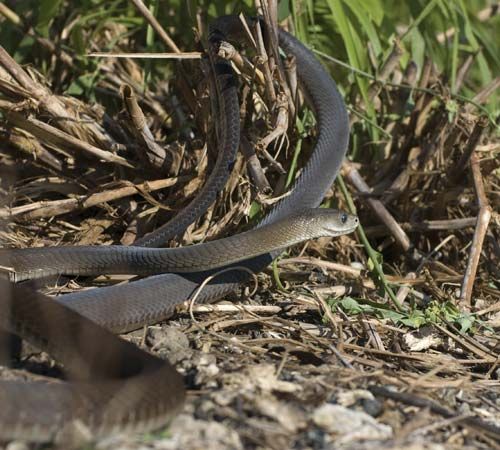
- Size and Speed: The black mamba is a large snake, typically reaching lengths of 2–2.5 meters (up to 4.3 meters), and is recognized as one of the fastest snakes in the world, capable of moving at speeds exceeding 12 miles (19 km) per hour.24
- Potent Venom: It possesses an extremely toxic neurotoxic venom that attacks both the nervous system and the heart. It is reported that just two drops of this venom can be lethal to most humans.24
- Defensive Behavior: While generally shy and inclined to flee, the snake has an aggressive reputation because it will defend itself if cornered or disturbed. In such instances, it may rear up, flatten its neck into a hood, and open its distinctive black-lined mouth before striking repeatedly.24
Despite this fear, unprovoked attacks on humans have not been proven, and the snake is responsible for only a small number of human deaths annually.21
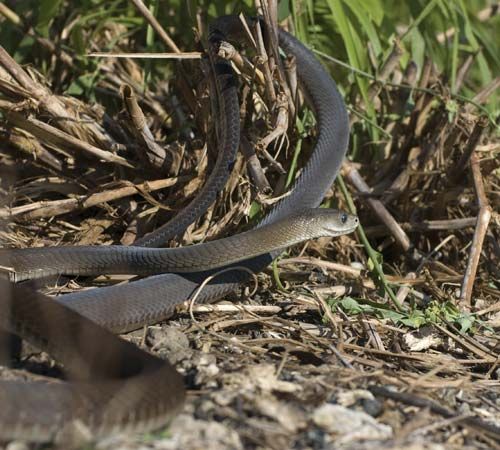
How many species of mamba exist, and where are they primarily found?
There are four recognized species of mamba, all of which are members of the cobra family (Elapidae) and are native to sub-Saharan Africa. These snakes inhabit a variety of environments, including tropical rainforests and savannas.1
The four species are:
- Black mamba (Dendroaspis polylepis): Found in rocky savannas and lowland forests, this species is unique among mambas for being primarily terrestrial rather than arboreal.12
- East African green mamba (D. angusticeps): Primarily located in East and South Africa.1
- Jameson’s mamba (D. jamesoni): Found throughout Central Africa.1
- West African green mamba (D. viridis): Native to regions of West Africa.1
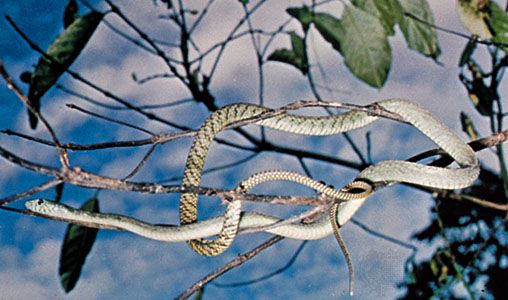
While the black mamba is often encountered on the ground, the three green mamba species are smaller and typically live in trees.1
What is the average lifespan of a mamba in the wild versus in captivity?
The lifespan of mambas varies significantly between their natural environment and captivity, with data primarily available for the black mamba and certain green mamba species.
- Black Mamba (Dendroaspis polylepis): In the wild, these snakes typically live at least 11 years. When kept in captivity, they have been known to live for more than 20 years.2
- Green Mamba Species: While specific wild lifespan data for the East African green mamba, Jameson’s mamba, and West African green mamba is less frequently cited, two of these three species have recorded longevities exceeding 18 years in captivity.1
The provided search results do not contain specific average lifespan data for green mambas in the wild.
Sources
- mamba — Encyclopædia Britannica
- black mamba — Encyclopædia Britannica
- mamba — Merriam-Webster
- 9 of the World’s Deadliest Snakes — Encyclopædia Britannica
Published on · 3 min read