Mangabey
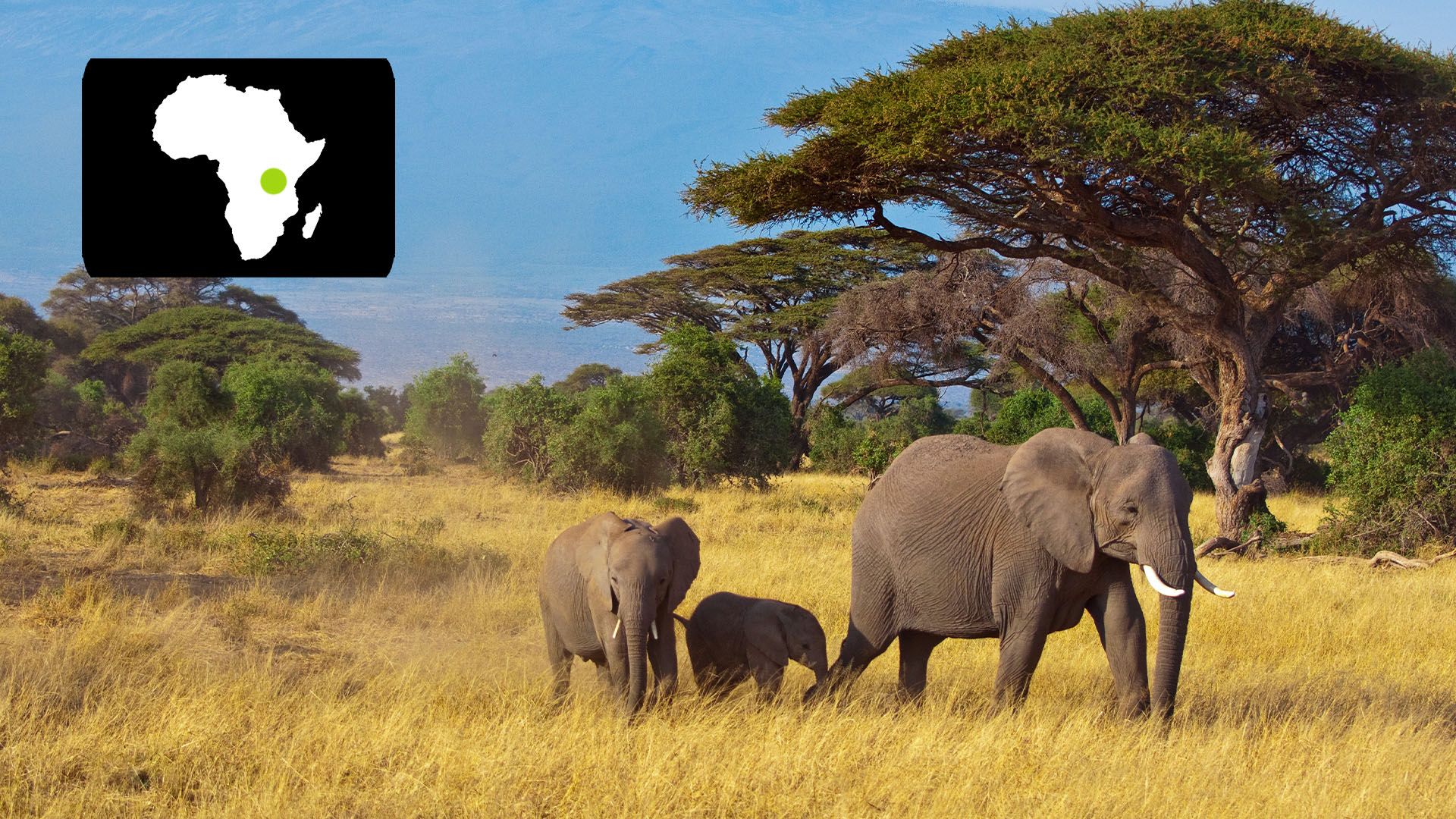
Mangabey monkeys are primarily found in the tropical forests of Africa.
Where are mangabey monkeys primarily found in the wild?
Mangabey monkeys are primarily found in the tropical forests of Africa1.
Their distribution varies by genus and species:
- Genus Cercocebus: These monkeys are typically found in west-central and Central Africa, with some species ranging as far west as Senegal and others located in East Africa, such as in Tanzania and Kenya.1
- Genus Lophocebus: These species are generally found in regions spanning from eastern Nigeria eastward into Uganda and areas south of the Congo River1.
While some species are widespread, others are restricted to specific river systems or mountain ranges, and many face significant threats due to habitat loss.1
What are the defining physical characteristics of mangabey monkeys?
Mangabey monkeys are slender, long-limbed, and fairly large quadrupedal monkeys characterized by cheek pouches and deep depressions under their cheekbones. They possess large front teeth that allow them to consume tough-coated fruits, and they utilize a specialized vocal sac for communication.1
Physical traits vary significantly between the two primary genera:
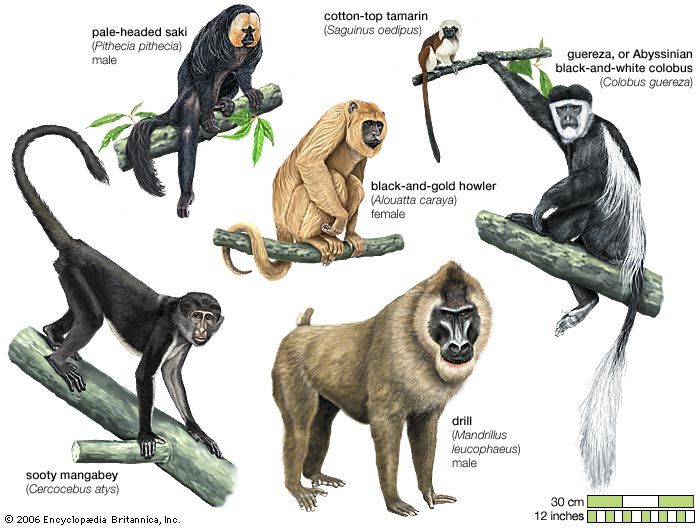
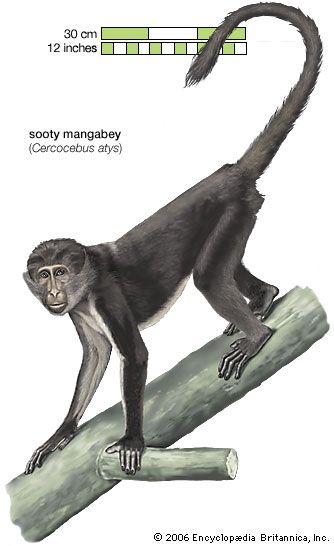
- Genus Cercocebus: These monkeys are short-haired with speckled, grayish-brown to dark gray fur. A defining feature is their light-colored, often bright white eyelids. They typically spend significant time on the ground and carry their long, tapering tails forward over their backs.1
- Genus Lophocebus: These monkeys are long-haired with unspeckled black fur. Unlike Cercocebus, they lack white eyelids and spend more time in trees. They carry their tails in an upright, curved, or question-mark shape.1
Overall, species range from 40 to 90 cm (16–35 inches) in head and body length, with males weighing up to 11 kg (24 pounds) and females up to 6 kg (13 pounds).1
How are mangabey monkeys affected by habitat loss and conservation efforts?
Mangabey monkeys face significant threats from the ongoing loss of their natural habitat, which has led to the decline of several species. The International Union for Conservation of Nature (IUCN) has classified multiple mangabey species as endangered, including the red-capped, Sanje, and white-naped mangabeys. The Tana River mangabey is particularly vulnerable, currently listed as a critically endangered species with a population estimated at only 100–1,000 individuals, a decline driven primarily by habitat destruction.1
Conservation efforts for these primates are often complicated by broader environmental and political challenges. While protected areas and reserves exist to provide sanctuary for various species, these regions frequently struggle against illegal poaching and the continued destruction of forest ecosystems. Furthermore, regional instability and civil strife can severely disrupt organized conservation initiatives, leaving populations at greater risk.2
What is the typical social structure and behavior of mangabey monkey groups?
Mangabeys are highly social animals that live in organized groups, though their specific social structures vary by genus and species.
Social Organization
- Genus Cercocebus: These monkeys typically live in small troops. For example, the Tana River mangabey lives in groups consisting of one or two males alongside several females and their young. These troops are known for the unusual practice of moving across open grasslands to travel between patches of gallery forest.1
- Genus Lophocebus: These species, such as the gray-cheeked mangabey, live in more dispersed troops that include several males and females. When not feeding, members of these groups are often observed resting in a characteristic, sprawled position along tree branches or in the forks of trees.1
Behavioral Characteristics
Mangabeys rely heavily on vocal communication to maintain social cohesion. They possess a specialized vocal sac that allows them to produce loud, distinct calls. Males are particularly vocal, often emitting a series of deep “whoops” that rise into screeches during the morning and evening to establish spacing between groups.1
Sources
- mangabey — Encyclopædia Britannica
- vervet — Encyclopædia Britannica
- Ituri Forest - Plant and animal life — Encyclopædia Britannica
- monkey — Encyclopædia Britannica
Published on · 3 min read