Mango
Mangoes are highly nutritious fruits that offer a variety of health benefits due to their rich chemical composition. They are an excellent source of vitamins…
What are the nutritional benefits of eating mangoes?
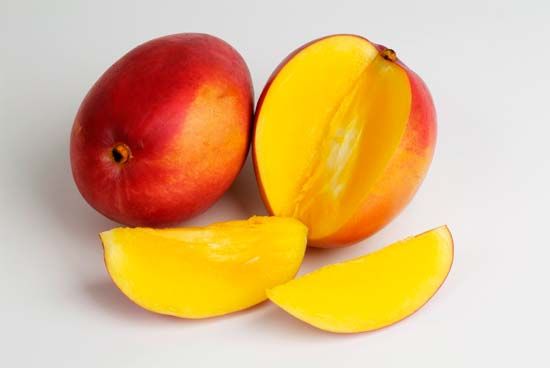
Mangoes are highly nutritious fruits that offer a variety of health benefits due to their rich chemical composition. They are an excellent source of vitamins A, C, and B complex, with a single serving providing approximately 50 percent of the daily requirement for vitamin C.12
Key nutritional and health-related properties include:
- Antioxidant Support: Mangoes contain flavonoids, carotenoids (such as beta-carotene), and mangiferin, which act as robust antioxidants to protect cells from oxidative damage.1
- Digestive Health: The fruit is rich in dietary fiber and enzymes like amylase, which aid digestion and help prevent constipation.1
- Metabolic Support: Bioactive compounds in mangoes can enhance glucose tolerance and insulin secretion, providing antidiabetic support.1
- Immunity and Growth: Minerals such as copper and vitamins like folate help boost immunity and support fetal development.1
While beneficial, mangoes have a higher sugar content than many other fruits, which may be a consideration for some individuals.2
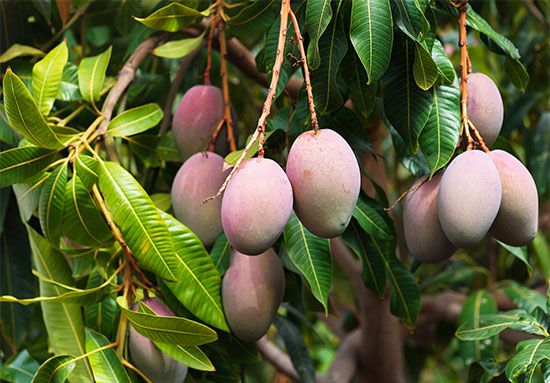
How long does it take for a mango tree to bear fruit, and what is its typical lifespan?
The mango tree (Mangifera indica) is an evergreen species known for its longevity, as it is capable of attaining great age. While the provided information notes that the tree reaches significant maturity and height, it does not specify a precise number of years for its typical lifespan or the exact time required for a tree to begin bearing fruit.1
The tree is typically propagated through grafting or budding, which are methods used to ensure the cultivation of specific varieties. Because mango seeds remain viable for only a short period, these vegetative propagation techniques are essential for commercial and agricultural success.1
How does the mango tree grow, and what conditions are ideal for its cultivation?
The mango tree (Mangifera indica) is an evergreen that typically reaches heights of 15–18 meters (50–60 feet). It is indigenous to southern Asia and is now cultivated in various tropical regions worldwide.
Ideal Cultivation Conditions
While mangoes do not require specific soil types, successful fruit production depends on several environmental factors:
- Dry Season: Finer varieties require a well-defined dry season to stimulate the production of flowers and fruit.
- Disease Management: In rainy climates, the tree is susceptible to anthracnose, a fungal disease that can destroy flowers and young fruit.
- Propagation: Because seeds remain viable for only a short time, commercial cultivation relies on vegetative propagation methods such as grafting or budding. In tropical Asia, inarching is common, while more efficient techniques like veneer grafting and chip budding are used in places like Florida.
What are some interesting cultural or religious significance of mangoes in different parts of the world?
The mango is deeply intertwined with the folklore and religious traditions of India, where the tree is considered indigenous. Its cultural significance is highlighted by the following historical associations:
- Buddhist Tradition: The mango holds a place of reverence in Buddhism. According to tradition, Buddha was presented with a mango grove, providing him with a place of repose and shade.
- Ceremonial Importance: The fruit and the tree are frequently featured in various religious ceremonies in India, reflecting their long-standing status as a symbol of cultural identity in the region.
While the mango is now a global fruit, its journey to other parts of the world was historically limited by the short viability of its seeds. It was not introduced to the Western Hemisphere until approximately 1700, when it was planted in Brazil, eventually reaching the West Indies and Florida in the 18th and 19th centuries.1
Sources
- Mango — Encyclopædia Britannica
- Mango: Top Questions — Encyclopædia Britannica
Published on · 3 min read