Hog Plum
The term "hog plum" most commonly refers to Spondias mombin, an ornamental deciduous tree in the cashew family native to the tropical Americas. While the…
What is Hog plum?
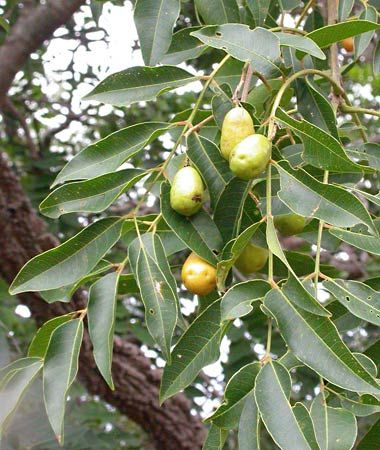
The term “hog plum” most commonly refers to Spondias mombin, an ornamental deciduous tree in the cashew family native to the tropical Americas. While the name is sometimes applied to other plants—such as the Chickasaw plum or certain species of poison-wood—the Spondias variety is widely recognized for its edible, plumlike drupe fruits.12
These trees can reach heights of 15 to 22 meters and are characterized by deeply fissured bark and compound leaves that typically drop before the tree flowers. The yellow-green fruits, which measure about 4 cm in length, contain a large, spiny stone that is difficult to separate from the pulp. Beyond their culinary use, the young leaves are edible, and various parts of the plant have historically been utilized in traditional medicine. Having naturalized in parts of Africa and Southeast Asia, these plants remain a significant botanical resource.1
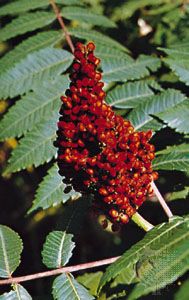
What other fruits belong to the Anacardiaceae family?
The Anacardiaceae family, commonly known as the sumac or cashew family, includes a diverse range of trees and shrubs. While some members are cultivated for their edible fruits and seeds, others are known for their resins or their potential to cause skin irritation.
Key plants in this family include:
- Edible Fruits and Seeds:
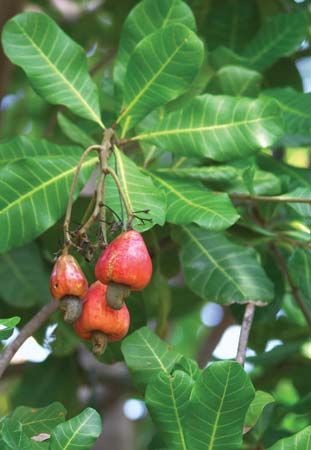
- Cashew (Anacardium occidentale): Cultivated primarily for its edible seed, often referred to as a nut.
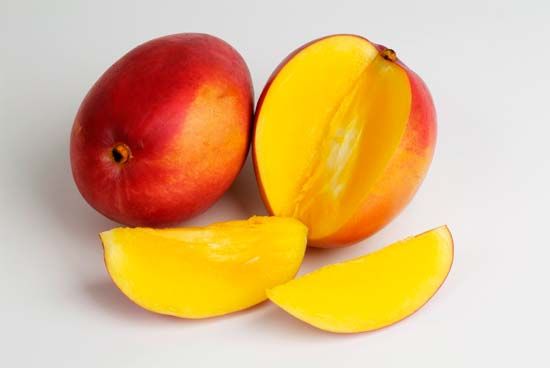
- Mango (Mangifera indica): A widely consumed tropical fruit.
- Pistachio (Pistacia vera): Known for its edible seed.
- Hog plum (Spondias mombin): Produces edible, plumlike drupes.
- Wild plum or Kaffir plum (Harpephyllum caffrum): Another species noted for its edible fruit.
- Ornamental and Industrial Plants:
- Pepper tree (Schinus molle): Often grown as an ornamental.
- Sumac (genus Rhus): Includes various species used for ornamental purposes.
- Mastic tree (Pistacia lentiscus): Valued for its resin.
- Quebracho (genus Schinopsis): A source of commercial tannin.
- Irritating Species:
- Poison ivy, poison oak, and poison sumac (all Toxicodendron species): Known for causing allergic skin reactions.
How are hog plums used in traditional medicine?
While various parts of the hog plum (Spondias mombin) are utilized in traditional medicine, the provided search results do not specify the particular ailments treated or the methods of preparation used in these practices.1
We could dive deeper into the botanical properties of the Spondias genus or explore other medicinal plants within the Anacardiaceae family if you would like to learn more.
What are the differences between a hog plum and a common plum?
While both the hog plum and the common plum produce edible, drupe-like fruits, they are distinct plants belonging to different botanical families.
Botanical Classification
- Hog Plum (Spondias mombin): A member of the Anacardiaceae family, which also includes cashews, mangoes, and pistachios. It is native to the tropical Americas.12
- Common Plum (Prunus genus): A member of the Rosaceae family, making it closely related to peaches and cherries.8
Physical and Structural Differences
- Fruit Characteristics: The hog plum produces a yellow-green, leathery-skinned drupe about 4 cm (1.6 inches) long, containing a large, spiny stone that is difficult to separate from the pulp. In contrast, common plums exhibit a wide range of sizes, colors, and textures, with flesh that is typically juicy and a stone that is distinct from the fruit’s exterior.18
- Tree Habit: The hog plum is a deciduous tropical tree that can reach heights of 15–22 meters (49–72 feet) and typically sheds its compound leaves before flowering. Common plum trees are generally smaller, ranging from 6 to 10 meters (20 to 33 feet), and feature flowers that grow from buds on short spurs or terminal shoots.18
Sources
- hog plum — Encyclopædia Britannica
- hog plum — Merriam-Webster
- list of plants in the family Anacardiaceae — Encyclopædia Britannica
- Anacardiaceae — Merriam-Webster
- Anacardiaceae — Encyclopædia Britannica
- Cashew — Encyclopædia Britannica
- Sapindales - Anacardiaceae — Encyclopædia Britannica
- Plum — Encyclopædia Britannica
Published on · 3 min read