Pepper Tree
The term "pepper tree" refers to Schinus molle, an ornamental tree belonging to the cashew family (Anacardiaceae). Native to dry regions of South America, it…
What is pepper tree?
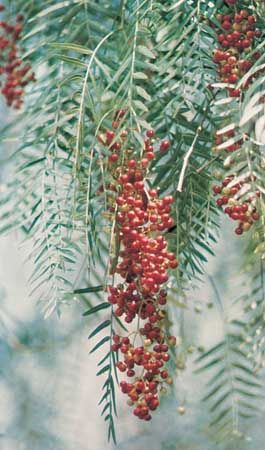
The term “pepper tree” refers to Schinus molle, an ornamental tree belonging to the cashew family (Anacardiaceae). Native to dry regions of South America, it is often called the California pepper tree.12
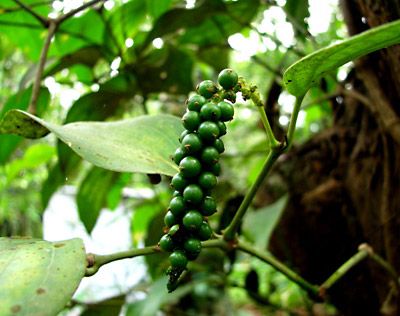
It is important to clarify that despite its name and the hot, aromatic taste of its “pink peppercorns,” the pepper tree is entirely unrelated to the true black pepper (Piper nigrum) used as a common culinary spice.1
The tree is fast-growing, reaching heights of up to 15 meters (50 feet), and is characterized by a wide, weeping canopy. Its leaves contain volatile oils that release a peppery scent when crushed. While valued for its appearance, the species is considered an invasive species in Australia and other regions, and it can host scale insects that threaten orange crops.1
How are pink peppercorns different from black pepper?
Pink peppercorns and black pepper are distinct botanical entities that share a similar name due to their pungent flavor, but they are not related.
- Black Pepper (Piper nigrum): This is the true source of the common culinary spice. It is derived from the fruits of the black pepper plant, which are typically dried and ground for use.1
- Pink Peppercorns: These are the piquant fruits of the pepper tree (Schinus molle), an ornamental member of the cashew family. While they possess a hot taste and aroma similar to black pepper, they are not true peppercorns.1
The pepper tree is native to South America and is characterized by its weeping branches and volatile oil-rich leaves. Because of their different origins, they belong to entirely separate plant families.1
Why is the pepper tree considered an invasive species in some regions?
The pepper tree (Schinus molle) is considered an invasive species in Australia and several other regions outside its native South American range primarily due to its aggressive growth habits and ecological impact.
As a long-lived and quick-growing plant, the pepper tree can easily outcompete native vegetation. Beyond its rapid spread, it poses a significant threat to agricultural interests; it serves as a host for scale insects that are known to damage orange trees. Consequently, the plant is actively controlled in susceptible agricultural areas to protect crop health and prevent the further disruption of local ecosystems.1
What other plants belong to the cashew family?
The cashew family, known as Anacardiaceae, is a diverse group of approximately 870 species of trees, shrubs, and woody vines. While some members are prized for their edible fruits and nuts, others are known for their resins or skin-irritating properties.
Notable plants in this family include:
- Edible Crops: Cashew, mango, pistachio, hog plum, and wild cashew.45
- Ornamentals and Trees: Pepper tree, smoke tree, sumac, and the mastic tree.45
- Resin and Wood Sources: Chinese lacquer tree and quebracho.45
- Irritants: Poison ivy, poison oak, and poison sumac.45
Members of this family are characterized by the presence of resin ducts in their bark and typically feature compound leaves.45
Sources
- pepper tree — Encyclopædia Britannica
- California pepper tree — Merriam-Webster
- black pepper — Encyclopædia Britannica
- list of plants in the family Anacardiaceae — Encyclopædia Britannica
- Anacardiaceae — Merriam-Webster
- Anacardiaceae — Encyclopædia Britannica
Published on · 2 min read