Máni
The Maniots, a fierce and historically isolated people inhabiting the Mani Peninsula in the southern Peloponnese, played a pivotal role in the War of Greek…
What role did the Maniots play in the Greek War of Independence?
The Maniots, a fierce and historically isolated people inhabiting the Mani Peninsula in the southern Peloponnese, played a pivotal role in the War of Greek Independence.
Known for their defensive “many-towered” architecture and independent spirit, the Maniots were instrumental in the early stages of the conflict. In 1821, an uprising initiated within the region served as a critical catalyst for the broader Greek struggle against Ottoman rule. Their long-standing tradition of resistance and their strategic location helped ignite the revolution that eventually led to the establishment of the modern Greek state.1
What is the significance of the Máni Peninsula in Greek mythology?
The Máni Peninsula holds significant importance in Greek mythology, primarily through its association with Cape Taínaron (Cape Matapan). This site was home to a sanctuary dedicated to Poseidon, the god of the sea, reflecting the region’s deep connection to the Mediterranean.1
In ancient tradition, the caves at Cape Taínaron were famously regarded as one of the entrances to the underworld, Hades. This mythological significance underscores the peninsula’s historical role as a place of both maritime reverence and symbolic transition between the world of the living and the realm of the dead.1
What are the unique geographical features of the Máni Peninsula?
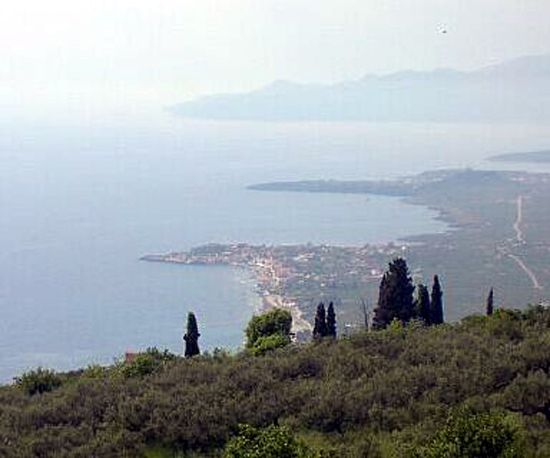
The Máni Peninsula is a rugged and isolated region in the southern Peloponnese, serving as a natural extension of the Taíyetos mountain range. Spanning 28 miles (45 km) in length, the peninsula is defined by its dramatic, mountainous terrain and a distinct, unspoiled medieval character.1
Key geographical and historical features include:
- Cape Taínaron: Located at the southern tip of the peninsula, this site features the ruins of a sanctuary dedicated to Poseidon.1
- Subterranean Landscapes: The region is home to magnificent caves near Diros, which were opened to the public in 1963.1
- Defensive Architecture: Historically known as “Many-Towered Maina,” the landscape is marked by traditional defensive towers built by its inhabitants.1
- Cultural Heritage: The area preserves numerous 11th- and 12th-century Byzantine churches, reflecting its long-standing historical significance.1
How does the economy of the Máni Peninsula differ from other parts of Greece?
The provided search results do not contain specific information regarding the current economy of the Máni Peninsula or how it differs from other regions of Greece.
Historically, the peninsula was characterized by an isolated, rugged landscape where inhabitants lived by raiding coastal shipping, a stark contrast to the agricultural and commercial activities found in the plains of Thessalía, Makedonía, and Thráki. Today, the region is designated as a historical district, and its economy is influenced by its status as a site of cultural heritage, featuring Byzantine churches and public attractions like the caves at Diros.12
Because the available data does not provide a comparative economic analysis between Máni and other parts of the country, I cannot offer further details on their differences.
Sources
- Máni — Encyclopædia Britannica
- Peloponnese — Encyclopædia Britannica
- Greece - Agriculture, forestry, and fishing — Encyclopædia Britannica
Published on · 2 min read