Manicouagan River
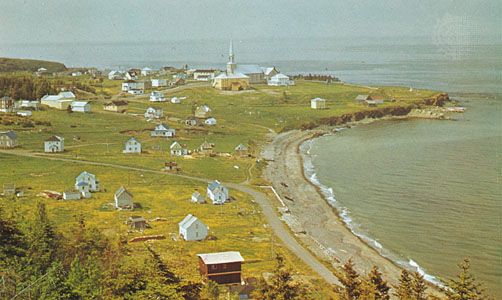
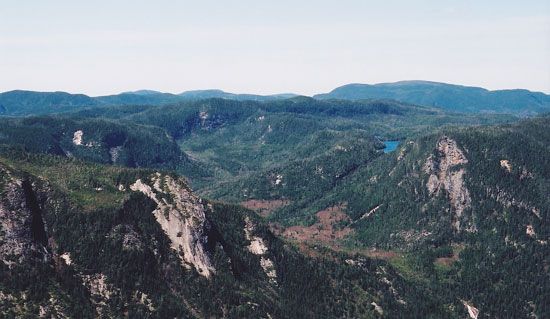
The Manicouagan River in eastern Quebec is more than 550 km (340 miles) long.
What is the length of the Manicouagan River, and how does it compare to other major rivers in Canada?
The Manicouagan River in eastern Quebec is more than 550 km (340 miles) long.1
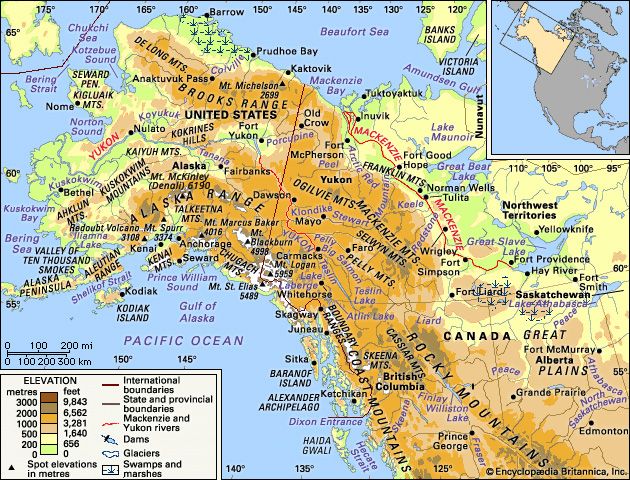
While significant for its role in hydroelectric power generation, the Manicouagan is relatively short compared to Canada’s major river systems. For context, the Mackenzie River, which is Canada’s longest, spans 4,241 km (2,635 miles). Similarly, the Saskatchewan River system extends 1,939 km (1,205 miles), and the St. Lawrence River waterway reaches approximately 3,765 km (2,340 miles).23
The Manicouagan drains an area of more than 41,000 square km (16,000 square miles), which is also substantially smaller than the massive drainage basins of rivers like the Mackenzie, which covers 1,800,000 square km (690,000 square miles).12
How was the Manicouagan Reservoir formed, and what is its significance?
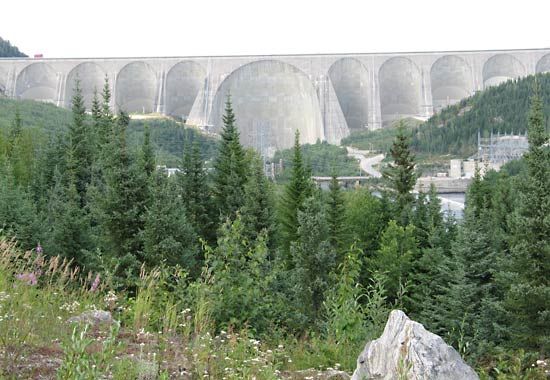
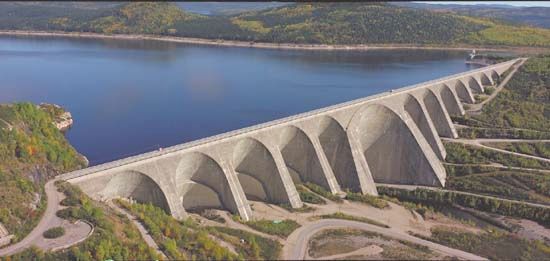
The Manicouagan Reservoir was formed by the impoundment of the Manicouagan River following the construction of the Daniel-Johnson Dam. Construction of this massive multiple-arch buttress dam began in 1959, and upon the sealing of diversion tunnels in 1963, the reservoir began to fill, a process that continued until 1977.4
The reservoir is highly significant for several reasons:
- Hydroelectric Power: It serves as a vital water source for the Manic-5 and Manic-5-PA power stations. Together, this complex boasts an installed capacity of 2,660 megawatts, providing essential electricity to the greater Quebec area.4
- Geological Landmark: The reservoir is situated within an ancient impact crater. Its distinct annular shape, often called the “Eye of Quebec,” completely surrounds René-Levasseur Island, which is the second-largest lake island in the world.4
- Engineering Achievement: The Daniel-Johnson Dam itself is an iconic symbol of engineering, standing as the tallest dam of its type in the world at 214 metres (703 feet).4
How has the Manicouagan River been utilized for hydroelectric power generation?
The Manicouagan River has been transformed into a major source of hydroelectric power through the ambitious Manicouagan-Outardes project managed by Hydro-Québec.
The centerpiece of this development is the Daniel-Johnson Dam, one of the world’s largest multiple-arch buttress dams. Completed in 1968, this engineering feat impounds the river to create an immense reservoir, which provides the necessary water pressure to drive the turbines at the nearby Manic-5 and Manic-5-PA generating stations. Together, these facilities possess an installed capacity of 2,660 megawatts, supplying significant electricity to the greater Quebec area.14
Beyond local use, the river’s power potential has been integrated into a broader regional grid. Notably, a submarine cable installed in 1954 was an early innovation used to transmit electric power under the St. Lawrence River to support industrial activities in the Gaspé Peninsula.1
How has the construction of dams on the Manicouagan River affected local communities and wildlife?
The provided search results do not contain information regarding the specific effects of the Manicouagan River dam construction on local communities or wildlife. The available documentation focuses primarily on the engineering history, technical specifications of the Daniel-Johnson Dam, and the development of hydroelectric power infrastructure in the region.
Sources
- Manicouagan River — Encyclopædia Britannica
- Canada - Drainage of Canada — Encyclopædia Britannica
- Saskatchewan River — Encyclopædia Britannica
- Daniel-Johnson Dam — Encyclopædia Britannica
- Ungava-Quebec Crater — Encyclopædia Britannica
- Outardes River — Encyclopædia Britannica
Published on · 2 min read