Mano River
The Mano River is a waterway that rises in the Guinea Highlands northeast of Voinjama, Liberia. Spanning approximately 200 miles (320 km), it flows in a…
What is Mano River?
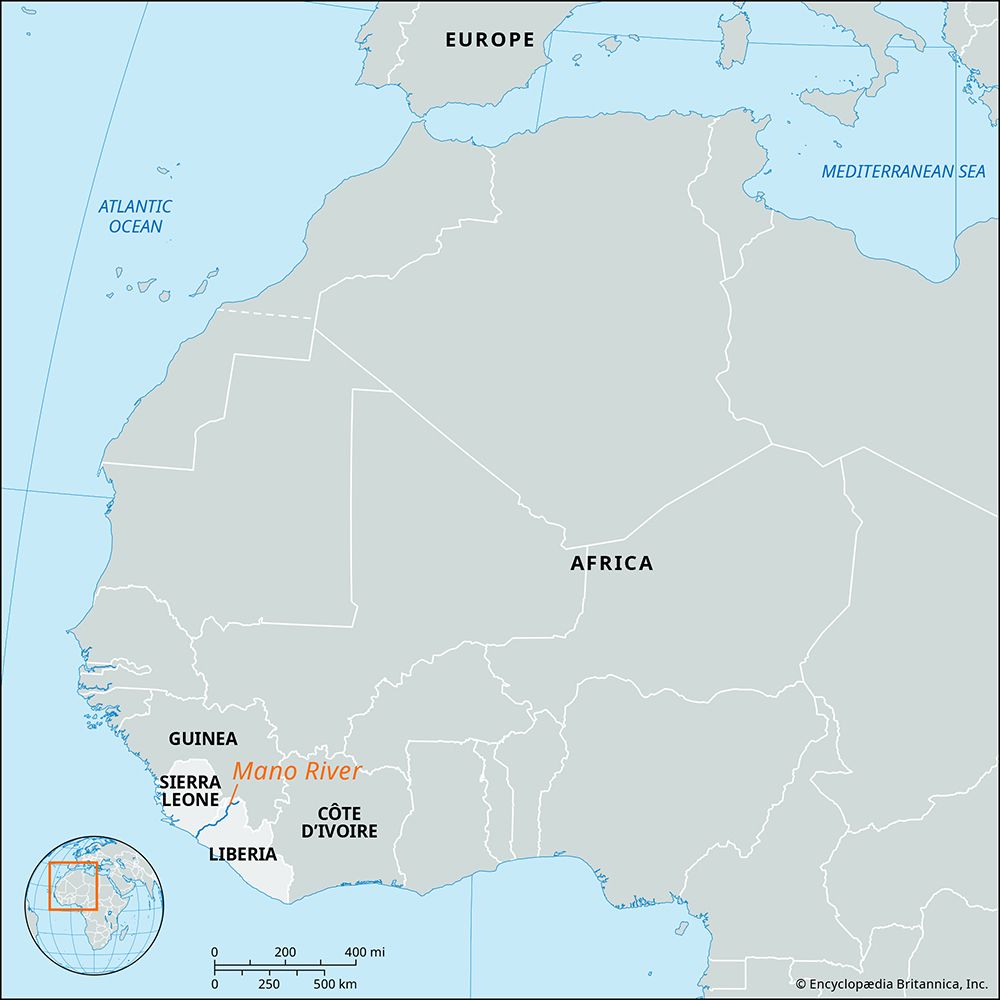
The Mano River is a waterway that rises in the Guinea Highlands northeast of Voinjama, Liberia. Spanning approximately 200 miles (320 km), it flows in a southwesterly direction through the Gola National Forest before emptying into the Atlantic Ocean at Mano Salija, Sierra Leone.1
Along with its tributary, the Morro, the river serves as a natural boundary for more than 90 miles (145 km) between Liberia and Sierra Leone. The river basin covers 3,185 square miles (8,250 square km) and includes other affluents such as the Zeliba. Due to intermittent rapids, the river is not easily navigable. In 1976, the Mano River Bridge was completed at Bo Waterside, Liberia, significantly improving road connectivity between the capitals of Liberia and Sierra Leone.12
What is the Mano River Union?
The Mano River Union is a regional free trade organization established to foster economic cooperation and integration among its member states. Originally formed by Liberia and Sierra Leone, the union also includes Guinea.1
The organization is named after the Mano River, a waterway that serves as a natural border between Liberia and Sierra Leone. By facilitating trade and economic collaboration, the union aims to strengthen the regional infrastructure and economic ties between these neighboring West African nations. In addition to this partnership, member countries are also part of the broader Economic Community of West African States (ECOWAS), which coordinates policy across a larger portion of the continent.31
What are the major rivers in Liberia?
Liberia features several major rivers that play a significant role in the country’s geography and drainage. These rivers generally flow in a southwesterly direction, perpendicular to the coast, and are often characterized by waterfalls and rapids that limit inland navigation.2
The major rivers in Liberia include:
- Mano and Morro Rivers: Located in the northwest, these rivers form sections of Liberia’s international boundary.24
- Cavalla River: Situated in the east and southeast, this river forms a significant portion of the border between Liberia and Côte d’Ivoire.25
- Lofa River: A major river located in the northern part of the country.2
- St. Paul River: This river flows into the Atlantic Ocean near Monrovia and is notable for the Mount Coffee Hydroelectric Plant](https://www.britannica.com/place/Saint-Paul-River/Introduction#ref1).26
- St. John and Cestos Rivers: These rivers also flow parallel to one another toward the coast.2
- Farmington River: This river is a key source of hydroelectric power for the nation.2
How do rapids affect river navigation?
Rapids significantly impede river navigation by creating sections of turbulent flow and white water. These conditions arise in response to a local increase in the channel gradient, often caused by geological features like bars of hard rock or abrupt changes in the riverbed’s structure.1
Because rapids represent major interruptions in a river’s flow, they act as physical barriers that prevent the smooth passage of vessels. For example, the Mano River is noted for having intermittent rapids that directly impede its navigability. While rivers are essential for water transport—often serving as cost-effective routes for moving commodities—the presence of rapids or waterfalls necessitates significant infrastructure investment or alternative transport methods to bypass these hazardous stretches.819
Sources
- Mano River — Encyclopædia Britannica
- Liberia - Drainage — Encyclopædia Britannica
- Liberia - Economy of Liberia — Encyclopædia Britannica
- Cavalla River — Encyclopædia Britannica
- Saint Paul River — Encyclopædia Britannica
- Liberia: Top Questions — Encyclopædia Britannica
- Côte d’Ivoire - Drainage — Encyclopædia Britannica
- waterfall — Encyclopædia Britannica
- river - Rivers as agents of landscape evolution — Encyclopædia Britannica
- canals and inland waterways - Economic significance — Encyclopædia Britannica
Published on · 2 min read