Maple
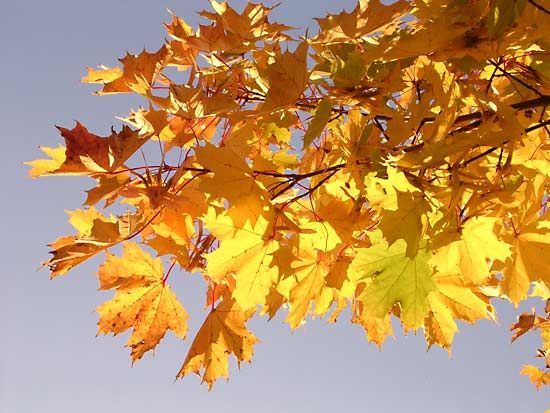
There are approximately 200 species of maple trees belonging to the genus Acer within the family Sapindaceae.
How many species of maple trees exist, and where are they primarily found?
There are approximately 200 species of maple trees belonging to the genus Acer within the family Sapindaceae.1
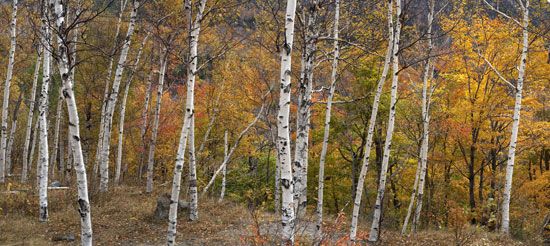
These trees are widely distributed throughout the North Temperate Zone, though they are most heavily concentrated in China. While they are found across various regions, certain species are native to specific areas; for instance, the sugar maple and red maple are native to eastern North America, where they are highly valued for their wood and the production of maple syrup.1234
What are the most common uses of maple trees in various industries?
Maple trees are utilized across several industries, primarily for their wood and sap. Their most common applications include:
Wood and Timber Industry
Maple trees provide a dense, high-quality hardwood that is highly valued for its durability and aesthetic appeal. Key uses include:
- Furniture and Flooring: The wood is widely used in the manufacture of fine furniture and durable flooring.32
- Musical Instruments: Due to its acoustic properties, maple is a preferred material for crafting various musical instruments.1
- Specialty Grain Patterns: Certain trees develop unique grain patterns, such as bird’s-eye, curly, and fiddleback maple, which are highly prized for decorative woodworking.3
Food and Beverage Industry
The sap of specific species, particularly the sugar maple and black maple, is a significant commercial resource.35
- Maple Syrup: Concentrated sap is used to produce maple syrup, which serves as a sweetener for foods like pancakes and waffles, as well as an ingredient in confections, ice cream toppings, and flavourings.35
- Other Uses: Maple syrup is also used as a casing for tobacco.5
Landscaping and Horticulture
Maples are one of the most important groups of ornamental plants. They are extensively used in landscaping for:
- Shade and Aesthetics: Many species are planted in parks, along streets, and in residential lawns for their varied forms, sizes, and striking autumn foliage.2
- Screening: Smaller species, such as the hedge maple, are often used to create screens or hedges.2
How does the process of maple syrup production work, from tree to table?
The production of maple syrup is a process of concentrating the sap of specific trees, primarily the sugar maple and black maple, through evaporation.2
The Harvesting Process
- Timing: The season occurs in late winter or early spring (mid-January to mid-April), when the trees are dormant. Sap flows from the sapwood when a period of freezing temperatures is followed by a thaw.23
- Tapping: Producers drill a taphole into the tree and insert a device to drain the sap. While traditional methods used individual buckets, modern operations often use plastic tubing to transport sap from entire stands of trees—known as a “sugar bush”—directly to central storage tanks.2
From Sap to Syrup
- Concentration: Raw sap contains only 1.5 to 3 percent solids, mostly sucrose, and lacks the characteristic colour and flavour of the final product.23
- Evaporation: The sap is boiled in open pans or specialized evaporators. This process removes water, concentrating the sugars and developing the syrup’s signature taste and colour. It takes approximately 30 to 50 gallons (115 to 190 litres) of raw sap to produce just one gallon of finished syrup.23
What are some of the most popular ornamental maple species used in landscaping?
Maples are among the most important ornamental plants, valued for their diverse forms, sizes, and striking autumn foliage. They are categorized by size and specific aesthetic features, making them suitable for various landscaping needs.1
Smaller Maples (Screens and Small Gardens)
- Hedge or Field Maple (A. campestre): Useful for screens or hedges, featuring yellow autumn foliage.1
- Amur or Ginnala Maple (A. ginnala): Also ideal for screens, displaying pink to scarlet fall colours.1
- Japanese Maple (A. palmatum): Highly popular for small gardens, this species has been bred over centuries to offer a wide array of leaf shapes and colours.1
- Vine Maple (A. circinatum): A shrubby, wide-spreading plant with purple and white spring flowers and brilliant fall leaves.1
- Siebold Maple (A. sieboldianum): A shrubby variety with seven- to nine-lobed leaves that turn red in autumn.1
Medium-Sized Maples
- Big-toothed Maple (A. grandidentatum): Often multistemmed, this tree displays pink to red fall foliage.1
- Coliseum (A. cappadocicum) and Miyabe (A. miyabei) Maples: Both are noted for their golden-yellow autumn colour.1
- Paperbark Maple (A. griseum): Prized for its attractive, peeling copper-brown bark.1
- Norway Maple (A. platanoides): A dense, round-headed tree available in many cultivated varieties with unusual leaf colours like maroon, bronze, or purple.1
Large Shade Maples
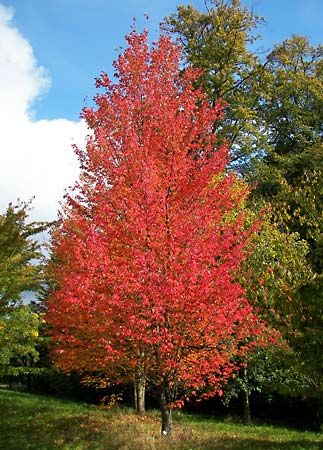
- Sugar (A. saccharum), Silver (A. saccharinum), and Red (A. rubrum) Maples: These large trees are frequently planted for shade. While the silver maple is a rapid grower, it is sometimes avoided in public spaces due to its brittle branches.16
Unique Features
Some maples are selected specifically for their bark, such as the striped maple and red snake-bark maple, which feature vertically striped, silvery-white bark that provides visual interest during the winter.1
Sources
- maple — Encyclopædia Britannica
- maple syrup — Encyclopædia Britannica
- sugar maple — Encyclopædia Britannica
- red maple — Encyclopædia Britannica
- wood - Acoustic properties — Encyclopædia Britannica
- silver maple — Encyclopædia Britannica
Published on · 4 min read