Pampas Grass
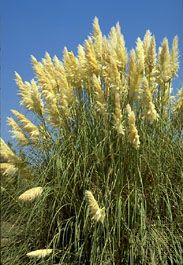
Pampas grass (Cortaderia selloana) is a tall, reedlike perennial grass belonging to the Poaceae family. Native to the Pampas plains of southern South…
What is Pampas grass?
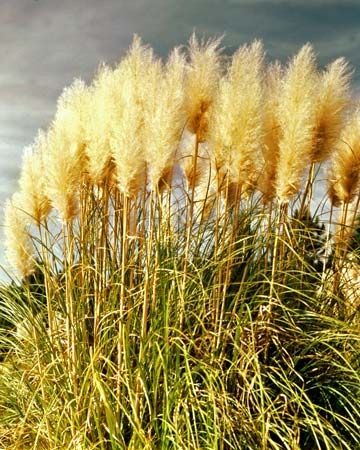
Pampas grass (Cortaderia selloana) is a tall, reedlike perennial grass belonging to the Poaceae family. Native to the Pampas plains of southern South America, it is widely cultivated as an ornamental plant for its showy, silvery-white, plume-like flower clusters.12
The plant can reach heights of up to 4 meters (13 feet) and features dense, tufted bunches of sharp-edged leaves that fold at the midrib. While valued for its aesthetic appeal, pampas grass is considered an invasive species in several regions outside its native range, including New Zealand, South Africa, and parts of the United States, where its feathery seeds are easily dispersed by the wind.1
What makes a plant an invasive species?
An invasive species is any nonnative organism that significantly disrupts or modifies the ecosystems it colonizes. While many species are introduced to new areas, most fail to survive because they lack the necessary adaptations to thrive in their new surroundings.4
A species becomes invasive when it possesses a competitive advantage over indigenous species, often because the new environment lacks natural predators to keep its population in check. These organisms may:4
- Outcompete native species: They may monopolize food, living space, or other essential resources, sometimes leading to the localized extinction of native plants and animals.4
- Disrupt ecological balance: Invasive predators can decimate prey populations, while invasive plants can replace diverse native vegetation, as seen with purple loosestrife in North American wetlands.45
- Spread disease: They may act as vectors for parasites and pathogens that harm native species.4
Human activity, particularly global commerce and travel, is the primary driver of these introductions.46
What are the characteristics of the Pampas plains?
The Pampas are vast, predominantly flat plains in central Argentina, extending from the Atlantic coast to the Andean foothills. The name derives from a Quechua word meaning “flat surface,” and the region features a gradual downward slope from the northwest to the southeast.89
The region is divided into two distinct zones:
- The Humid Zone (East): A temperate, well-watered area that serves as the nation’s economic heart and most populated region.8
- The Dry Zone (West): A largely barren landscape characterized by saline areas, brackish streams, and sandy deserts.8
The terrain is composed of thick deposits of loess, alluvium, and volcanic ash. loess, alluvium, and volcanic ash. The climate is influenced by pamperos—violent gales with heavy rain caused by the collision of cool southern winds and warm tropical air. Historically home to gauchos and their livestock, the region has been transformed since the 19th century into a major center for agriculture, including wheat, corn, and wine production.98
How do wind-dispersed seeds help plants spread?
Wind dispersal, or anemochory, is a vital mechanism that allows plants to distribute their seeds away from the parent plant. This process reduces competition for resources like sunlight and nutrients, while facilitating the colonization of new habitats and the reestablishment of species following environmental disturbances.10
Plants have evolved various specialized structures to harness wind energy for dispersal:
- Winged seeds and fruits: Many trees and shrubs, such as maples, produce winged structures like the samara (a one-winged propeller) that allow them to glide through the air.117
- Plumed and hairy seeds: Species like dandelions and milkweeds utilize tufts of silky hair or pappus to catch the wind, enabling them to travel significant distances.117
- Dust diaspores: Some plants, including many orchids, produce vast quantities of minute, dust-like seeds that are easily carried by air currents.117
- Tumbleweeds and balloons: Certain plants, such as tumbleweeds, break off and roll across open ground, scattering seeds as they move, while others use inflated pods as “balloons” for limited air travel.117
Sources
- pampas grass — Encyclopædia Britannica
- pampas grass — Merriam-Webster
- Paspalum — Encyclopædia Britannica
- invasive species — Encyclopædia Britannica
- conservation - Removing invasive species — Encyclopædia Britannica
- invasive species - Solutions — Encyclopædia Britannica
- Plant - Dispersal and colonization — Encyclopædia Britannica
- the Pampas — Encyclopædia Britannica
- Argentina - The Pampas — Encyclopædia Britannica
- Seed dispersal - Anemochory: wind dispersal — Encyclopædia Britannica
- Seed - Dispersal by wind — Encyclopædia Britannica
- Anemometer — Encyclopædia Britannica
- Seed dispersal — Encyclopædia Britannica
Published on · 3 min read