Maquis
The term maquis refers to two distinct concepts:
What is maquis?
The term maquis refers to two distinct concepts:
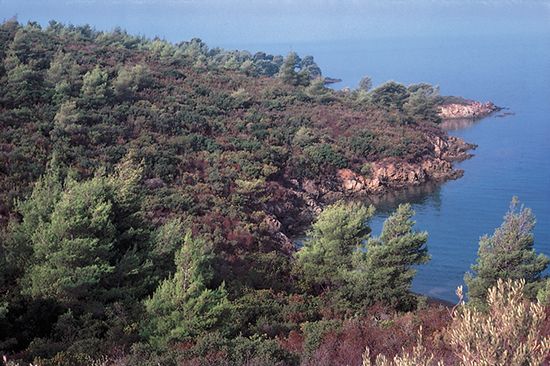
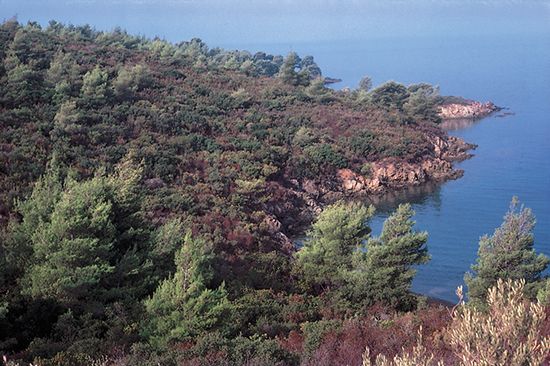
- Vegetation: It is a scrubland plant community found in the Mediterranean region. This ecosystem consists of dense, leathery, broad-leaved evergreen shrubs and small trees, such as laurels and myrtles. These areas are often found on mountain slopes and are sometimes considered degraded due to overgrazing or overharvesting.12
- Historical Resistance: During World War II, the term was used to describe guerrilla fighters in the French underground. These resistance groups took their name from the dense underbrush that provided them with cover while they conducted sabotage and intelligence operations against Nazi occupiers. In 1944, these forces were formally integrated into the French Forces of the Interior.3
What are some other examples of Mediterranean-style biomes around the world?
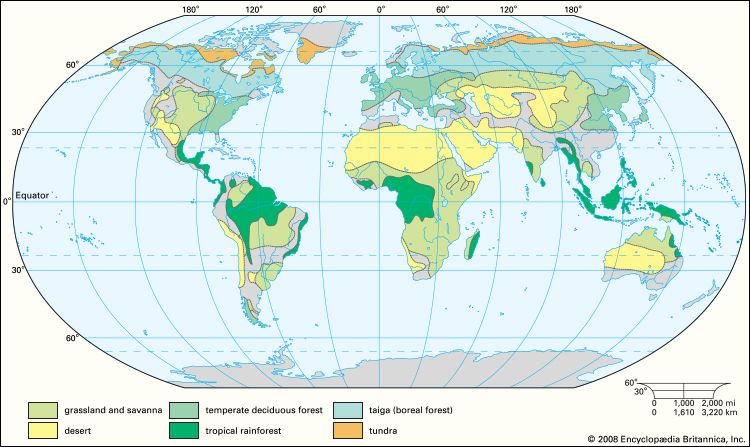
Mediterranean-style biomes, characterized by hot, dry summers and mild, wet winters, occur in several regions across the globe between 30° and 40° latitude. While often referred to generally as Mediterranean vegetation, these scrubland ecosystems have distinct regional names:56
- Chaparral: Found in southwestern North America, particularly in California and northern Mexico, this biome is dominated by broad-leaved evergreen shrubs and is highly biodiverse.57
- Fynbos: Located at the southern tip of South Africa, this unique scrubland is known for its exceptional plant diversity and nutrient-poor soils.56
- Matorral: This term is used to describe the Mediterranean-type vegetation found in central Chile.56
- Mallee: Found in southwestern Australia, this scrubland is dominated by specific shrub-form Eucalyptus species.56
- Macchie/Garigue: These terms, alongside maquis, are used to describe the characteristic scrubland vegetation surrounding the Mediterranean Sea.5
These biomes share common adaptations to drought and fire, such as sclerophyllous (hard, leathery) leaves that help conserve water.57
How does the garrigue ecosystem differ from maquis?
While both maquis and garrigue are related Mediterranean vegetation communities, they differ primarily in their soil requirements and structural density.
- Maquis: This ecosystem typically consists of dense, impenetrable thickets of leathery, broad-leaved evergreen shrubs and small trees. It is generally found on the lower slopes of mountains and is often associated with more developed, though sometimes degraded, vegetation cover.25
- Garrigue: This community is specifically associated with poor, rocky limestone soils. Compared to the dense growth of maquis, garrigue is typically more open and lower in height. It is characterized by a mix of woody plants, including various evergreen and cork oaks, and is often considered a more sparse or degraded form of scrubland.25
Both communities are part of the broader Mediterranean biome, sharing adaptations such as sclerophyllous leaves that help plants conserve water during hot, dry summers.24
Why did the French Resistance fighters choose the name ‘Maquis’ for their groups?
The French Resistance fighters adopted the name Maquis because they operated from the dense, scrubby evergreen underbrush—known as maquis—that provided essential cover for their guerrilla activities during World War II.13
The term maquis originally refers to the thick, impenetrable vegetation found along Mediterranean shores, derived from the Italian word macchia (thicket). By hiding within this rugged terrain, resistance fighters were able to evade detection while conducting sabotage, ambushing German patrols, and gathering intelligence. Because these fighters lived and operated within this specific type of underbrush, they became known as maquis (or maquisards), a name that eventually became synonymous with the armed bands of the French underground. In 1944, these groups were formally integrated into the French Forces of the Interior (FFI).1313
Sources
- maquis — Merriam-Webster
- maquis — Encyclopædia Britannica
- resistance — Encyclopædia Britannica
- Africa - Mediterranean vegetation — Encyclopædia Britannica
- Mediterranean vegetation — Encyclopædia Britannica
- fynbos — Merriam-Webster
- Chaparral — Encyclopædia Britannica
- Chile - Plant and animal life — Encyclopædia Britannica
- Scrubland - Environment — Encyclopædia Britannica
- Scrubland — Encyclopædia Britannica
- Europe - Mediterranean climate — Encyclopædia Britannica
- Mediterranean Sea - Climate — Encyclopædia Britannica
- maquisard — Merriam-Webster
Published on · 3 min read