Maré Island
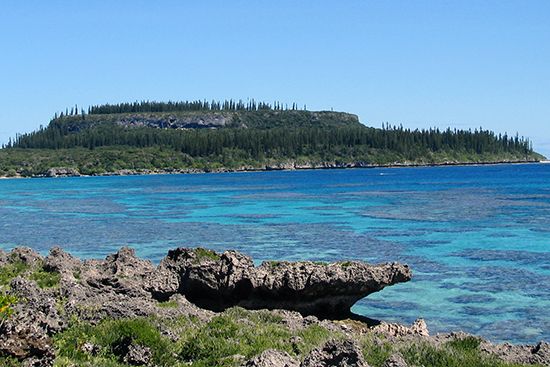
Maré Island is the southernmost and highest island of the Loyalty Islands, a group located in the French overseas territory of New Caledonia in the…
What is Maré Island?
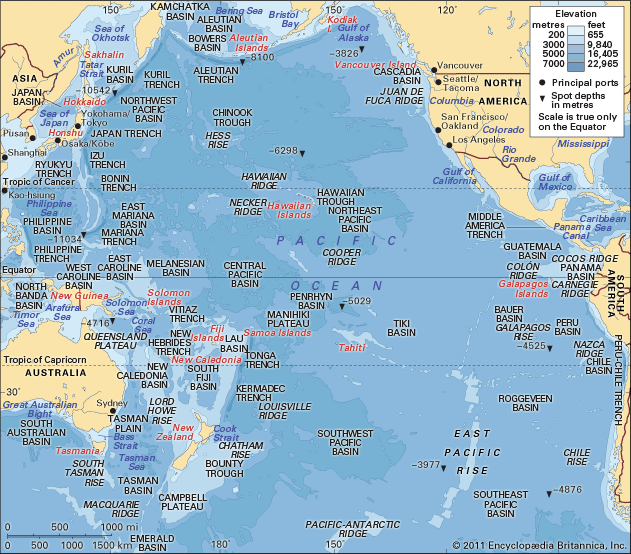
Maré Island is the southernmost and highest island of the Loyalty Islands, a group located in the French overseas territory of New Caledonia in the southwestern Pacific Ocean.12
Composed of raised coralline limestone and volcanic rock, the island reaches an elevation of 453 feet (138 metres) above sea level. It spans 22 miles in length and 18 miles in width, covering an area of 248 square miles. Annexed by France in 1866, the island was Christianized by indigenous teachers from Samoa and Rarotonga.12
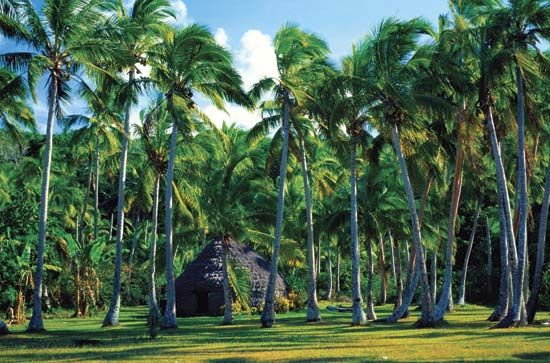
Today, the administrative center is located at Tadine on the west coast. The local economy relies on agriculture, with residents cultivating taro, yams, and bananas, while exporting copra and oranges.1
What are the other islands in the Loyalty group?
The Loyalty Islands group, located in New Caledonia, consists of three primary islands:2
- Lifou Island: The largest and most populous island, situated in the center of the group. It serves as the administrative hub for the Loyalty Islands, with its provincial capital located at Wé.23
- Ouvéa Island: The northernmost island in the group. It is a crescent-shaped atoll known for its fertility and extensive beaches.24
- Maré Island: The southernmost island of the group and its highest point, reaching 453 feet (138 metres) above sea level.2
These islands are composed of coralline limestone and share a similar economy based on the cultivation of crops like yams, taro, and bananas, as well as the production of copra for export.234
How did French colonization impact New Caledonia?
French colonization of New Caledonia, which began with annexation in 1853, profoundly reshaped the territory through systemic displacement, economic exploitation, and long-standing political conflict.56
Social and Territorial Impact
The colonial administration marginalized the indigenous Melanesian population by confiscating their land and relegating them to reserves. To control the population, the French implemented the indigénat (native regulations) in 1887, which imposed forced labor, curfews, and travel restrictions until 1946. Furthermore, the colonial government imported approximately 60,000 indentured laborers between 1864 and 1939 to support mining and public works, creating a diverse but ethnically stratified society.65
Economic and Political Consequences
The economy was structured around nickel mining and European land ownership, leading to persistent wealth inequality; today, Melanesian households earn significantly less than European households. Politically, the legacy of colonization remains a source of tension, characterized by historical uprisings and modern struggles over independence, most recently marked by violent protests in 2024 regarding electoral reforms.76
What is the significance of Melanesian culture in the Pacific?
Melanesian culture is defined by its immense diversity, rooted in the historical convergence of two distinct populations: the ancient Papuan peoples and the Austronesian speakers who arrived by sea approximately 4,000 years ago. This cultural landscape, spanning from New Guinea to Fiji, is characterized by several significant features:10
Social Organization and Exchange
Societies were traditionally organized into autonomous local groups based on kinship and descent. In the absence of centralized political institutions, these groups maintained cohesion through elaborate exchange systems. These networks, such as the famous kula ring, facilitated the movement of valuables, fostered social cooperation, and served as a venue for status rivalry and political negotiation. Obligations toward kin remain a moral imperative, often validated through bridewealth and competitive feasting.1112
Artistic and Religious Expression
Melanesian art is highly varied, ranging from permanent carvings to ephemeral works created for specific ceremonies. Many art forms, including masks and elaborate costumes, hold deep religious significance, often used to impersonate mythical beings or dramatize cult secrets. Religious systems frequently incorporate concepts like mana (potency) and taboo, reflecting a complex spiritual worldview.1310
Linguistic and Cultural Diversity
The region is home to hundreds of distinct languages, a fragmentation that reflects both geographic isolation and long-term cultural transformation. While European colonial influence significantly disrupted traditional authority, trade, and social structures, there has been a notable revival of traditional art forms and indigenous literature since the 1970s, blending ancestral practices with modern creative expression.14151613
Sources
- Maré Island — Encyclopædia Britannica
- Loyalty Islands — Encyclopædia Britannica
- Lifou Island — Encyclopædia Britannica
- Ouvéa Island — Encyclopædia Britannica
- New Caledonia — Encyclopædia Britannica
- New Caledonia - History of New Caledonia — Encyclopædia Britannica
- France - The overseas territories — Encyclopædia Britannica
- New Caledonia - Economy — Encyclopædia Britannica
- New Caledonia - Services and trade — Encyclopædia Britannica
- Melanesian culture - Trade and exchange systems — Encyclopædia Britannica
- Melanesian culture — Encyclopædia Britannica
- Melanesian culture - Kinship and local groups — Encyclopædia Britannica
- Melanesian culture - Art of the Melanesian culture — Encyclopædia Britannica
- Melanesian culture - Traditional Melanesia — Encyclopædia Britannica
- Oceanic art and architecture - The lower Fly River — Encyclopædia Britannica
- Oceanic music and dance - Melanesia — Encyclopædia Britannica
- Melanesian languages — Encyclopædia Britannica
Published on · 3 min read