Lifou Island
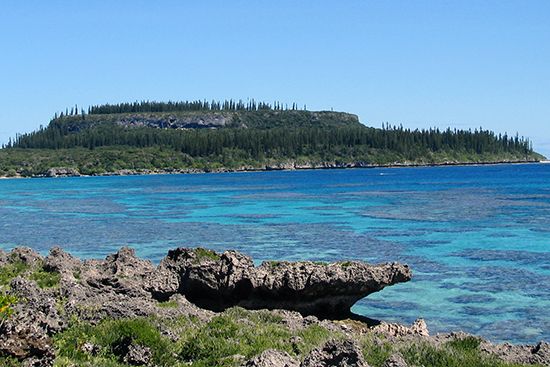
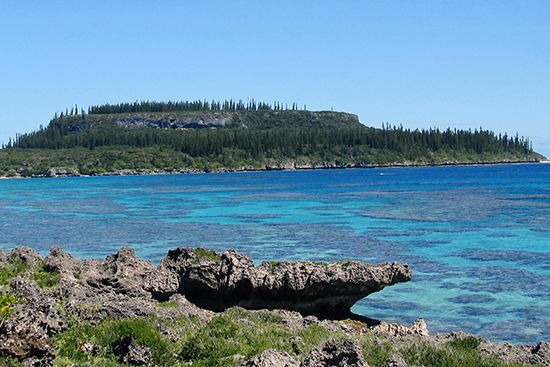
Lifou Island is the largest and most populous island within the Loyalty Islands, located in the French overseas territory of New Caledonia in the…
What is Lifou Island?
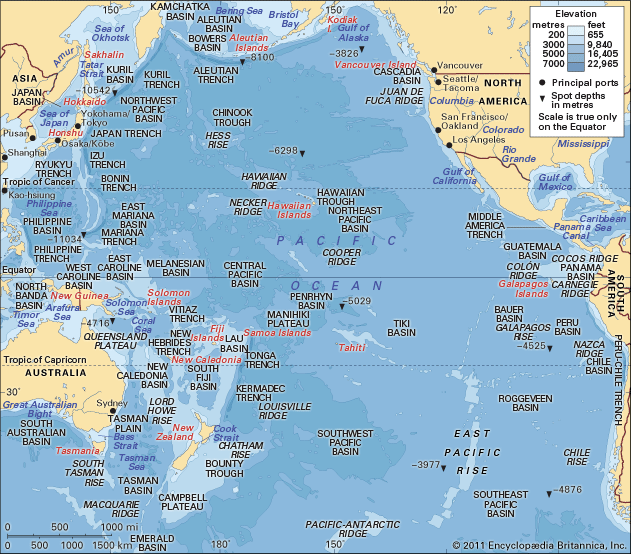
Lifou Island is the largest and most populous island within the Loyalty Islands, located in the French overseas territory of New Caledonia in the southwestern Pacific Ocean.12
Spanning 466 square miles, the island is composed of coralline limestone, which results in fertile soil but prevents the formation of surface streams; consequently, fresh water is accessible only through wells and caves. The local economy relies on the cultivation of crops such as yams, taro, and bananas, alongside the production of copra for export.12
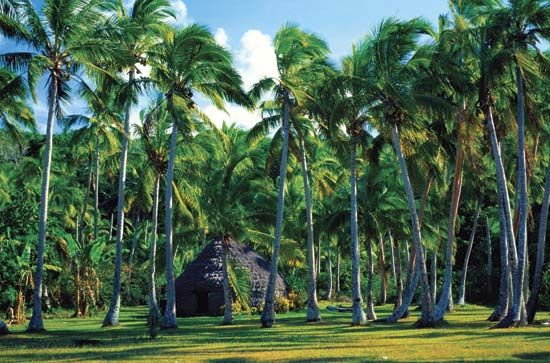
Administratively, the island serves as the home to Wé, the provincial capital of the Loyalty Islands, while Chépénéhé serves as the chief town on the west coast. The island’s population is primarily Melanesian, reflecting the broader cultural history of the archipelago, which has been inhabited for over 3,000 years.12
What are the other islands in the Loyalty group?
The Loyalty Islands group consists of three primary islands located in the southwestern Pacific Ocean as part of New Caledonia. In addition to Lifou Island, the group includes:2
- Ouvéa Island: The northernmost island of the group, it is a crescent-shaped atoll known for being the most fertile of the three. Its administrative center and chief village is Fayaoué.23
- Maré Island: The southernmost island, it is a raised coralline limestone and volcanic island. It is the highest point in the group, reaching 453 feet (138 meters) above sea level. Its administrative center is Tadine.24
How did the Loyalty Islands become part of France?
The Loyalty Islands became a focus of conflict between British and French interests during the 19th century, following the arrival of European missionaries and traders in the region.2
While France formally took possession of most of present-day New Caledonia in 1853, the French flag was not officially raised in the Loyalty Islands until 1864. Prior to this, the islands had seen the arrival of the London Missionary Society in 1841, which established a Protestant presence, while French Catholic missions were active in the broader territory. Following their annexation, the islands were eventually attached administratively to New Caledonia in 1946.52
Today, the islands remain part of the French overseas collectivity of New Caledonia, a status maintained through a series of referendums held under the Nouméa Accord.5
What is the significance of Melanesian culture in the Pacific?
Melanesian culture is significant for its deep historical roots, complex social structures, and the enduring influence of traditional practices in the face of modernization. The region, which includes Papua New Guinea, the Solomon Islands, Vanuatu, New Caledonia, and Fiji, represents a unique convergence of two ancient populations: the indigenous Papuans and the Austronesian peoples who arrived by sea thousands of years ago.910
Cultural Foundations and Social Organization
The significance of Melanesian culture is rooted in its traditional systems of kinship and exchange. Historically, these societies were organized into autonomous local groups where land was held collectively by descendants of founding ancestors. Key aspects include:11
- Kinship and Exchange: Obligations toward kin serve as a moral imperative. Systems of bridewealth and ceremonial exchange—such as the kula ring—remain vital for maintaining social alliances and validating status.1112
- Cultural Diversity: The region is characterized by immense linguistic and cultural fragmentation, with numerous distinct groups often existing on a single island, reflecting a long history of adaptation and transformation.10
Contemporary Significance
In the modern era, Melanesian identity is increasingly defined by a tension between Westernization and the revival of kastom (traditional custom). While Christianity and global economic systems have profoundly reshaped the region, cultural nationalist ideologies have emerged among the new elite. These movements emphasize traditional art, music, and exchange systems as essential sources of identity, ensuring that ancient practices continue to inform political and social life in the 21st century.12
Sources
- Lifou Island — Encyclopædia Britannica
- Loyalty Islands — Encyclopædia Britannica
- Ouvéa Island — Encyclopædia Britannica
- Maré Island — Encyclopædia Britannica
- Loyalty Islands — Merriam-Webster
- New Caledonia — Merriam-Webster
- New Caledonia - History of New Caledonia — Encyclopædia Britannica
- Pacific Islands - Missionary activity — Encyclopædia Britannica
- Melanesian culture - Traditional Melanesia — Encyclopædia Britannica
- Melanesian culture — Encyclopædia Britannica
- Melanesian culture - Kinship and local groups — Encyclopædia Britannica
- Melanesian culture - Contemporary Melanesia — Encyclopædia Britannica
Published on · 3 min read