Loyalty Islands
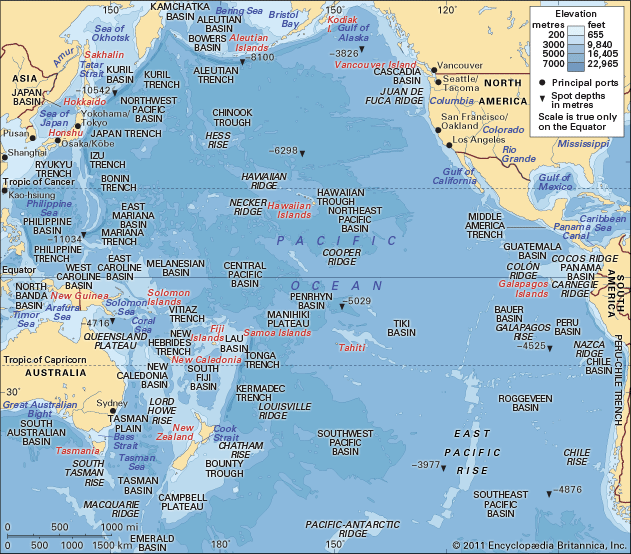
The Loyalty Islands are a limestone coral group located in the southwestern Pacific Ocean and are a dependency of New Caledonia. The archipelago consists of…
What is Loyalty Islands?
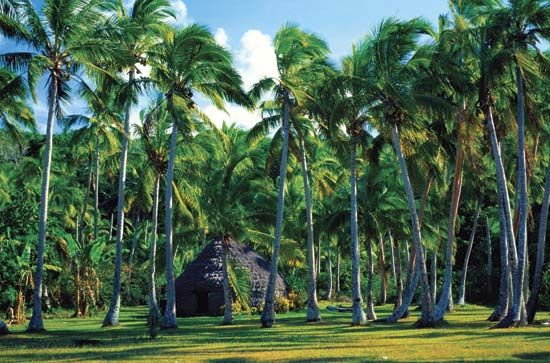
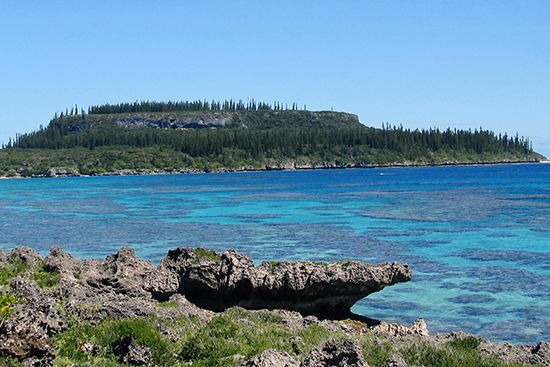
The Loyalty Islands are a limestone coral group located in the southwestern Pacific Ocean and are a dependency of New Caledonia. The archipelago consists of three primary islands: Ouvéa, Lifou, and Maré.12
Inhabited by Melanesians for over 3,000 years, the islands were annexed by France in the mid-19th century and administratively attached to New Caledonia in 1946. The islands feature a tropical agricultural economy, with copra serving as the chief export alongside crops like yams, taro, and bananas. Lifou is the largest and most populous island, housing the provincial capital, Wé. The geography is characterized by raised coralline limestone, with Maré reaching the group’s highest elevation of 453 feet (138 meters).134
What is the history of Melanesian culture in the Pacific?
The history of Melanesian culture is defined by the convergence of two distinct populations: the ancient Papuan peoples and the later-arriving Austronesians.5
Early Foundations and Migration
Papuan peoples, who were hunter-gatherers adapted to tropical rainforests, occupied the Sahul continent at least 40,000 years ago. By 9,000 years ago, they had developed early agricultural systems, including root-crop cultivation and swine husbandry. Approximately 4,000 years ago, Austronesian peoples arrived by sea from Southeast Asia, bringing sophisticated maritime technology and the distinctive Lapita culture, characterized by unique pottery and tools.5
Cultural Integration and Social Structure
The interaction between these groups led to a complex exchange of agricultural, technological, and religious traditions. Precolonial Melanesian societies were typically organized into autonomous local groups based on kinship and descent. These groups were often linked by intermarriage, which served as a vital mechanism for creating alliances and managing resources. While political systems varied, many societies practiced systems of exchange, such as bridewealth, to validate social obligations and kinship ties.56
Colonial Impact and Transformation
The arrival of Europeans beginning in the 17th century profoundly disrupted these traditional systems. Colonialism introduced new diseases, firearms, and labor systems that eroded traditional authority and intensified intercommunity conflict. Today, the region remains characterized by immense linguistic and cultural diversity, with contemporary Melanesian identity shaped by both these ancient roots and the ongoing legacy of colonial history.78
How does a coral island form?
Coral islands are tropical landmasses composed of organic material derived from the skeletons of corals and associated marine organisms. They typically form on the flat tops of coral reef systems and generally sit only a few meters above sea level.11
There are two primary ways these islands originate:
- Accretion: This process involves the accumulation of rubbly reef rock, broken off by storms and waves, mixed with finer reef detritus. Over time, currents and wave action deposit this material onto the reef top. Wind may form dunes, and rainwater—which dissolves the calcium carbonate in the reef material—acts as a cementing agent, hardening the deposits into land that can be colonized by plants and animals.11
- Uplift: In this scenario, crustal movements raise a portion of a reef system above sea level. These islands are typically rocky, featuring cliffs and surfaces sculpted by weathering.11
While these processes create the land, the underlying reef structures often develop through the subsidence of volcanic islands or changes in sea level, as famously theorized by Charles Darwin.1213
What is the relationship between New Caledonia and France?
New Caledonia is a French unique collectivity located in the southwestern Pacific Ocean, with a relationship to France defined by a long history of colonial rule and ongoing political negotiation regarding self-determination.1617
Historical Context
France annexed New Caledonia in 1853, initially utilizing the territory as a penal colony between 1864 and 1897. Colonial rule was marked by the systematic alienation of indigenous Melanesian lands, the imposition of the indigénat (a restrictive system of administrative law), and frequent uprisings by the Kanak people against French authority.1617
Modern Governance
Under the Nouméa Accord of 1998, New Caledonia maintains limited autonomy within the French legal framework. While the French president serves as head of state and France retains authority over defense and internal security, the territory has its own government and sends representatives to the French parliament.18
Self-Determination
The Nouméa Accord provided for a series of referendums on independence. Three votes were held between 2018 and 2021, with the final referendum being boycotted by pro-independence groups, leading to contested results. Tensions remain high, as evidenced by violent protests in 2024 following proposed electoral changes by the French government.16
Sources
- Loyalty Islands — Encyclopædia Britannica
- Loyalty Islands — Merriam-Webster
- Lifou Island — Encyclopædia Britannica
- Maré Island — Encyclopædia Britannica
- Melanesian culture - Traditional Melanesia — Encyclopædia Britannica
- Melanesian culture — Encyclopædia Britannica
- Melanesian culture - Kinship and local groups — Encyclopædia Britannica
- Stone Age - Oceania — Encyclopædia Britannica
- French Polynesia - Cultural life — Encyclopædia Britannica
- Pacific Islands - Early period — Encyclopædia Britannica
- coral island — Encyclopædia Britannica
- coral reef - Origin and development of reefs — Encyclopædia Britannica
- coral reef - Types of coral reefs — Encyclopædia Britannica
- atoll — Encyclopædia Britannica
- lagoon - The effect of time — Encyclopædia Britannica
- New Caledonia - History of New Caledonia — Encyclopædia Britannica
- New Caledonia — Encyclopædia Britannica
- New Caledonia - Government and society — Encyclopædia Britannica
- Pacific Islands - Independence movements — Encyclopædia Britannica
Published on · 3 min read