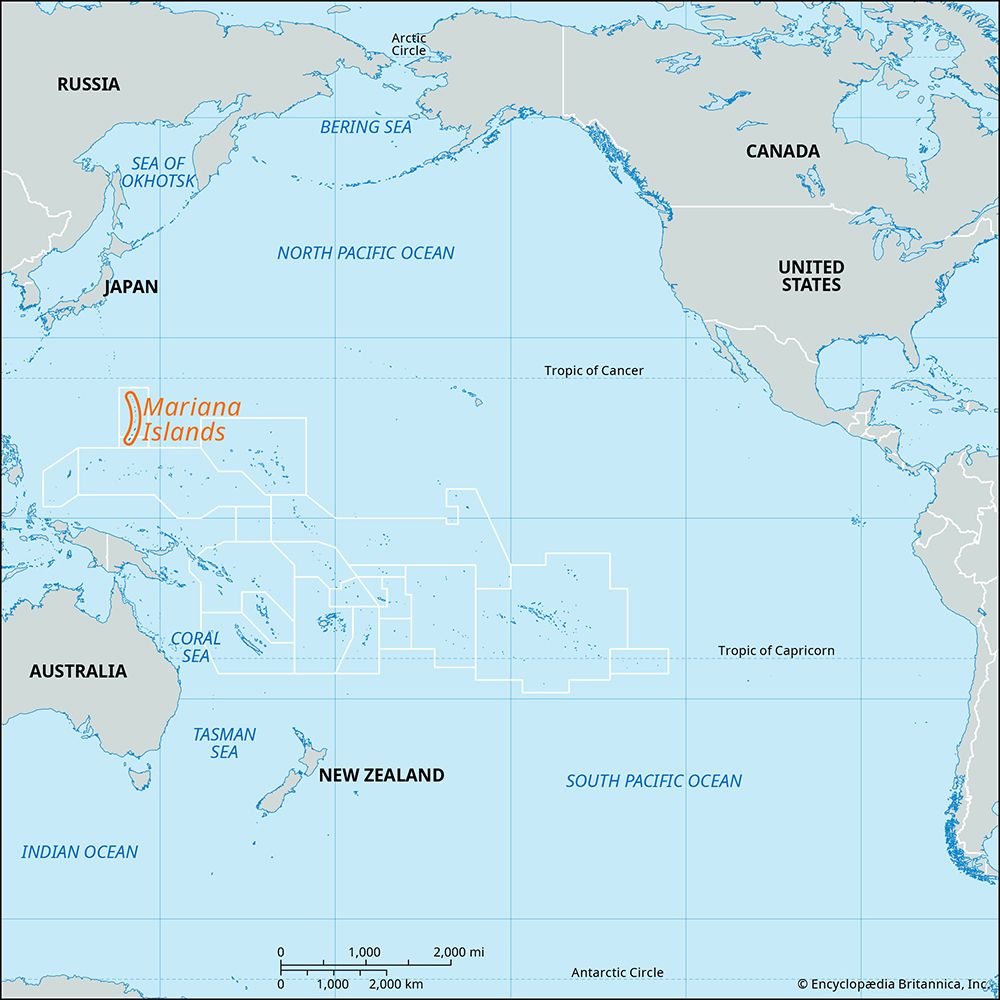
Mariana Islands
The Mariana Islands hold significant historical importance due to their strategic role in global colonial rivalries and, most notably, as a pivotal theater…
What is the historical significance of the Mariana Islands in the Pacific region?
The Mariana Islands hold significant historical importance due to their strategic role in global colonial rivalries and, most notably, as a pivotal theater during World War II1.1
Following their discovery by Ferdinand Magellan in 1521, the islands were colonized by Spain starting in 1668. The Spanish forcibly converted the indigenous Chamorro people to Roman Catholicism, leading to the “Chamorro wars” and a significant decline in the native population. By the late 19th century, the islands became pawns in colonial competition, eventually being divided between the United States (which acquired Guam in 1898) and Germany.23
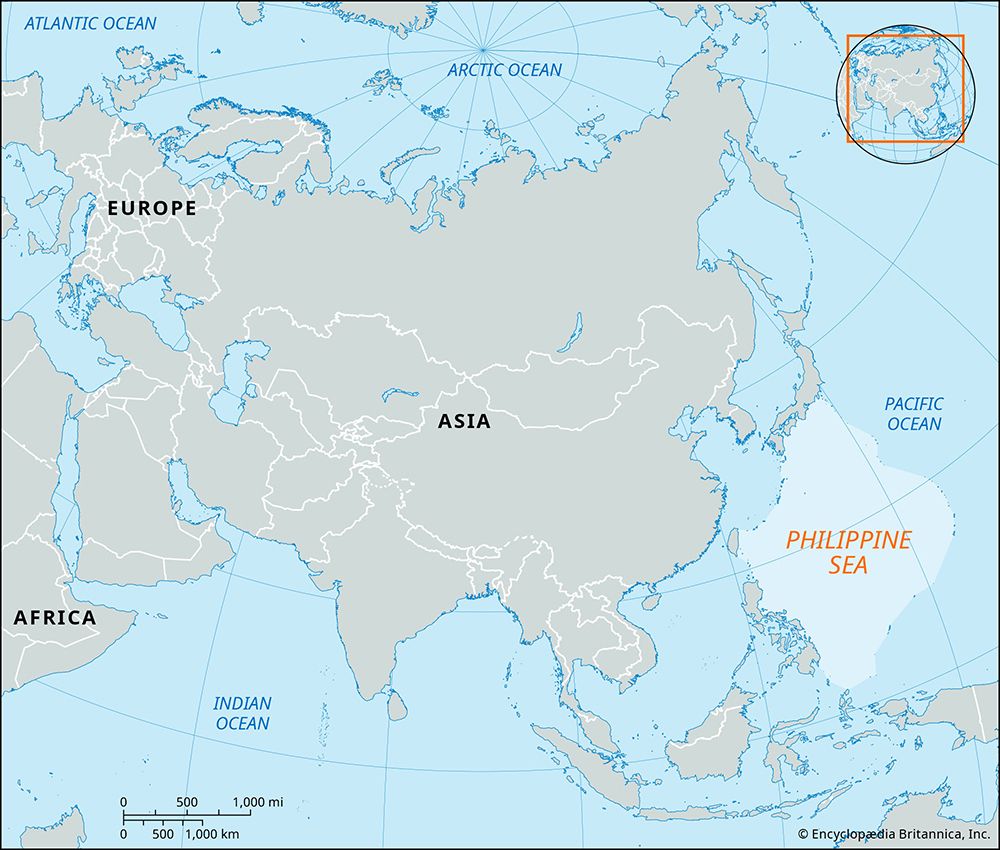
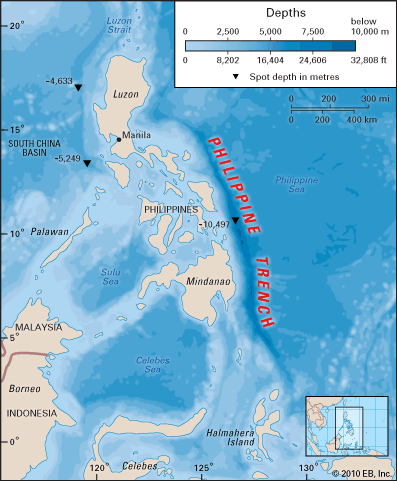
During World War II, the islands became a critical defensive line for Japan. Their capture by U.S. forces in 1944 was a turning point in the Pacific War, enabling the Battle of the Philippine Sea and providing air bases for B-29 bombers to strike the Japanese home islands. Notably, the atomic bombs dropped on Hiroshima and Nagasaki were launched from Tinian.14
What role did the Mariana Islands play during World War II?
During World War II, the Mariana Islands served as a critical strategic frontier in the Pacific theater. Following the Japanese seizure of Guam in 1941, the archipelago—including Saipan, Tinian, and Rota—became a vital defensive line for Japan.56
The U.S. campaign to recapture the islands in mid-1944 was a massive undertaking involving over 500 ships and 125,000 troops. Key developments included:57
- The Battle of the Philippine Sea: Often called the “greatest carrier battle of the war,” this engagement resulted in a decisive U.S. victory, crippling Japanese naval air power and earning the nickname “the Great Marianas Turkey Shoot.”537
- Strategic Air Bases: The capture of Saipan allowed the U.S. to establish bases for B-29 bombers, bringing the Japanese home islands within striking distance.576
- Atomic Bombing: Tinian became the departure point for the aircraft that dropped the first atomic bombs on Hiroshima and Nagasaki.56
The loss of the Marianas was a catastrophic blow to Japan, leading to the resignation of Prime Minister Tōjō Hideki and his cabinet.57
What is the climate like in the Mariana Islands, and how does it affect daily life?
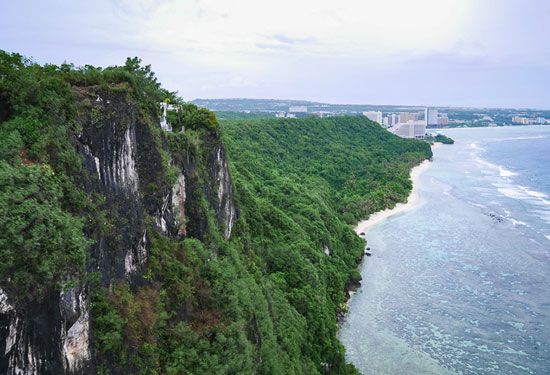
The Mariana Islands experience a tropical climate characterized by warm, consistent temperatures and significant rainfall. On Saipan, average annual temperatures typically range between 79 and 82 °F (26 and 28 °C), with annual precipitation averaging about 70 inches (1,800 mm).81
This climate profoundly shapes daily life, particularly through the periodic threat of typhoons. These powerful storms can cause widespread disruption, as seen during events like Super Typhoon Sinlaku in 2026, which resulted in significant infrastructure damage, including downed power lines, uprooted trees, and the destruction of unreinforced structures. Heavy rains associated with such systems often lead to flooding in low-lying areas and can temporarily halt transportation and utility services.19
Beyond extreme weather, the tropical environment influences the local economy, which relies on subsistence agriculture and grazing, though the shallow, low-fertility soils in some volcanic areas present ongoing challenges for cultivation.81
How did the Mariana Islands become a U.S. territory, and what is their current political status?
The Mariana Islands are politically divided into two distinct U.S. jurisdictions, each with a unique history of acquisition and current status.
Guam
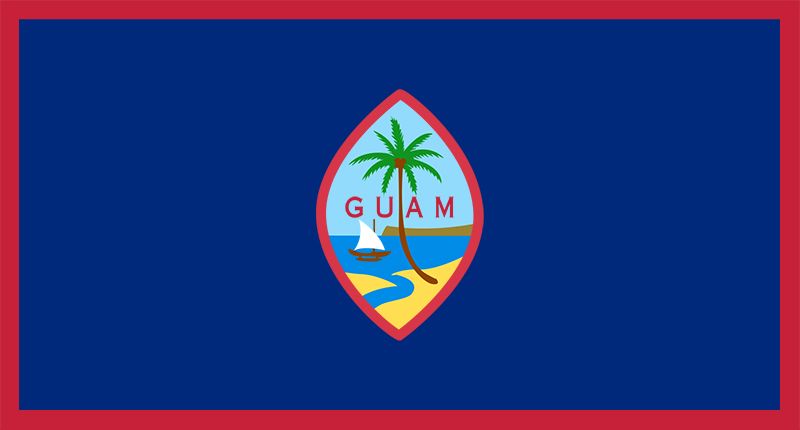
Guam became a U.S. possession in 1898 when it was ceded by Spain following the Spanish-American War. After being occupied by Japan during World War II, it was reclaimed by the United States and formally designated as an unincorporated territory in 1950. Today, Guam remains an unincorporated territory administered by the U.S. Department of the Interior.1112
Commonwealth of the Northern Mariana Islands (CNMI)
Following World War II, the Northern Marianas were part of the Trust Territory of the Pacific Islands, administered by the United States under a United Nations mandate. by the United States under a United Nations mandate. In 1975, residents voted to become a U.S. commonwealth, a status that was fully implemented in 1986 upon the dissolution of the trust. Under this arrangement, the Northern Marianas exist in political union with the United States, and its residents are U.S. citizens.11131
Sources
- Mariana Islands — Encyclopædia Britannica
- Northern Mariana Islands - Spanish colonial rule — Encyclopædia Britannica
- Northern Mariana Islands - German and Japanese control — Encyclopædia Britannica
- Northern Mariana Islands - Early period — Encyclopædia Britannica
- Pacific War - The Central Pacific Islands — Encyclopædia Britannica
- Battle of the Philippine Sea — Encyclopædia Britannica
- World War II - The central Pacific — Encyclopædia Britannica
- Tonga - Climate — Encyclopædia Britannica
- Northern Mariana Islands - Land — Encyclopædia Britannica
- Super Typhoon Sinlaku — Encyclopædia Britannica
- Northern Mariana Islands - Government and society — Encyclopædia Britannica
- Northern Mariana Islands - Events since c. 1950 — Encyclopædia Britannica
- Guam - History — Encyclopædia Britannica
Published on · 3 min read