Philippine Trench
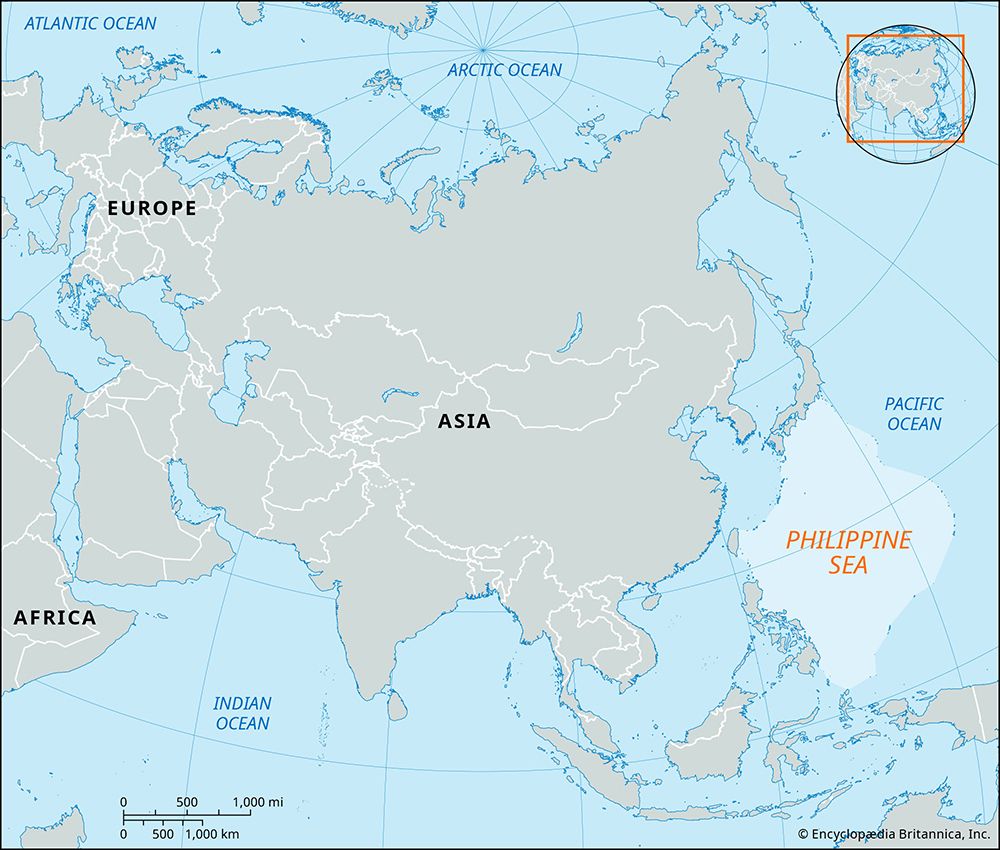
The Philippine Trench is a deep-sea submarine trench located on the floor of the Philippine Sea in the western North Pacific Ocean. It borders the eastern…
What is Philippine Trench?
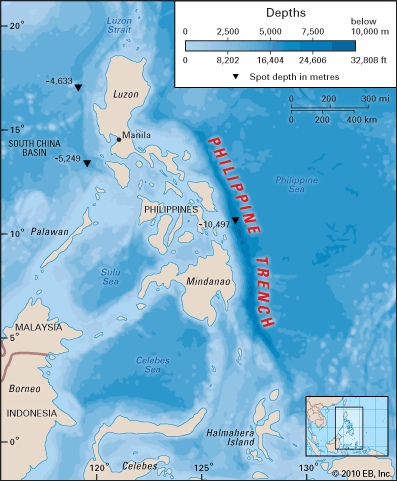
The Philippine Trench is a deep-sea submarine trench located on the floor of the Philippine Sea in the western North Pacific Ocean. It borders the eastern coast of the island of Mindanao and is recognized for reaching the second greatest depth of any ocean trench.12
The trench reaches a depth of approximately 34,578 feet (10,539 metres), a measurement established by the Danish Galathea expedition in 1951. While earlier soundings suggested even greater depths, subsequent analysis identified those as instrumentation errors.12
Like other deep-sea trenches, the Philippine Trench is a topographic expression of the lithosphere sinking into the asthenosphere3. This process, associated with earthquake activity and negative gravity anomalies, occurs where oceanic plates are forced downward into the Earth’s interior.3
What is the difference between a trench and a seamount?
Seamounts and deep-sea trenches are distinct geological features of the ocean floor, differing primarily in their formation, shape, and physical characteristics.
Seamounts
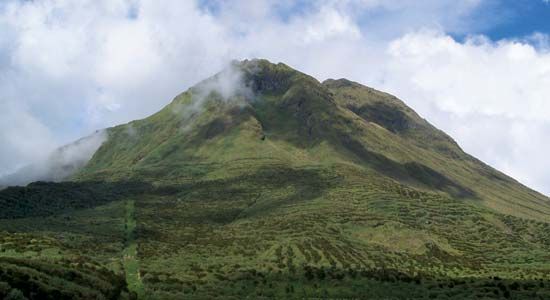
A seamount is a large submarine volcanic mountain that rises at least 1,000 meters (3,300 feet) above the surrounding seafloor. These features are typically formed by volcanic activity and are often composed of microcrystalline or glassy oceanic basalt. In plan view, they tend to be elliptical or elongate, and they are frequently found in linear clusters or groups. While some seamounts have steep sides, larger ones often feature concave slopes.45
Deep-Sea Trenches
In contrast, deep-sea trenches are deep, V-shaped linear troughs. They are primarily formed at subduction zones, where two tectonic plates converge and one is forced downward into the Earth’s mantle. Unlike the volcanic construction of a seamount, a trench represents a site where oceanic crust is destroyed. While seamounts are elevated features, trenches are the deepest parts of the ocean floor, characterized by steep landward sides and narrow axes.56
How do tectonic plates create deep-sea trenches?
Deep-sea trenches are formed through a geological process known as subduction, which occurs at convergent plate boundaries. Because the Earth maintains a constant volume, the creation of new crust at mid-oceanic ridges must be balanced by the destruction of old crust elsewhere. This destruction takes place when two tectonic plates collide, and the older, denser plate is forced downward into the Earth’s mantle.891011
As the denser oceanic plate bends and slides beneath an overriding plate—which may be either oceanic or continental—it creates a narrow, steep-sided, V-shaped topographic depression known as a deep-sea trench. The specific characteristics of these trenches, such as their depth and shape, are influenced by the age, density, and speed of the colliding plates.8511
When the overriding plate is oceanic, the subduction process often leads to the development of island arcs and explosive volcanoes as the subducting plate melts and forms magma that rises to the surface. These zones are also frequently associated with large earthquakes.85
What is the Mariana Trench and how does it compare?
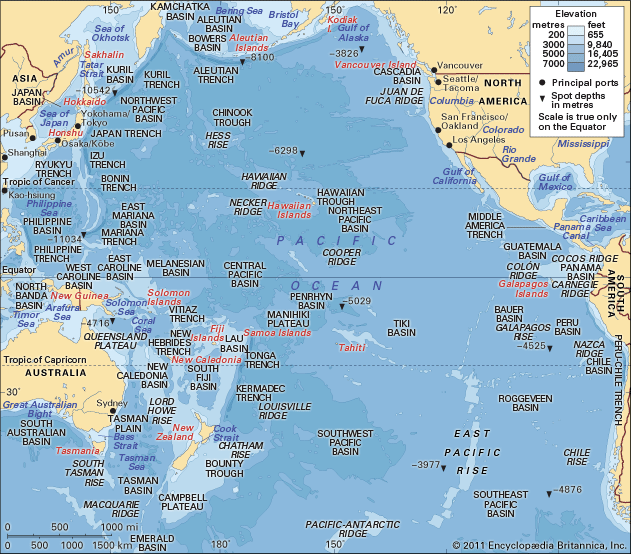
The Mariana Trench is a crescent-shaped, deep-sea depression in the western North Pacific Ocean and is recognized as the deepest trench on Earth. Located primarily east and south of the Mariana Islands, it stretches over 1,580 miles (2,540 km) with a mean width of 43 miles (69 km). Its greatest depths are found within the Challenger Deep, where measurements have reached approximately 36,000 feet (nearly 11,000 meters).13814
Comparison and Context
The Mariana Trench is a classic example of a subduction zone, where the dense Pacific Plate is forced beneath the smaller Mariana Plate. This process distinguishes it from other seafloor features that may share the name “trench” but have different origins:15
- Subduction Trenches: Like the Tonga Trench or Java Trench, these are formed by tectonic plate convergence and are typically associated with volcanic island arcs and back-arc basins.6
- Non-Subduction Features: Some features, such as the Vema Trench or the Diamantina Fracture Zone, are actually fracture zones or rift valleys rather than subduction-related trenches.6
Sources
- Philippine Trench — Encyclopædia Britannica
- Philippine Sea — Encyclopædia Britannica
- deep-sea trench - Origin of deep-sea trenches — Encyclopædia Britannica
- seamount — Encyclopædia Britannica
- ocean basin - General features — Encyclopædia Britannica
- deep-sea trench - Structure — Encyclopædia Britannica
- seamount — Merriam-Webster
- How was the Mariana Trench formed? — Encyclopædia Britannica
- subduction zone — Encyclopædia Britannica
- deep-sea trench - Types — Encyclopædia Britannica
- plate tectonics - Convergent margins — Encyclopædia Britannica
- plate tectonics - Earth’s layers — Encyclopædia Britannica
- Pacific Ocean: Top Questions — Encyclopædia Britannica
- Mariana Trench — Merriam-Webster
- Mariana Trench — Encyclopædia Britannica
Published on · 3 min read