Marigold
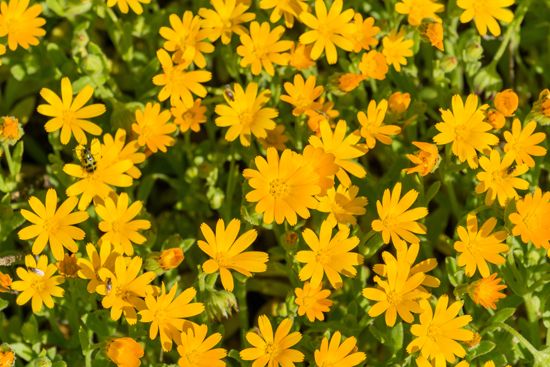
Marigolds, belonging to the genus Tagetes, are popular annual herbs widely utilized in gardening and landscaping for their vibrant yellow, orange, and red…
How are marigolds used in gardens and landscaping?
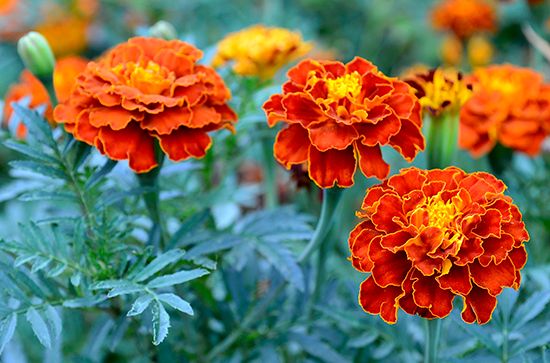
Marigolds, belonging to the genus Tagetes, are popular annual herbs widely utilized in gardening and landscaping for their vibrant yellow, orange, and red flowers.1
In garden design, these plants are frequently used in garden borders due to their attractive, dense flower heads. Beyond their aesthetic appeal, they serve a practical purpose as companion plants in vegetable gardens, where they are valued for their ability to deter pests. This utility is largely attributed to their strong-scented leaves.1
While the term marigold often refers to Tagetes, it is also used to describe the pot marigold (Calendula), which is similarly cultivated for ornamental purposes. Additionally, the Mexican marigold (Tagetes erecta) holds cultural significance, playing an important role in Día de los Muertos observances.12
What is the scientific name of marigolds and which plant family do they belong to?
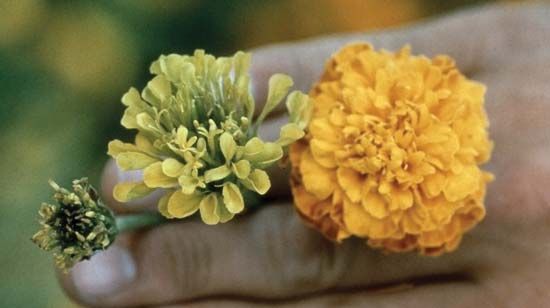
The scientific name for the genus commonly referred to as marigolds is Tagetes. These plants belong to the Asteraceae family, which is also known as the aster, daisy, or composite family.13
It is important to note that the name “marigold” is sometimes applied to other plants, such as the pot marigold, which belongs to the genus Calendula, as well as various unrelated species.1
What role do marigolds play in companion planting?
In the practice of companion planting, marigolds (Tagetes species) are highly valued for their ability to protect vegetable crops from harmful pests. Their primary role involves acting as a natural deterrent due to their strong-scented leaves, which help repel various insects that might otherwise damage garden vegetables.1
Beyond their role as insect repellents, marigolds are recognized for their ability to manage soil health. Specifically, certain species of Tagetes are toxic to many plant-infecting nematodes, which are microscopic worms that can cause significant damage to plant roots. By incorporating these plants into a garden, growers can utilize them as a biological control measure to reduce nematode populations in the soil.4
Because of these protective qualities, they are frequently integrated into vegetable gardens alongside food crops to promote a healthier growing environment.1
How do marigolds act as companion plants to protect vegetables?
Marigolds (Tagetes species) serve as effective companion plants in vegetable gardens primarily through their ability to deter pests and improve soil conditions.
Pest Deterrence
Many species of Tagetes possess strong-scented leaves that act as a natural repellent for various garden pests. By planting them in garden borders or interspersed among vegetables, gardeners can create a protective barrier that discourages insects from attacking food crops.1
Soil Health and Nematode Control
Beyond repelling surface-level pests, marigolds are highly valued for their impact on soil health. They are toxic to many plant-infecting nematodes, which are microscopic worms that damage plant roots. Incorporating Tagetes into a garden serves as a biological control measure, helping to reduce nematode populations and protect the root systems of neighboring vegetables.4
These dual benefits make marigolds a popular choice for sustainable gardening practices aimed at maintaining a healthy, productive growing environment.1
Sources
- Marigold — Encyclopædia Britannica
- pot marigold — Merriam-Webster
- Asteraceae — Encyclopædia Britannica
- Plant disease - Control measures — Encyclopædia Britannica
Published on · 2 min read