Calendula
Calendula is a genus of 15–20 species of herbaceous plants belonging to the Asteraceae family. These plants are native to temperate regions of Eurasia and…
What is Calendula?
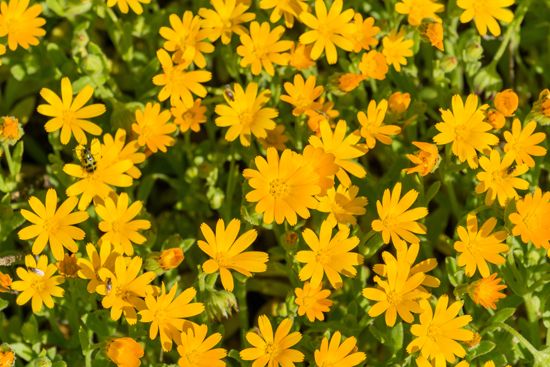
Calendula is a genus of 15–20 species of herbaceous plants belonging to the Asteraceae family. These plants are native to temperate regions of Eurasia and North Africa.1
Physical Characteristics
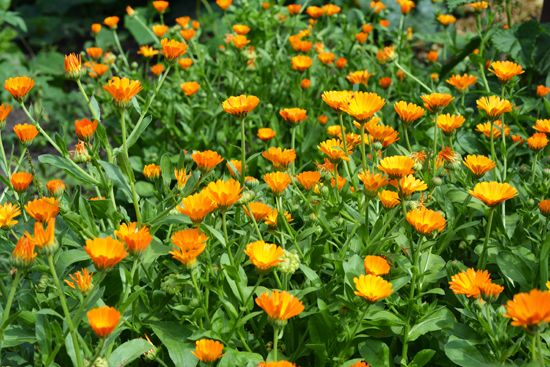
Calendulas can be annual or perennial and feature waxy, smooth, or glandular stems. Their leaves are simple and arranged alternately. The plants produce composite flower heads with yellow or orange ray flowers and central disk flowers that may be yellow, red, or purple. Their fruit is a curved achene.1
Uses and Species
The most well-known species, the pot marigold (Calendula officinalis), is widely cultivated for ornamental use and is a common ingredient in cosmetics and herbal products. Its ray flowers are edible and sometimes used in salads. Other species include the field marigold and the critically endangered sea marigold.1
What are the main differences between annual and perennial plants?
The primary difference between annual and perennial plants lies in their life cycle duration and how they persist from one growing season to the next.
Annual Plants
An annual is a plant that completes its entire life cycle—germinating from seed, maturing, flowering, and producing new seeds—within a single growing season. Once this cycle is complete, the plant dies. Because the dormant seed is the only part of the plant that survives to the next season, annuals must be replanted each year if you wish to maintain them in a garden. Common examples include corn, wheat, marigolds, and zinnias.345
Perennial Plants
A perennial is a plant that lives for an indefinite number of years, regrowing and reblooming year after year. While the aboveground portions of herbaceous perennials may die back in autumn, the plant survives through specialized underground structures like bulbs, rhizomes, or tubers. All trees and shrubs are perennials, as are many herbaceous plants such as chrysanthemums, dahlias, and asparagus.56
How do scientists classify plants within the Asteraceae family?
Scientists classify plants within the Asteraceae family—also known as the aster, daisy, or composite family—primarily through their distinct morphological characteristics and genetic relationships within the order Asterales.78
Morphological Classification
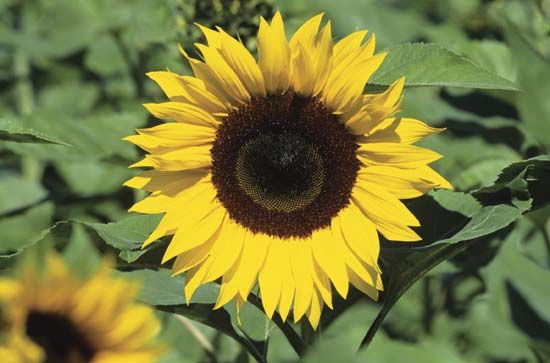
The most defining feature used for classification is the plant’s inflorescence. Members of this family group their flowers into compact heads that resemble individual blossoms. These heads are composed of many small florets surrounded by bracts. Scientists categorize these heads into specific types based on the composition of the florets:910
- Discoid heads: Contain only tubular disk flowers.10
- Radiate heads: Feature disk flowers in the center surrounded by marginal ray flowers.10
- Disciform heads: Lack marginal rays but have pistillate outer flowers.10
- Ligulate heads: Composed entirely of ligulate (strap-shaped) flowers, such as in the dandelion.10
Additionally, the family is distinguished by its one-seeded fruit, known as an achene, and a highly modified calyx called the pappus, which often appears as bristles or scales.910
Phylogenetic Classification
In modern botanical systems, such as the Angiosperm Phylogeny Group (APG) system, Asteraceae is placed within the core asterid clade. These plants are genetically linked by common chemical traits, including the presence of inulin and ellagic acid, as well as shared evolutionary mechanisms like plunger pollination.8
Why are some plant species considered critically endangered?
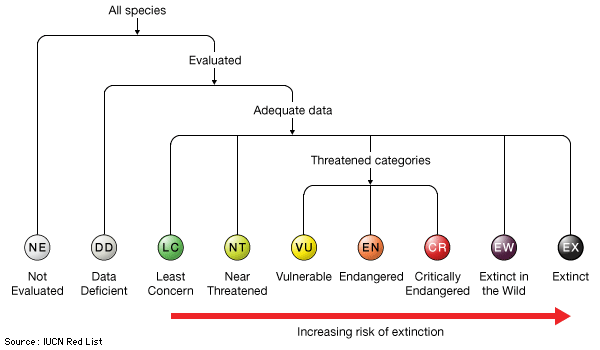
Plant species are classified as critically endangered when they face an extremely high risk of extinction in the wild. The International Union for Conservation of Nature (IUCN) designates this status based on quantitative criteria, such as a population decline of 80 to 90 percent or more over 10 years or three generations, or when fewer than 250 mature individuals remain.12
Several human-driven factors contribute to this critical status:
- Habitat loss: The most pervasive threat, involving the conversion of land for agriculture, logging, and development, which destroys or fragments the space plants need to survive.1213
- Invasive species: Nonnative plants can outcompete native species for essential resources like sunlight, water, and living space.1413
- Global warming: Rapid climate shifts challenge the adaptive capacity of plants, leading to the loss of fragile habitats and altered environmental conditions.1215
- Overexploitation: The collection of plants for trade or medicinal use can deplete populations faster than they can reproduce.1216
- Disease: Pathogens, often spread through human activity, can cause devastating losses in biodiversity.12
Sources
- Calendula — Encyclopædia Britannica
- calendula — Merriam-Webster
- Is That Plant 'Perennial' or 'Annual'? — Merriam-Webster
- Perennial — Encyclopædia Britannica
- Annual — Encyclopædia Britannica
- Plant - Classification of angiosperms — Encyclopædia Britannica
- Asteraceae — Encyclopædia Britannica
- Asteraceae - Physical characteristics — Encyclopædia Britannica
- Asterales — Encyclopædia Britannica
- Asteraceae - Flowers — Encyclopædia Britannica
- list of plants in the family Asteraceae — Encyclopædia Britannica
- critically endangered species — Encyclopædia Britannica
- invasive species — Encyclopædia Britannica
- habitat loss — Encyclopædia Britannica
- Global warming - Environmental consequences of global warming — Encyclopædia Britannica
- conservation - Habitat protection — Encyclopædia Britannica
- overharvesting — Encyclopædia Britannica
Published on · 3 min read