Marquesas Islands
The Marquesas Islands are believed to have been inhabited as early as 340 BCE, though some scholars suggest settlement may have occurred as early as the 2nd…
What is the history of human settlement on the Marquesas Islands?
The Marquesas Islands are believed to have been inhabited as early as 340 BCE, though some scholars suggest settlement may have occurred as early as the 2nd century BCE. The islands were settled by seafaring people associated with the Austronesian migration, though specific origins remain a subject of academic debate.12
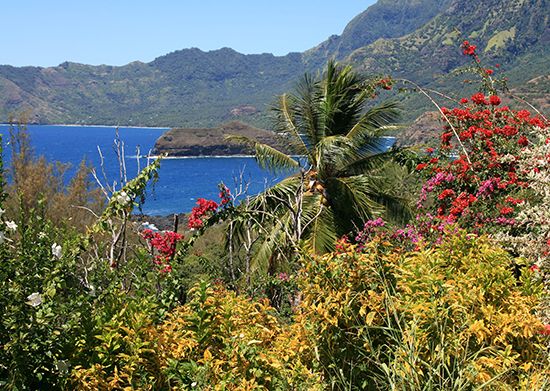
Due to the islands’ rugged topography, which lacks coastal plains and coral reefs, human settlement historically concentrated in narrow, deep valleys. Prehistoric inhabitants developed a settlement pattern of hamlets, where extended families lived in clusters of houses built on rectangular stone platforms. The height and complexity of these platforms often reflected the social status of the residents.13
Early Marquesan culture (c. 300–600 CE) is noted for specific artistic traditions, including the creation of shaped whale-tooth pendants. Over time, the society developed sophisticated stone carving, including monumental figures of gods and deified ancestors installed on sacred platforms. While these early settlers brought various skills, some technologies, such as pottery, were lost shortly after initial settlement.452
Where are the Marquesas Islands located, and how many islands make up this archipelago?
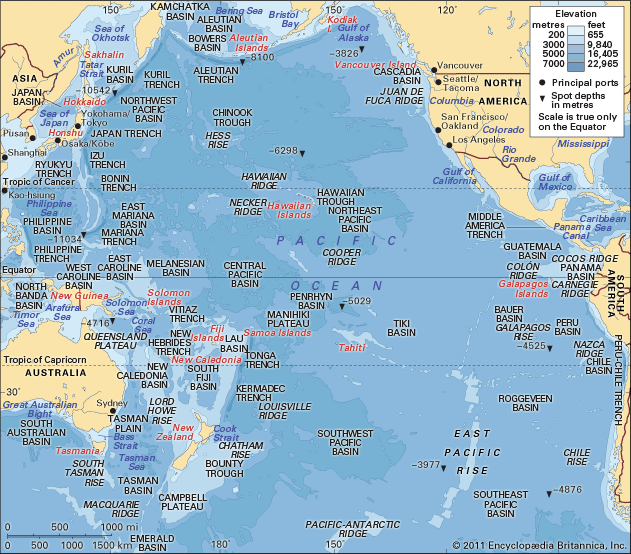
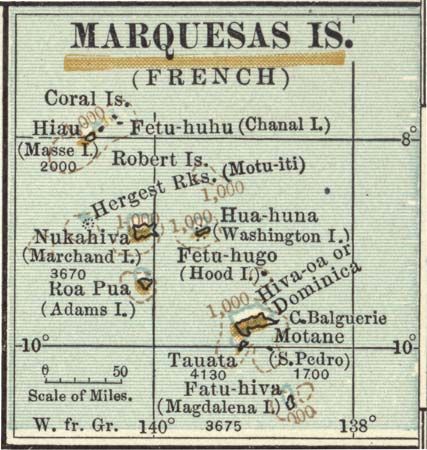
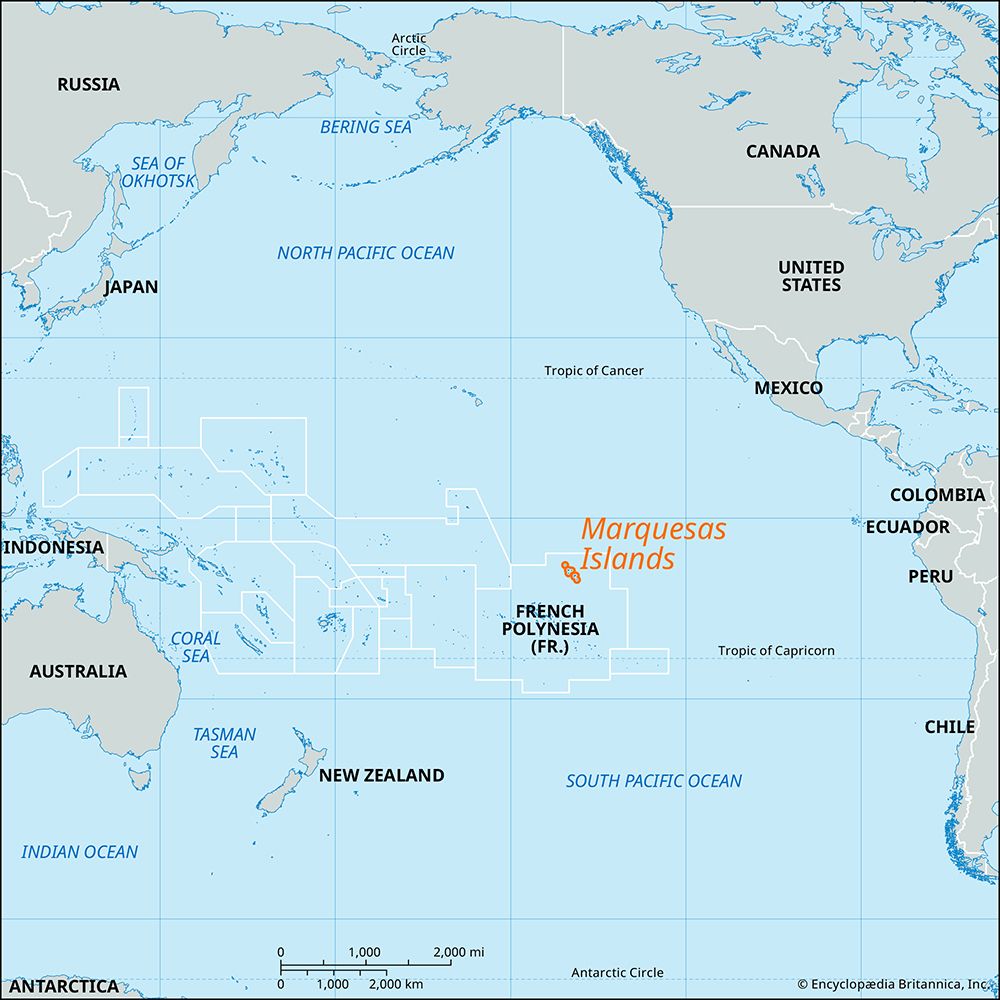
The Marquesas Islands are a volcanic archipelago located in the central South Pacific Ocean, situated approximately 740 miles (1,200 km) northeast of Tahiti within French Polynesia.1
The archipelago consists of 10 primary islands divided into two groups:1
- Southeastern group: Hiva Oa, Fatu Hiva, Tahuata, Motane, and Fatu Huku.1
- Northwestern group: Nuku Hiva, Ua Pou, Ua Huka, Eiao, and Hatutu.1
How did European contact and colonization impact the Marquesas Islands?
European contact with the Marquesas Islands began in 1595 with the arrival of the Spanish explorer Álvaro de Mendaña de Neira, followed by visits from British and American captains in the late 18th century. These early encounters introduced the islands to a wider global network, eventually leading to the archipelago’s annexation by France in 1842.1
The arrival of Europeans brought significant social and cultural shifts. Missionaries, who traveled to Oceania with the intent of transforming indigenous societies, faced initial difficulties in the Marquesas compared to other Polynesian regions. Over time, however, the influence of Roman Catholic missionaries became deeply embedded, and today, the majority of the population identifies as Roman Catholic.71
Colonization also disrupted traditional life by introducing European goods and altering political structures. While the islands retained distinct artistic traditions—such as the conventionalized human face motifs found in wood and stone sculpture—the broader societal changes brought by foreign traders, beachcombers, and colonial administration fundamentally reshaped the islands’ historical trajectory.75
What archaeological sites or artifacts have been discovered on the Marquesas Islands?
Archaeological findings in the Marquesas Islands provide significant insight into the region’s prehistoric culture, which is believed to have been inhabited as early as 340 BCE.2
Architectural Sites
The most prominent archaeological features are the ceremonial grounds, known as marae or ahu complexes. These served as places of worship and represent the islands’ most significant architectural achievements. These sites typically featured:5
- Sacred Enclosures: Raised or walled platforms used for religious ceremonies.51
- Stone Platforms: Large structures that supported monumental stone figures of gods.81
- Relief Carvings: The walls of these platforms often incorporated stone slabs featuring faces carved in relief.8
Artifacts and Sculpture
Marquesan art is characterized by a strict conventionalization of the human face, featuring large, circular or oval eyes and a horizontal, oblong mouth. Key artifacts include:8
- Stone and Wood Figures: These sculptures represented deified ancestors. Stone figures were often used as votive offerings or in fishing magic, while wooden figures were sometimes lashed to stilt poles for competitive races.8
- Personal Ornaments: Early phases of Marquesan culture (300–600 CE) produced shaped whale-tooth pendants and small perforated shell disks. Later, men wore elaborate head ornaments, including mother-of-pearl shells with tortoiseshell plaques and coronets made of shell and tortoiseshell strips.58
- Household and Functional Objects: Archaeological finds include engraved bowls, gourds with lids, and stone pounders featuring shafts carved with human heads.8
Sources
- Marquesas Islands — Encyclopædia Britannica
- Oceanic art and architecture - Polynesia — Encyclopædia Britannica
- Pacific Islands - Origins of Oceanian peoples — Encyclopædia Britannica
- Polynesian culture - Settlement patterns and housing — Encyclopædia Britannica
- Oceanic art and architecture - The Marquesas (Marquises) Islands — Encyclopædia Britannica
- Oceanic art and architecture - Effects of European contact — Encyclopædia Britannica
- Pacific Islands - Missionary activity — Encyclopædia Britannica
- Polynesian culture - Art — Encyclopædia Britannica
- Hei-tiki — Encyclopædia Britannica
Published on · 3 min read