Melos
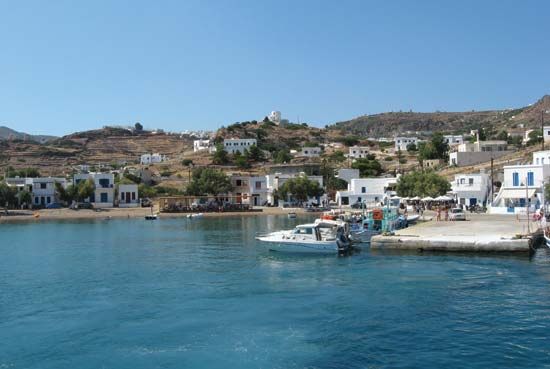
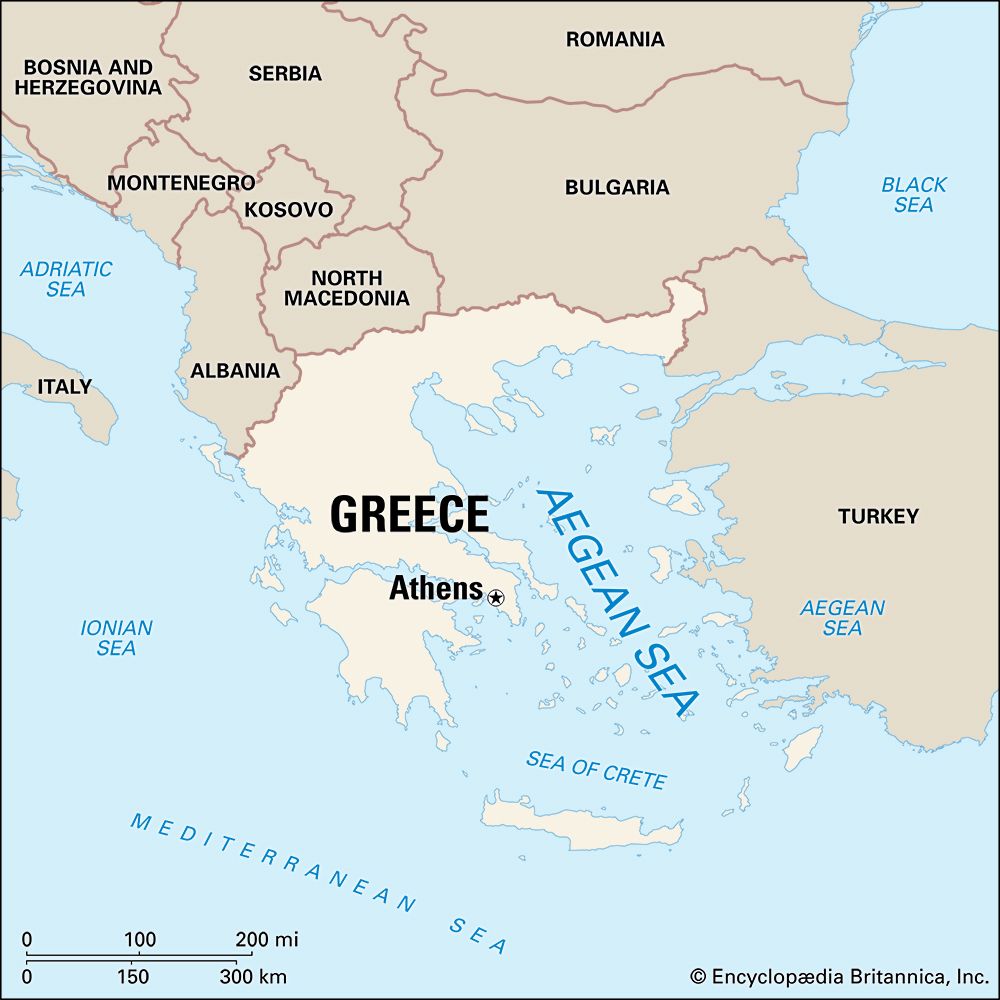
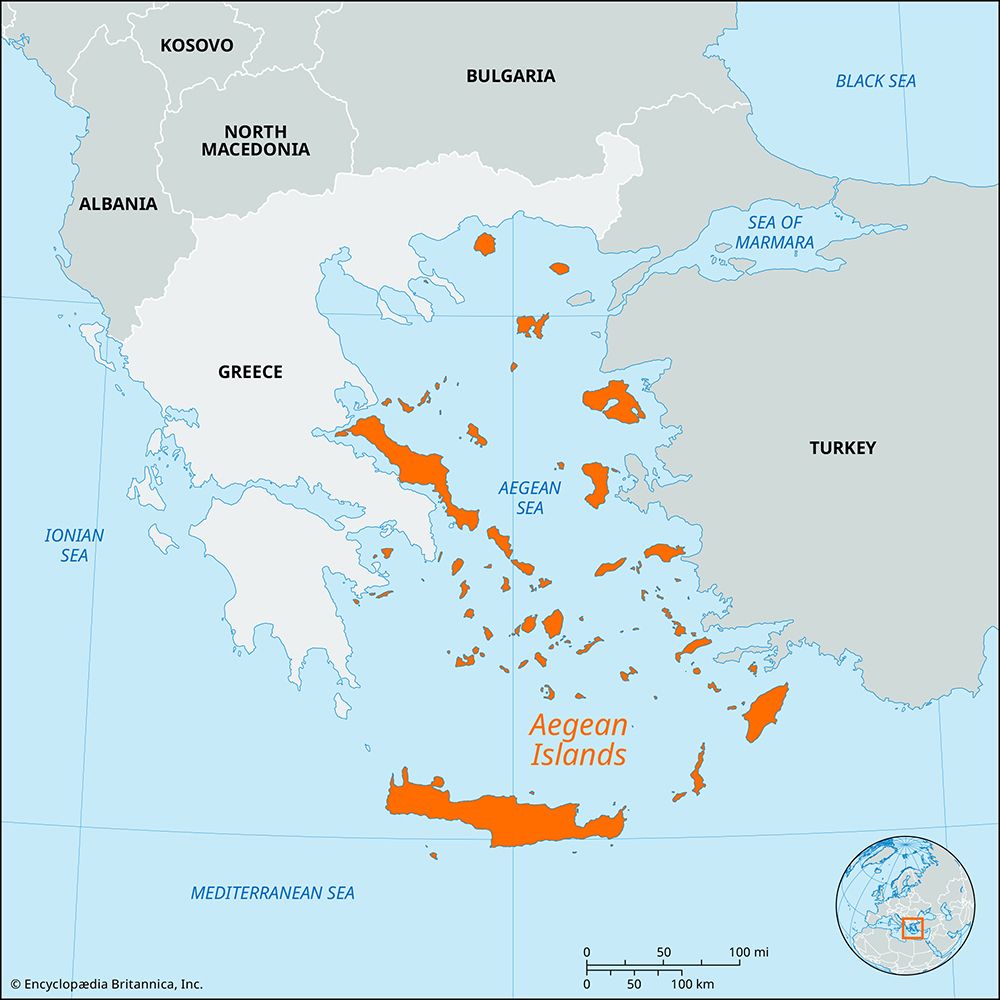
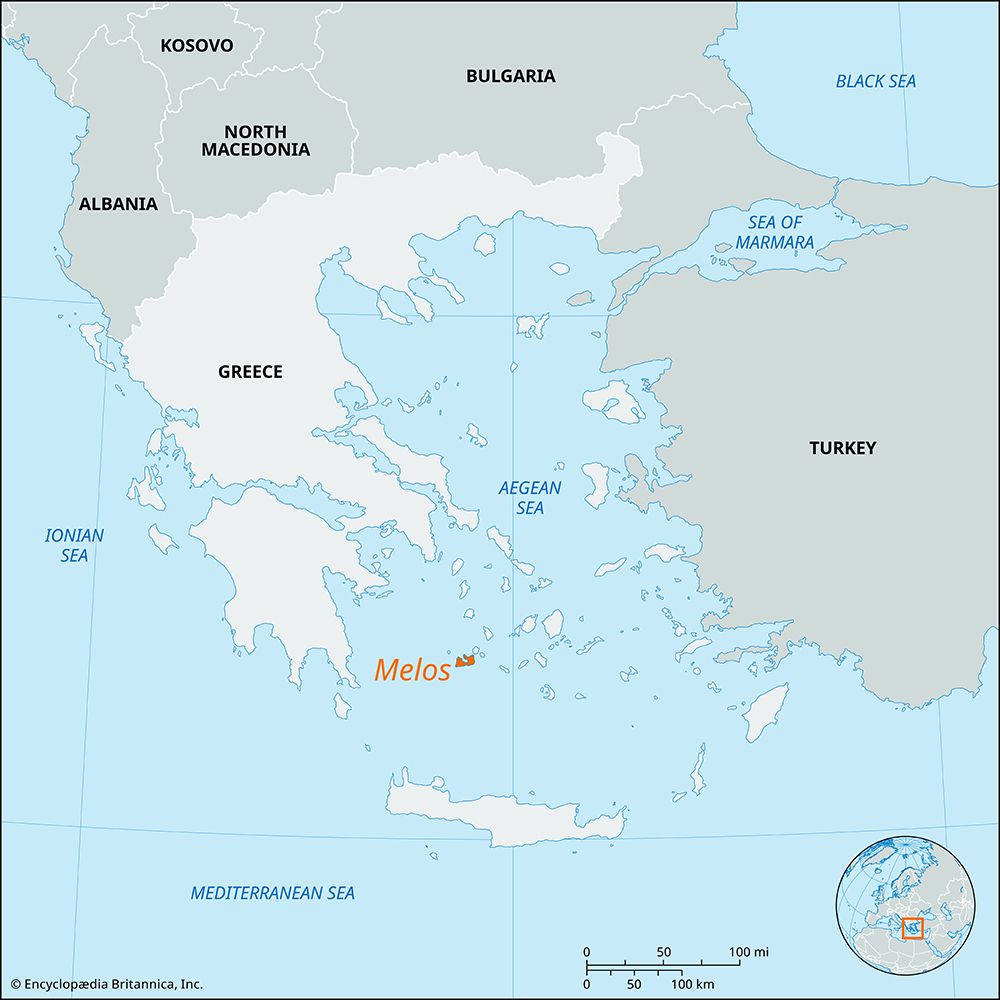
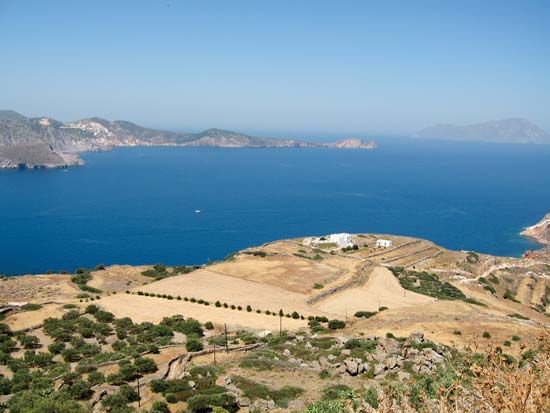
Melos (also known as Mílos) is the most southwesterly of the major islands in the Cyclades group of Greece, situated in the Aegean Sea.
What is the geographical location and size of Melos island in Greece?
Melos (also known as Mílos) is the most southwesterly of the major islands in the Cyclades group of Greece, situated in the Aegean Sea.1
The island covers an area of approximately 58.1 square miles (150.6 square kilometers). It is of geologically recent volcanic origin, characterized by rugged terrain that reaches its highest point in the west at Mount Profítis Ilías, which stands at 2,464 feet (751 meters). The island’s distinctive bay is a submerged volcanic crater.1
What is the historical significance of Melos in ancient Greek history?
Melos holds significant historical importance in ancient Greek civilization, spanning from its role as a commercial hub to its tragic involvement in the Peloponnesian War.3
Early Civilization and Commerce
During the Bronze Age, Melos was a flourishing center of Aegean culture. Its obsidian exports to Phoenicia established it as a vital trade node. The site of Phylakopi provides evidence of continuous settlement from 2300 BCE through the Mycenaean period, representing the height of the island’s Cycladic civilization.3
The Melian Dialogue and Athenian Aggression
In 416 BCE, during the Peloponnesian War, Athens demanded that the neutral Melians submit to their empire. The resulting confrontation is immortalized in the Melian Dialogue by the historian Thucydides. This debate serves as a stark exploration of power politics, where Athens argued that the weak must submit to the strong. When the Melians refused, Athens executed the entire male population and enslaved the women and children. This ruthless act of aggression was later condemned by the playwright Euripides in his anti-war play, Trojan Women.23
What are some notable archaeological discoveries made on Melos?
Melos has been the site of several significant archaeological discoveries that provide insight into its long history as a center of Aegean civilization. Notable findings include:
- Venus de Milo: Perhaps the most famous discovery, this ancient marble statue, likely representing the goddess Aphrodite, was found in pieces on the island in 1820. Created around 150 BCE by the sculptor Alexandros, it is now housed in the Louvre.22
- Phylakopi: Excavations at this site have revealed a flourishing settlement dating back to the Bronze Age. Evidence from the site shows continuous habitation from 2300 BCE until its destruction by Dorian settlers around 1100 BCE, with the third city representing the peak of the island’s Cycladic civilization.4
- Ancient Acropolis of Klima: Excavated by the British School at Athens between 1896 and 1899, this site yielded a palace, a gymnasium, and a Roman theater.4
- Early Christian Catacombs: Located southwest of the modern capital, these underground burial sites served as a place of refuge for early Christians from the Greek mainland.4
What is the origin of the name ‘Melos’ and its meaning?
The provided search results do not contain information regarding the etymological origin or the specific meaning of the name “Melos.” While the sources confirm that Melos (also spelled Milos) is a Greek island in the Cyclades and note its historical and geological context, they do not offer a linguistic explanation for the name itself.15
Sources
- Mílos — Merriam-Webster
- Melos — Encyclopædia Britannica
- ancient Greek civilization - Harsh treatment of Melos — Encyclopædia Britannica
- Venus de Milo — Encyclopædia Britannica
- Melian — Merriam-Webster
Published on · 2 min read