Masdevallia
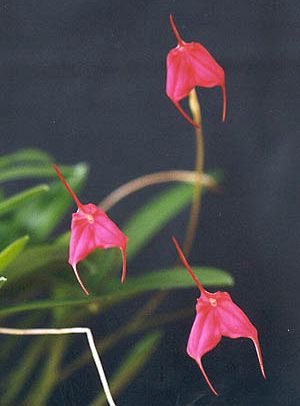
Masdevallia is a genus comprising over 500 species of tropical American orchids within the family Orchidaceae.
What is Masdevallia?
Masdevallia is a genus comprising over 500 species of tropical American orchids within the family Orchidaceae.12
These plants are primarily epiphytes, though some varieties grow in soil or on rocks. They are characterized by short stems and leaves that emerge from a creeping rhizome. Their flowers are noted for their striking colors and unique morphology: the sepals are joined at the base to form a tube and typically feature long, tail-like extensions. While some species are cultivated for their ornamental appeal, they are often considered difficult to maintain because they require specific cool, humid environmental conditions.12
What is an epiphyte?
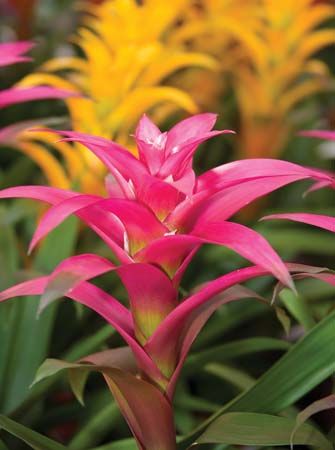
An epiphyte is a plant that grows upon another plant or object solely for physical support. Often referred to as “air plants,” they do not rely on their host for nourishment and are not parasitic, as they do not penetrate the host to extract water or nutrients.345
Most epiphytes are found in moist tropical regions, where growing above the ground allows them to access sunlight in dense, shaded forests and capture nutrients from organic debris that accumulates in the tree canopy. They obtain water from rain and atmospheric moisture, typically absorbing it through their roots or specialized leaves.4
Common examples include many species of orchids, ferns, mosses, and members of the pineapple family (Bromeliaceae). While they are most prevalent in the tropics, some species, such as certain mosses and lichens, are also found in temperate zones.34
How do orchids adapt to their environments?
Orchids exhibit remarkable adaptability, allowing them to thrive in diverse environments ranging from the Arctic Circle to tropical cloud forests and even arid deserts. Their survival strategies are primarily centered on specialized reproductive mechanisms and unique growth habits.6
Structural and Ecological Adaptations
- Growth Habits: Orchids have evolved to occupy various niches. Many are epiphytes, growing on trees to access sunlight in dense forests, while others are terrestrial or even grow on bare rocks and cacti in extreme conditions.67
- Nutrient Acquisition: Because many orchids lack access to soil, they rely on mycorrhizal fungi to germinate and obtain nutrients. Epiphytic species often capture moisture and nutrients from rain and organic debris that collects on their host plants.87
- Seed Dispersal: To colonize specific habitats, orchids produce vast quantities of tiny, dustlike seeds that are easily dispersed by the wind.87
Pollination Strategies
Orchids are highly adapted to utilize specific pollinators through complex, often deceptive, methods:
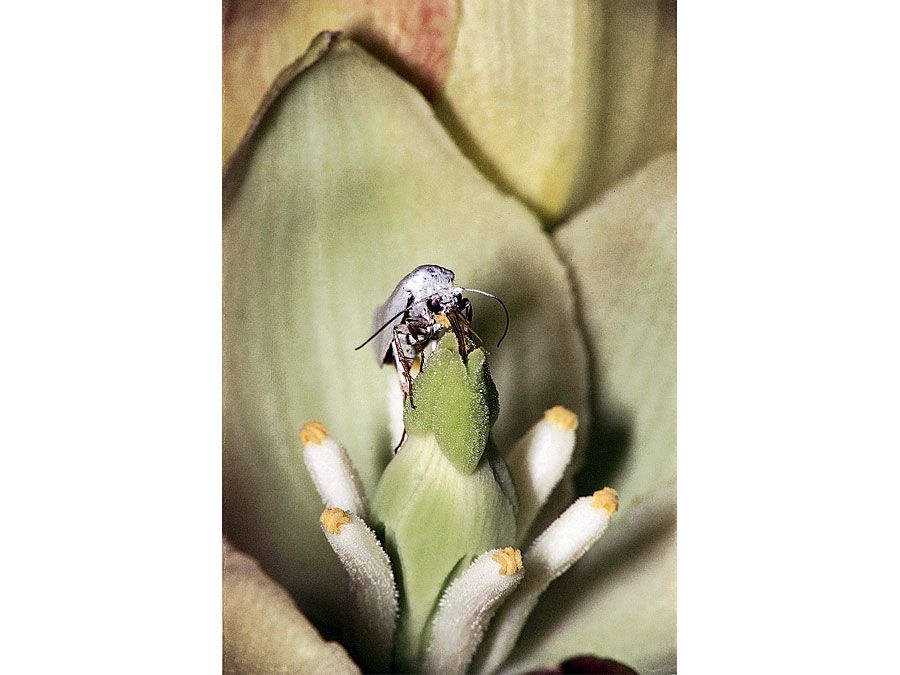
- Pollinator Manipulation: Many orchids use mimicry or enticing odors to attract bees. For instance, the bucket orchid (Coryanthes) uses a waxy, water-filled trap to force bees through a tunnel where pollen packets are attached to them.94
- Coevolution: The structural diversity of orchid flowers is largely a result of coevolution with specific insects, ensuring that pollination is precise and efficient.910
What are the main parts of an orchid flower?
The orchid flower is characterized by a unique structure that distinguishes it from other plants. Its primary parts include:
- Perianth: Composed of three sepals and three petals. One petal is highly specialized as a landing platform for pollinators and is known as the lip or labellum.
- Column: A central structure formed by the fusion of the male and female reproductive organs, including the anther, stigma, and style.
- Pollinarium: The reproductive unit consisting of pollinia—masses of pollen grains—often attached to a sticky pad called a viscidium.
- Ovary: Located at the base of the flower, it is composed of three fused carpels and eventually develops into a seed pod.
- Nectaries: Specialized structures that secrete nectar to attract pollinators, often found as spurs or cuplike depressions.
Orchid flowers are typically bilaterally symmetrical, a result of the fertile stamen being positioned opposite the lip.
Sources
- Masdevallia — Encyclopædia Britannica
- Masdevallia — Merriam-Webster
- Did you know? — Merriam-Webster
- epiphyte — Encyclopædia Britannica
- parasitic plant — Encyclopædia Britannica
- orchid - Bee pollination — Encyclopædia Britannica
- orchid - Structural diversity — Encyclopædia Britannica
- orchid - Ecology — Encyclopædia Britannica
- orchid - Seeds — Encyclopædia Britannica
- bucket orchid — Encyclopædia Britannica
- orchid - Floral structure — Encyclopædia Britannica
Published on · 3 min read