Lamington Plateau
The Lamington Plateau is a prominent section of the McPherson Range located in southeastern Queensland, Australia, near the border of New South Wales.
What is Lamington Plateau?
The Lamington Plateau is a prominent section of the McPherson Range located in southeastern Queensland, Australia, near the border of New South Wales.1
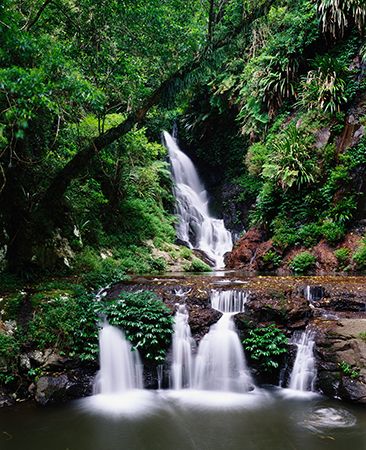
Spanning approximately 75 square miles (195 square km) with an average elevation of 2,000 feet (600 m), the plateau serves as the source for the Nerang, Coomera, Albert, and Logan rivers. It is named after Baron Lamington, a former governor of Queensland, and is home to Lamington National Park. The region is renowned for its diverse natural features, including:1
- Over 500 waterfalls.1
- Scenic peaks, such as Mount Wanugara.1
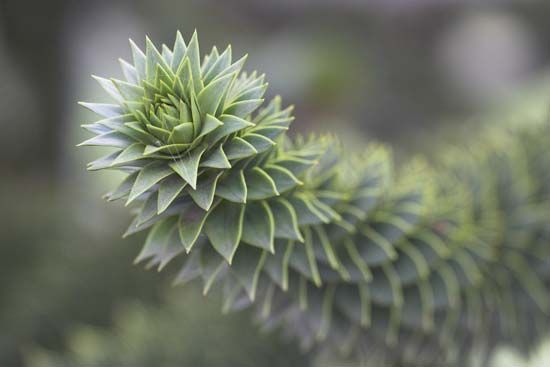
- Ancient stands of Antarctic beech trees.1
- A variety of rare bird and plant species.1
The area is located about 70 miles (110 km) south of Brisbane and is accessible via the Mount Lindesay Highway.1
What is the significance of the Antarctic beech trees found there?
The Antarctic beech (Nothofagus moorei), found in the Lamington Plateau, is significant primarily for its role as evidence of continental drift.2
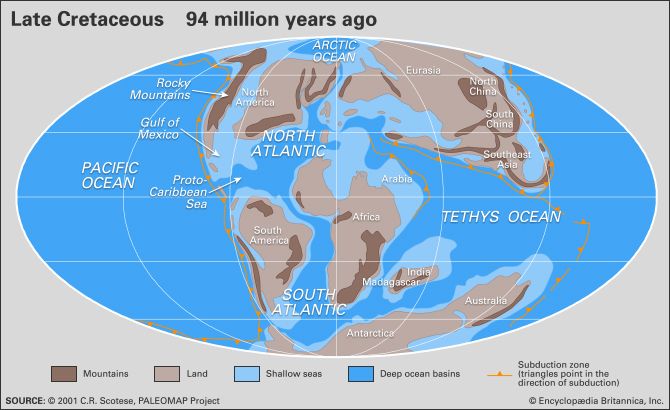
The genus Nothofagus is distributed across widely separated regions, including Australia, South America, New Zealand, and New Guinea. Because the fruits of these trees are highly susceptible to damage by seawater, they could not have crossed vast oceans to reach these disparate locations. Their presence in these specific areas serves as a biological record of the breakup of the supercontinent Gondwana during the Cretaceous Period.2
In the context of the Lamington Plateau, these trees represent a connection to an ancient botanical history that spans the Southern Hemisphere. Unlike some of their deciduous relatives in South America, the Australian species are evergreen and are known for their large trunks and hard wood.23
How do volcanoes shape the formation of plateaus?
Volcanoes contribute to the formation of plateaus primarily through the accumulation of extensive lava flows and volcanic ash that bury preexisting terrain4. These features, often referred to as flood basalts or traps, can reach thicknesses of tens to hundreds of meters, creating surfaces that are typically very flat despite being occasionally incised by canyons.4
The process of volcanic plateau formation is often linked to hot spots, where upwelling hot material from the asthenosphere not only produces volcanic activity but also causes the uplift of the lithosphere through thermal expansion. Notable examples of such formations include the Columbia Plateau in the United States and the Deccan Traps in India.45
It is important to note that these volcanic processes often operate in tandem with other tectonic forces. For instance, the Ethiopian Plateau stands high due to a combination of lithospheric heating and extensive Cenozoic volcanic rock coverage.4
What makes Lamington National Park a World Heritage site?
Lamington National Park is a significant component of the Gondwana Rainforests of Australia, a collection of protected areas designated as a UNESCO World Heritage site.67
The park’s inclusion is based on its exceptional natural value, particularly its role as a refuge for ancient plant and animal species. It features diverse ecosystems, including scenic wooded peaks and over 500 waterfalls, which support a high concentration of rare birds and plants. Notably, the park contains ancient stands of Antarctic beech trees, which serve as living links to the continent’s botanical history and the breakup of the supercontinent Gondwana. These rainforest reserves are recognized for their scientific and ecological importance, representing some of the most significant natural heritage areas in Australia.16
Sources
- Lamington Plateau — Encyclopædia Britannica
- Southern beech — Encyclopædia Britannica
- antarctic beech — Merriam-Webster
- plateau - Formative processes — Encyclopædia Britannica
- plateau - Geographic distribution — Encyclopædia Britannica
- Australia - Land of Australia — Encyclopædia Britannica
- list of World Heritage sites - Australia — Encyclopædia Britannica
Published on · 3 min read